North Idaho On Site Sheds

Hunting Gear Storage Built On-Site in North Idaho

Need a hunting gear storage shed in North Idaho? On-site builds with drying systems, plus custom sizing made for North Idaho snow. Get a free estimate today.

Hunting gear storage works best when it is designed around the way real seasons overlap in North Idaho, not just around a few shelves and hooks. We build these sheds on-site so drying systems, scent-control strategy, security, and seasonal organization can be matched to your lot, your equipment list, and the snow-heavy access conditions that come with rural and mountain properties.

Hunting Gear Storage Built for North Idaho Weather

Hunting equipment does not store well when it is scattered between a garage corner, a mudroom bench, and the back of a pickup. Wet boots mildew, packs never fully dry, camo picks up household smells, and expensive gear becomes harder to find right when the season changes. A dedicated hunting gear storage shed gives all of that equipment a real home, but it only pays off if the building is planned around North Idaho weather and the way local hunters actually use it.

That starts with a shell built for real snow. Across our service area, the roof may need to be designed around 40 psf conditions or well into the 50s and 60-plus psf range depending on the property. If the building is on acreage in Boundary or Bonner County, the weather exposure may be very different than a tighter Kootenai County lot. The base matters too. Wet boots, muddy decoys, icy dog gear, and spring runoff can all make a gear shed feel damp fast if the drainage and floor system are an afterthought. Once the project becomes larger or more permanent, North Idaho's common 24-inch frost-depth benchmark starts affecting the foundation conversation as well.

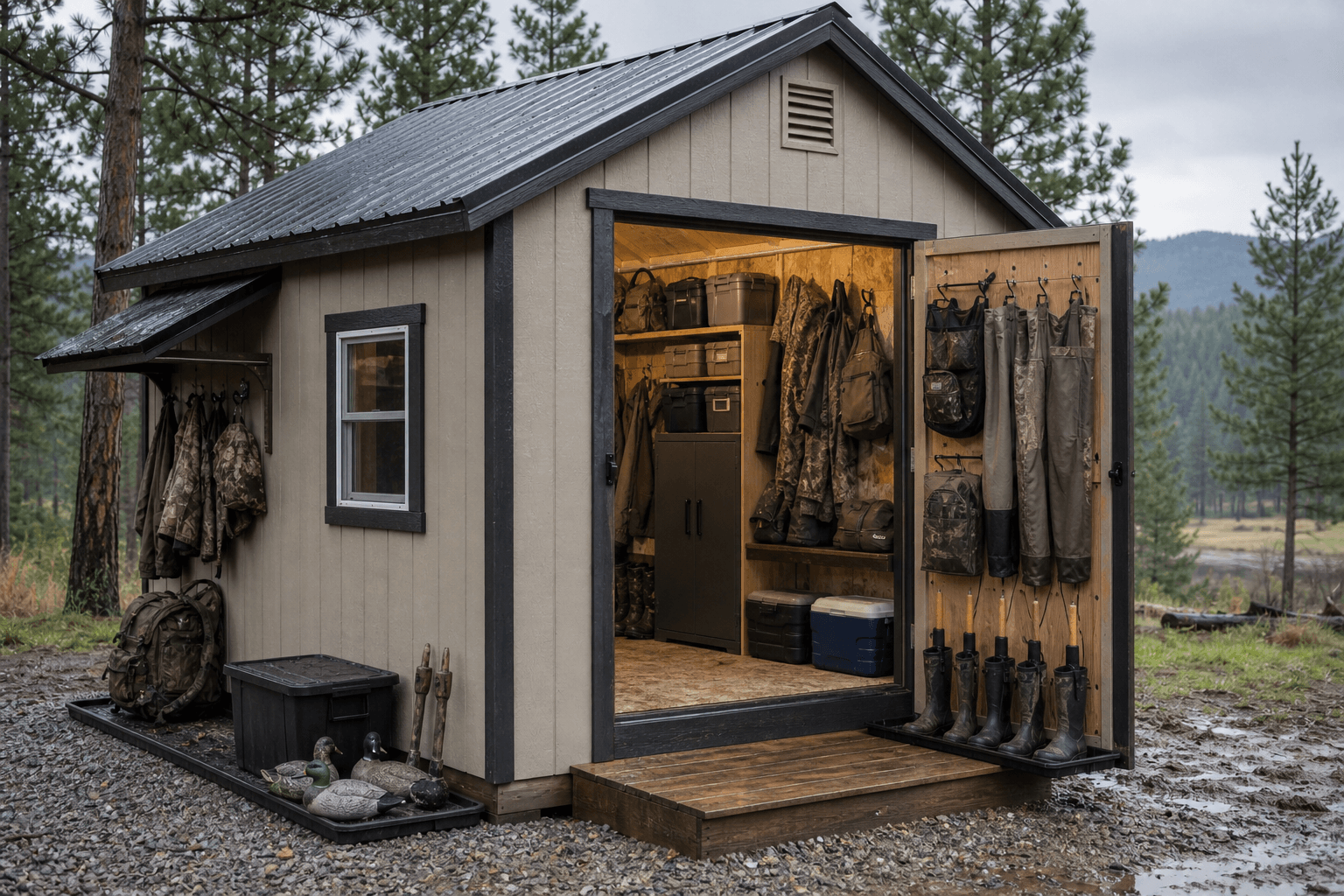
Hunting properties often add one more challenge: location. The best place for the shed may be close to the driveway, barn, or side yard where gear comes off the truck, not necessarily where a prefab delivery wants to leave it. On-site construction is a major advantage here because the building can be fitted to the real staging area, including gates, slope, snow storage, and the access path you actually use before dawn in November.

Hunting Gear Storage Shed Features & Build Options

The right hunting shed is built around three priorities: drying, control, and separation. Drying matters because boots, waders, packs, and outerwear often come home damp or outright soaked. Control matters because scent, dirt, and clutter can ruin the usefulness of a room fast. Separation matters because archery gear, rifle season gear, waterfowl gear, and late-winter layers all have different shapes, storage needs, and rhythms.

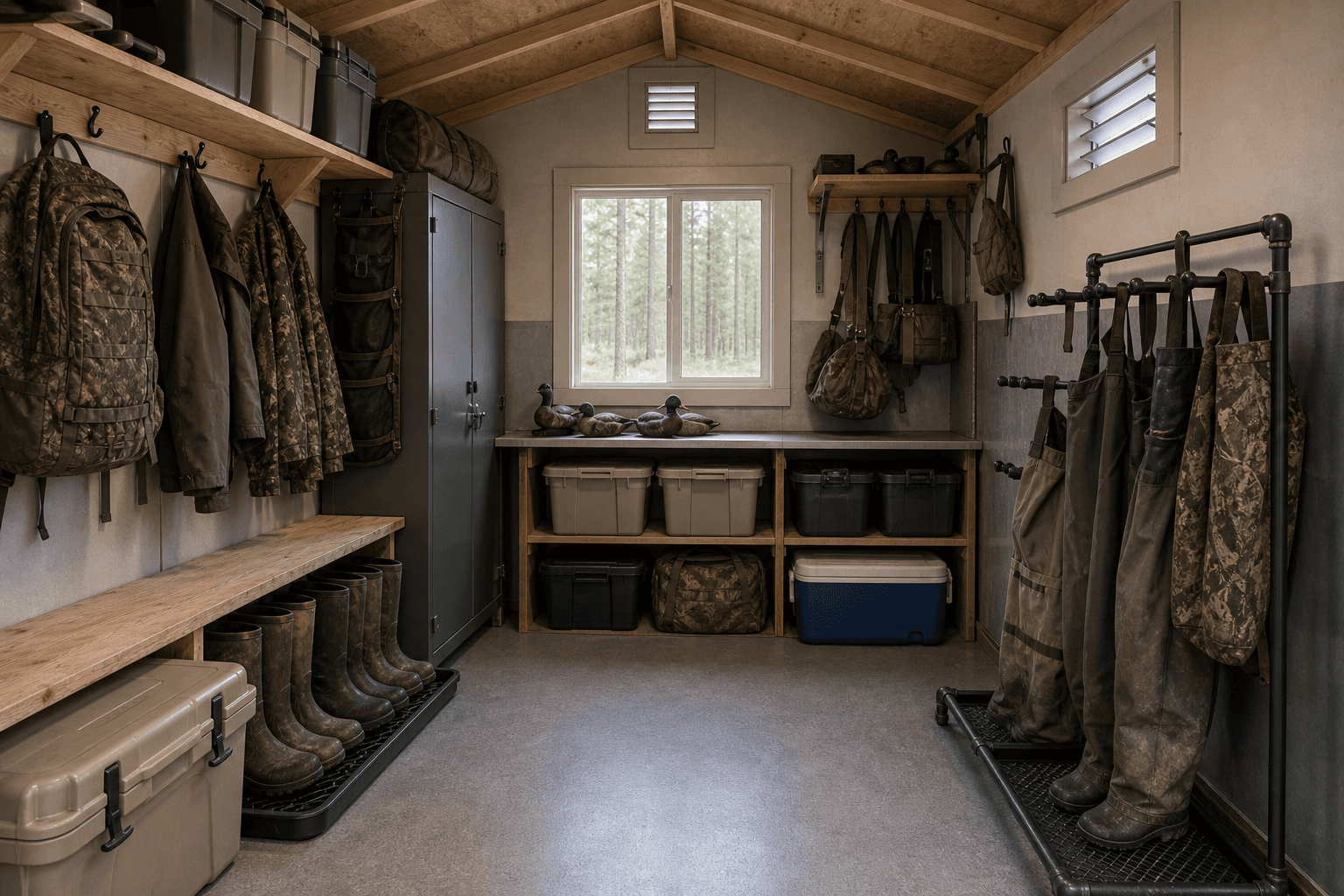
Drying systems are usually the first real upgrade. A wall designed for boots, waders, and jackets can keep the gear ready instead of letting it sour in a pile. Hunting gear drying and scent-control shed design that actually helps is a good planning resource because it explains why airflow and separation are just as important as hooks and shelves.

Seasonal organization is the next big win. Most hunters do not use the same gear all year, and the room gets much easier to manage when archery, rifle, waterfowl, winter predator, and general outdoor gear each have defined zones. Organizing by season: archery, rifle, waterfowl, winter is helpful because it shows how to build around real use instead of one giant storage wall.

Common hunting gear storage features include:

  • Drying systems for boots, outerwear, packs, and waders.
  • Scent-control-minded storage that keeps hunting gear away from house odors and general clutter.
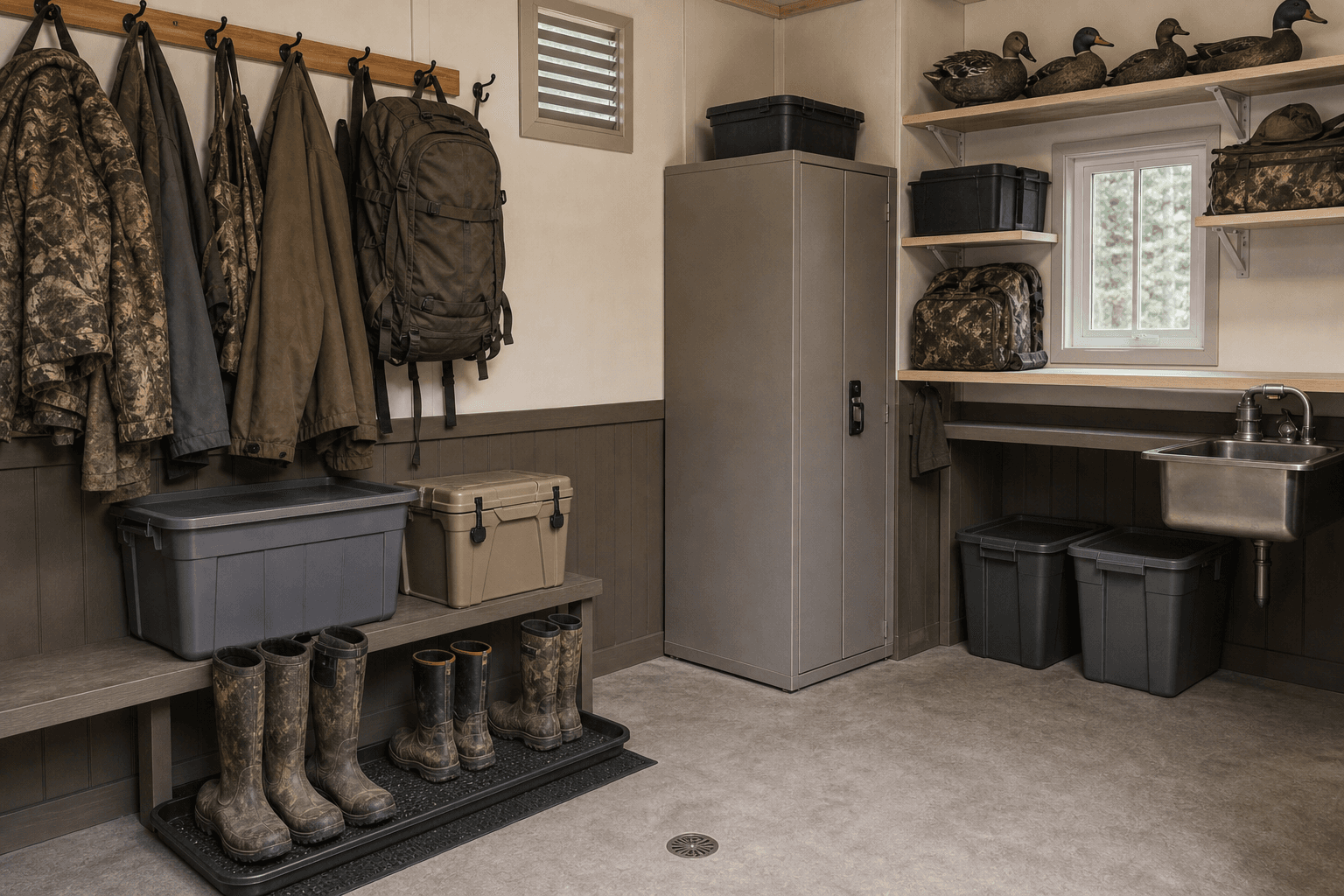
  • Dedicated gun safe space with enough structure and clearance to plan the room correctly.
  • Seasonal organization walls for archery, rifle, waterfowl, and cold-weather gear.
  • Bench, bin, and hook layouts that make it easier to load out and reset between hunts.

Some projects naturally pair with a hunting cabin if the property also needs a base-camp structure. Others connect to a game processing shed when the owner wants the full workflow, from field gear to meat care, handled on one property. The key is designing the gear shed around the equipment you actually own, not a generic idea of a "hunting room."

Popular Hunting Gear Storage Shed Sizes & Layouts

A 10x12 is a practical starting point for one hunter or a smaller household. It can support a drying wall, vertical storage, and a bench without turning into a closet.

A 10x16 gives more flexibility and is a strong size when the shed needs to separate wet gear from dry storage. It also makes better sense if a safe, larger bins, or longer seasonal racks need to be part of the layout.

A 12x16 is one of the best balanced sizes for a serious hunting gear room. It gives enough wall length for category-based storage and enough aisle room that the shed still feels usable during active season.

A 12x20 starts to feel more like a true equipment room. This size is especially practical when multiple users share the building or when the room needs a bench zone, dog gear area, or freezer-adjacent utility space.

A 12x24 is usually chosen when the property has a deep equipment list or when the shed supports multiple activities beyond hunting alone. It is more room, but it keeps late-season clutter from overwhelming the building.

What Size Hunting Gear Storage Shed Works Best?

The right size depends on how much of your outdoor life you expect the shed to hold. A focused hunting gear room for one person can be relatively compact. A room that needs to carry decoys, waders, blinds, layered clothing, packs, dog gear, and maybe a gun safe is a different project entirely.

It helps to think in modules. How much hanging space is really needed for wet outerwear? How much floor space is needed for totes and decoys? Does the room need to support gear prep on a bench, or just storage? If there is a safe, can it live in a secure position without eating the whole circulation path? Those questions usually tell you faster than square footage alone whether the shed is sized correctly.

Another point many owners miss is future creep. Hunting gear almost never shrinks. Seasons expand, new methods get added, and the room that felt organized at move-in can feel cramped after two years. Choosing a size that leaves a little growth room often costs less than replacing bad storage habits later. Security planning can change the footprint too. Once you account for a gun safe, lockable optics storage, and a cleaner zone for smaller essentials, the room usually needs more honest wall space than people expect. It is better to plan those high-value zones into the layout from day one than to squeeze them into the circulation path later.

How Does On-Site Hunting Gear Storage Shed Building Work?

Hunting gear storage sheds use the same core NIOS build process as other projects, but organization and seasonal workflow matter earlier than usual.

  1. Gear inventory and use-case planning We start by reviewing what needs to be stored, what needs to dry, and how the room should separate archery, rifle, waterfowl, and winter equipment.
  2. Site and access planning We look at how the shed connects to the truck, shop, or house and where the snow, mud, and traffic pattern make the most sense.
  3. On-site framing and shell construction Building on-site allows the footprint to fit the actual property instead of forcing the design to work around a delivery constraint.
  4. Drying, storage, and security layout This is where the service-specific details come together: drying systems, safe location, storage walls, and the circulation that makes the room easy to reset after a hunt.
  5. Final walkthrough and organization check Before the project wraps, we make sure the layout works for the real equipment list and not just an empty-room idea on paper.

On-site construction matters here because the shed often belongs in a very specific place on the lot. If it is too far from the truck, too exposed to drifting snow, or too tight against an existing building, it becomes less useful every season.

Hunting Gear Storage Shed Service Areas Across North Idaho

We build hunting gear storage sheds across Kootenai, Bonner, Boundary, Shoshone, and Benewah counties, but these projects are especially common on properties where the hunting routine is closely tied to acreage, snow, and longer drives. Around Bonners Ferry, Sandpoint, and rural Athol-area properties, owners often want a dedicated room that keeps boots, packs, and late-season layers out of the house and ready for the next trip.

In more built-up parts of Kootenai County, the challenge is often fitting a serious gear room onto a tighter lot without making access awkward. In more remote areas, the bigger issue may be snow staging, slope, and where the building sits relative to the shop or drive. That is exactly why on-site construction helps. It lets the shed respond to the property instead of the other way around.

If you are comparing ranges, see our pricing guide. If you want help sizing the room around your actual gear list and property layout, request a free estimate.

Frequently Asked Questions About Hunting Gear Storage Shed

The FAQ section below covers the most common questions we hear about cost, sizes, permits, and timelines. If you want a dedicated space that keeps hunting gear dry, organized, and easier to manage through the whole year, request a free estimate and we can help plan it around your property and your seasons.

Built for North Idaho weather

  • Engineered for snow load

    Roofs framed for North Idaho's 70+ psf ground snow load.

  • Wind-rated

    Anchored and braced for the gusts that funnel down our valleys.

  • Sealed for freeze-thaw

    Detailed drip edges, sealed penetrations, and breathable wraps.

  • 12-year warranty

    Bumper-to-bumper coverage on materials and workmanship.

What you get

  • Drying systems

  • scent control

  • gun safe space

  • seasonal org

How it works

  1. Step 1Site visit

    We come to you, listen to how you want to use the shed, and read the site.

  2. Step 2Free estimate

    You get a single, all-in price — no surprises, no upsell.

  3. Step 3Build day

    We build it on your property in a single visit. No delivery permits, no crane fees.

  4. Step 4Walkthrough

    We hand it over with a walkthrough of materials, doors, and aftercare.

Frequently asked questions

  • How much does a hunting gear storage shed cost in North Idaho?

    Most hunting gear storage shed projects in North Idaho start around $5,800 and can reach $14,700 depending on size, foundation, utilities, insulation, and finish level. Site access, snow loads, and feature upgrades can move pricing higher. See our pricing guide or request a free estimate.

  • What size hunting gear storage shed works best in North Idaho?

    Most hunting gear storage shed builds land in the 10x12, 10x16, 12x16 range, while 12x20, 12x24 works better when you need more clearance, storage zones, or finished space. North Idaho lot layout, setbacks, and access matter as much as square footage. Compare 10x12, 10x16, and 12x16.

  • Do I need a permit for a hunting gear storage shed in North Idaho?

    Often yes. Many hunting gear storage shed projects land at or above 200 square feet or include utilities, which makes permit review more likely in North Idaho. Even when a simpler footprint follows the under-200-sq-ft path, setbacks, HOA rules, and intended use still matter. Review permit basics and request a site-specific estimate.

  • How long does it take to build a hunting gear storage shed on-site in North Idaho?

    Most hunting gear storage shed projects take about 2-3 on-site days once the site is ready and materials are staged. Larger footprints, slab work, insulation, wiring, plumbing, and muddy or tight North Idaho access can extend the schedule. See how our build process works.

Ready to get started?

Get Your Free Estimate