Hayden Lake sits just northeast of the city of Hayden in Kootenai County — a deep, tree-lined lake ringed by some of the most sought-after property in the Panhandle. The shoreline runs from Honeysuckle Beach and the public boat launch around to English Point, Sportsman Park, and the wooded bays past Mokins, and the lots behind them tend to be large, sloped, and heavily treed. We build custom sheds right where you live around the lake, assembling boat and gear storage and garages on your property instead of trucking in a finished building that was never sized for the site.
Building on-site is what makes a shed actually work on a Hayden Lake estate lot. Lakefront parcels drop toward the water, the bench lots up off East Hayden Lake Road and Bozanta Drive rarely sit flat, and the long wooded driveways near the Hayden Lake Country Club and Avondale are not built for a wide finished-shed trailer to back down. When the crew builds in place, the access and the slope stop being a delivery problem — we work to your grade, your trees, and the exact spot you want the building to sit.
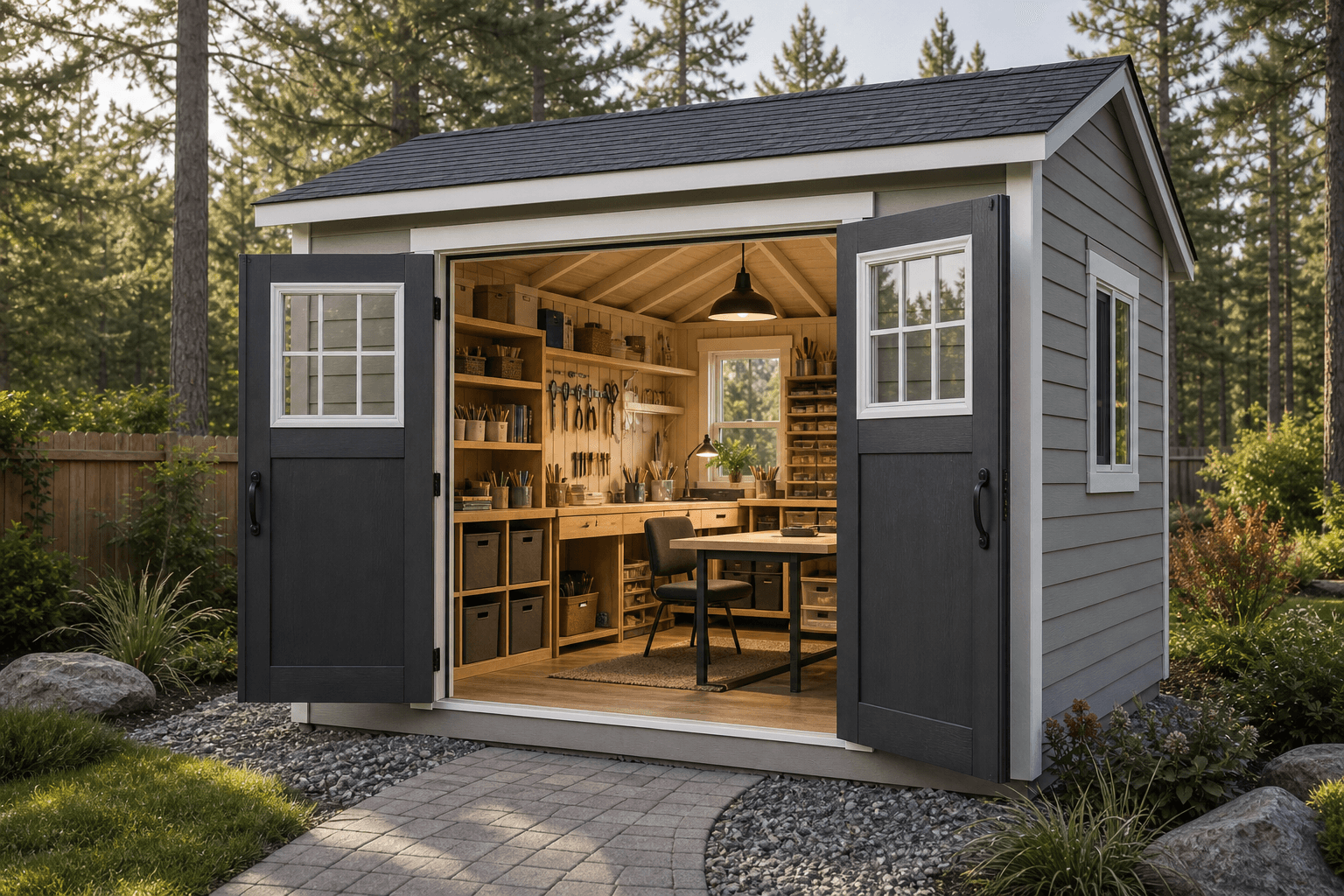
A custom shed built on-site on a wooded Hayden Lake lot, sized to the slope and the trees it had to fit between.
Most Hayden Lake owners come to us for one of a few reasons: the boat, the wakeboards, and the dock hardware have taken over the garage and need a dry home of their own; a big wooded lot has room for a real shop or a second garage bay; or they want a finished backyard room that matches a high-end lakeside home. We build all of it on your property. A purpose-built boat and gear shed gets the trailer, life jackets, and watersports kit out of the weather; a detached garage or shop adds covered space for a project car, a side-by-side, or the lake toys; and a she shed carves out a quiet studio under the pines with a door that closes.
Access is the first thing we sort out. Many lake lots are reached by a single steep driveway, a gated entry, or a tree-lined approach with no room to swing a long trailer — building in place means the shed still lands exactly where you want it, no crane and no clearing mature trees to make a drop. For lakefront and bench parcels above the shoreline, we plan the footprint and the pad around the fall of the land so the building sits level and drains away from the structure and the lake below.
Wakeboards, life jackets, dock hardware, the boat cover, and watersports kit come off the garage floor and into a dry building sized for trailers and long gear.
Larger wooded lots up off East Hayden Lake Road often have room for a real second bay or shop for a project car, a side-by-side, or a heated workbench.
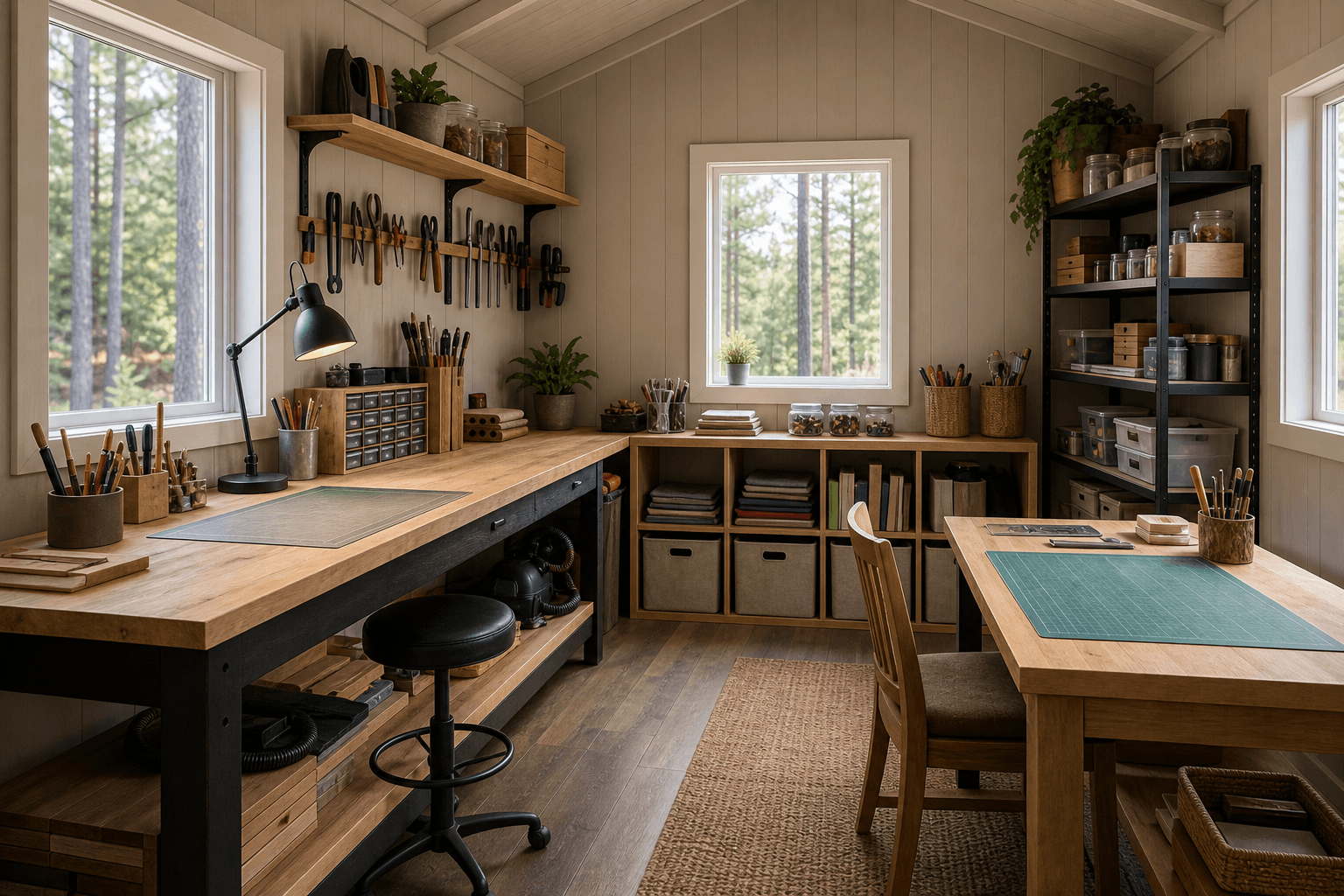
A finished backyard room for an art studio, office, or reading retreat, trimmed to match an upscale lakeside home and insulated for a North Idaho winter.
Around Hayden Lake, accessory buildings run through Kootenai County (and the small City of Hayden Lake near the south shore), and the county handles them the way most North Idaho jurisdictions do: smaller utility sheds under a set square-footage threshold usually skip a building permit, while larger footprints, anything with power or plumbing, and any building you intend to occupy generally need one. Even when a permit is not required, setbacks still are — your building has to sit a minimum distance from side and rear property lines, and lakefront parcels carry additional shoreline and setback rules tied to the high-water line.
Many of the lake's neighborhoods also carry CC&Rs and architectural review — the Hayden Lake Country Club / Avondale area and the gated estate communities often dictate siding, roof color, and where an outbuilding may sit, sometimes more strictly than the county code. Check your covenants before you finalize anything. Our permits and placement guide walks through the county basics and setbacks, and the boat and gear shed planning guide helps you lock in a size before you apply.
A detached garage built on-site on a wooded Kootenai County lot, with a roof pitch and anchoring rated for local snow load.
Hayden Lake winters are real. The lake sits at the wet, snowy edge of the Panhandle, so a shed here has to carry a meaningful snow load on the roof, shrug off freeze-thaw at the foundation, and keep a door that still swings after a storm drops a foot overnight under the trees. We build to the roof pitch and anchoring the local load calls for, and we set most buildings on a compacted gravel pad that drains snowmelt and keeps the floor up off wet, shaded ground — a better fit for sloped, tree-covered lake lots than a slab that traps water against the structure.
Site matters as much as weather. Bench lots above the shoreline rarely sit flat, lakefront parcels slope toward the water, and the heavy tree canopy around the lake keeps lots damp and shaded well into spring. We level and drain the pad so the building stays dry and square for the long haul. A 12x16 or 12x20 covers most lake-gear and shop needs with room for a trailer, while a 10x16 tucks a tidy storage building into a wooded corner.
Hayden Lake, Kootenai County, northeast of the city of Hayden — permits run through Kootenai County or the small City of Hayden Lake, and lakefront lots carry shoreline rules.
Small utility sheds often skip a permit; larger footprints, occupied buildings, and anything with power or plumbing usually need one, and setbacks always apply.
Plan for a meaningful winter snow load on the roof, freeze-thaw at the foundation, and a gravel pad that drains snowmelt away from the building under heavy tree cover.
We build on-site all around Hayden Lake — steep driveways, gated entries, tree-lined approaches, and sloped lakefront and bench lots are all handled in place, no crane needed.
Lakefront lots carry more than the usual side and rear setbacks. In addition to Kootenai County's distance from your property lines, shoreline parcels have setback and shoreline rules tied to the lake's high-water line, and some neighborhoods add their own placement limits through CC&Rs. The exact numbers depend on your address and whether you are under the county or the City of Hayden Lake. We place the building to clear all of it from the start, keeping it off the shoreline buffer and square to the slope — our permits guide covers how the county rules fit together.
Yes, and around the lake that matters. The homes here run from log and timber lodges to high-end contemporary lakeside builds, and an outbuilding looks right only when it reads with the house. Because we build on your property, we line up the roofline, siding, trim, and color with your home rather than dropping in a generic finished shed. The configurator is a good way to preview siding and roof options before you commit, so the building looks like it belongs on the lot.
We plan the build and delivery around the access you have. Many lake lots are reached by a single steep driveway, a gated entry, or a tree-lined approach with no room to swing a long finished-shed trailer. Building on-site solves that — we bring materials in and assemble the building in place, so the shed lands exactly where you want it without clearing mature trees or staging a crane. Tell us how your lot is reached and where the spot is, and we fit the build sequence to it.
It depends on size, use, and where your lot sits. Smaller utility sheds under the local square-footage threshold usually do not need a building permit, but larger buildings, anything you plan to occupy, and any shed with power or plumbing generally do. Setbacks from property lines apply either way, and lakefront parcels carry extra shoreline rules. Permits run through Kootenai County or the City of Hayden Lake depending on your address. We help you size and place the building to fit, and our permits guide covers the basics.
For most lake properties, a 12x16 or 12x20 hits the sweet spot — enough room for the boat trailer, dock hardware, watersports gear, and the seasonal overflow that fills up a garage, with space to grow. A 10x16 works well for a tidy storage building tucked into a wooded corner, while larger lots up off East Hayden Lake Road often step up to a detached garage or shop. We size the building to your lot, your access, and what you actually need to store.
Hayden Lake gets real winter weather, so the roof has to carry a meaningful snow load, the foundation has to handle freeze-thaw, and the doors need to keep working after a heavy storm — especially under the tree canopy that hangs onto snow around the lake. We build to the roof pitch and anchoring the local load calls for and set most buildings on a gravel pad that drains snowmelt instead of trapping it against the structure. If you want the shed usable year-round as a shop or studio, we can insulate and wire it to stay comfortable through the cold months.
Tell us about your lot, your access, and what the building is for. We will help you size and place it for Hayden Lake weather, wooded estate lots, and Kootenai County setbacks — then you can build and price it online.
Check local permit, setback, and placement rules before you build on site.
We build on site across North Idaho. Explore other cities and towns we serve.