Priest River sits in western Bonner County where the Priest River pours down out of the high country and meets the Pend Oreille — an old timber and mill town on Highway 2 that has long been the jumping-off point for Priest Lake and the back roads into the Selkirks. The town itself is compact, but the area runs out to wooded acreage, riverfront parcels, and rural lots tucked back in the trees, and a lot of life here is tied to the water and the woods. We build for all of it — storage sheds, firewood sheds, and outbuildings assembled on your property instead of trucked in finished from somewhere else.
Building on-site is what makes a shed actually fit a Priest River place. Property here is often acreage reached by a gravel drive or a forest road, with the building spot set well back off the highway and grade that runs toward the river or down off a timbered bench. When the crew builds in place, that long rural approach stops being a problem — there is no finished structure to thread up a soft driveway, no trailer to back through the trees, and no settling for a spot near the road because that is as far as a delivery could reach. The building goes up exactly where you want it.
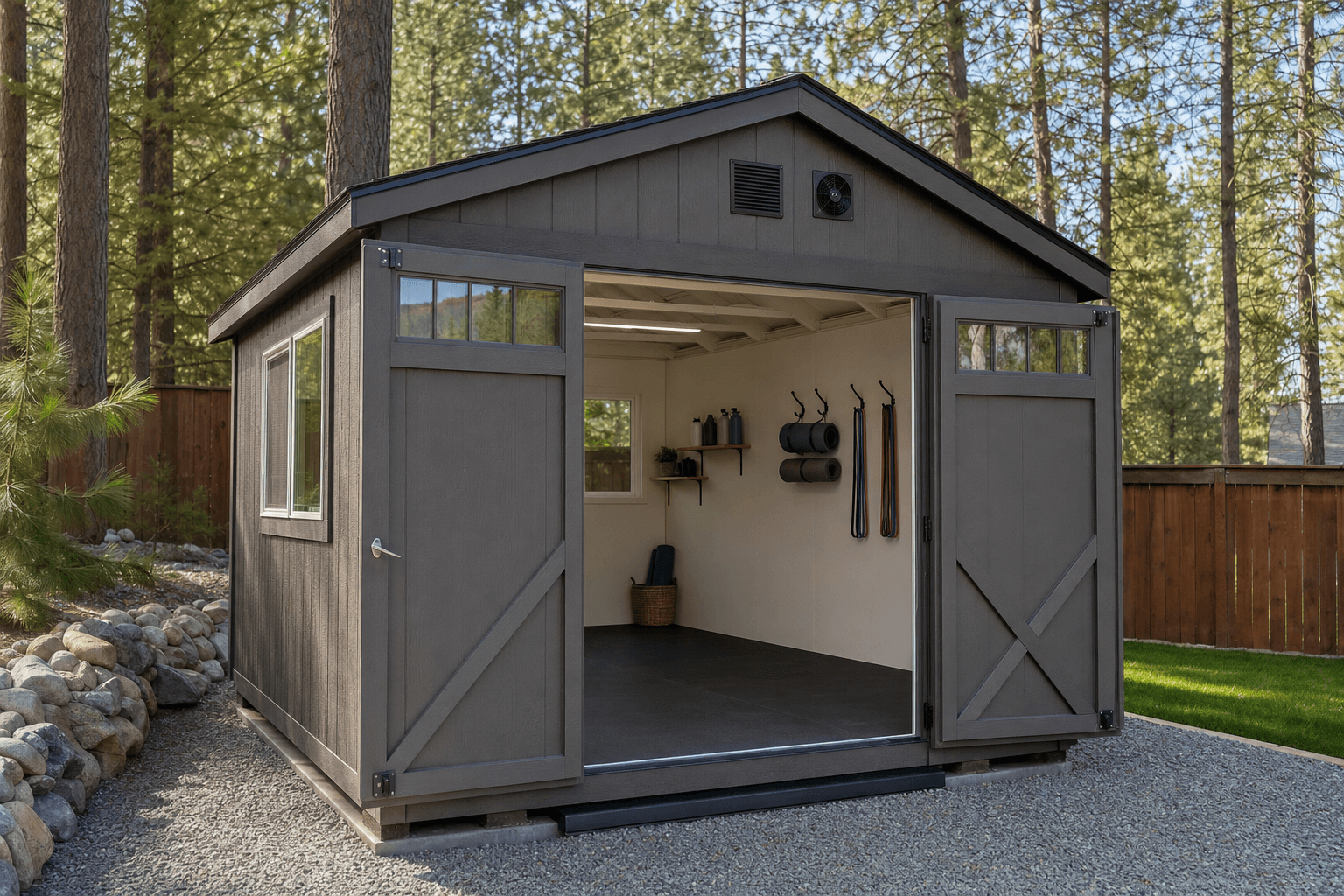
A custom shed built on-site on a Priest River lot, set on a drained gravel pad back in the trees near the river.
Most Priest River customers come to us because the gear has outgrown the garage and the property is built for the outdoors. With Priest Lake a short drive up Highway 57 and the rivers running right through town, a lot of households here are storing boats, kayaks, paddleboards, sleds, and fishing tackle on top of everyday tools and mowers. A boat and lake gear shed keeps the trailer, the kicker motor, life jackets, and tackle dry and organized between trips; a firewood shed keeps a long-winter's worth of cordwood split, stacked, and seasoned; and a detached garage or shop adds a real bay for a truck, a sled, or a project off the dirt.
Access on a rural river lot is the first thing we sort out. Driveways here are often gravel, sometimes long, and frequently soft during spring breakup — none of which matters when the building goes up where it stands. We bring the materials in and assemble on your pad, so the shed ends up back by the boat trailer, beside the woodpile, or out near the tree line rather than wherever a rig happened to fit. On riverfront parcels along the Priest and the Pend Oreille and lots that grade toward the water, we plan the footprint and pad around the slope and the high-water line so the building sits level and drains away from the structure.
With Priest Lake and the rivers close by, a dedicated building keeps the boat trailer, kayaks, paddleboards, sleds, and tackle dry and out of the weather between trips.
Open-front woodsheds keep a long Panhandle winter's worth of split cordwood up off the ground and under cover, sized to what a Priest River home actually burns.
Real bay space for a truck, a sled, or a tractor, plus [farm storage](/services/farm-storage) for feed, tools, and equipment on the wooded acreage out toward the lake and the county line.
Priest River is an incorporated city, but much of the surrounding land is unincorporated Bonner County, and the two handle accessory buildings the way most North Idaho jurisdictions do. Smaller utility sheds under a set square-footage threshold usually skip a building permit, while larger footprints, anything with power or plumbing, and any building you intend to occupy generally need one. Even when a permit is not required, setbacks still are — your building has to sit a minimum distance from property lines and the road right-of-way, and riverfront parcels along the Priest and Pend Oreille can carry extra floodplain and shoreline placement rules. We size and place the building with those lines in mind from the start.
Permits run through the City of Priest River or Bonner County Planning depending on whether your address sits inside city limits or out on county acreage, so it is worth confirming which applies before you finalize anything. Most rural Priest River lots are not in an HOA, but a few platted lake and riverfront subdivisions toward Priest Lake do carry architectural rules that go beyond county code — if yours is one, check your CC&Rs first. Our permits and placement guide walks through the county basics and setbacks, and the storage shed planning guide helps you lock in a size before you apply.
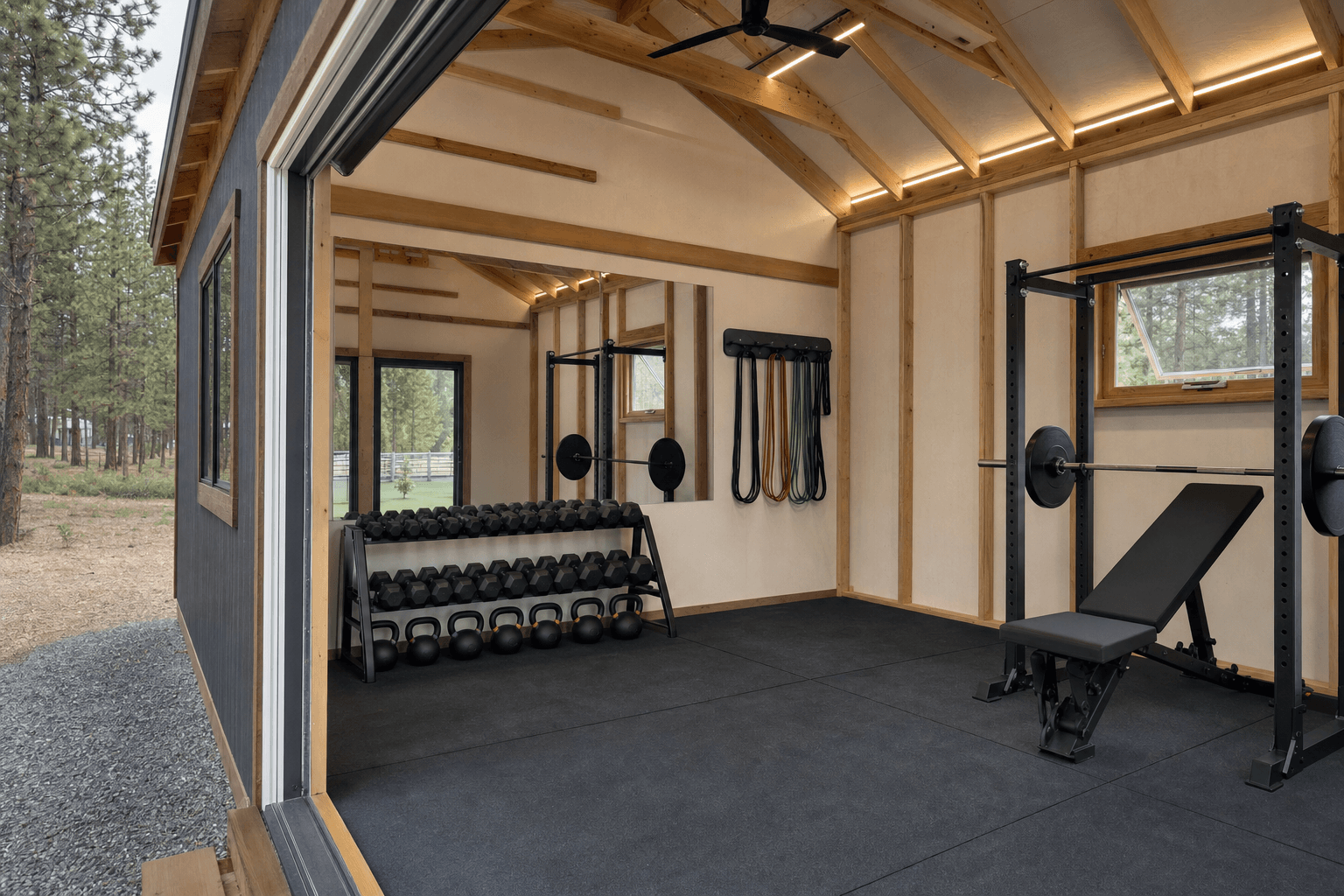
A detached garage built on-site on a Bonner County lot near Priest River, with a roof pitch and anchoring rated for heavy Panhandle snow load.
Western Bonner County gets a serious winter, and the Priest River drainage catches more of it than the towns down on Lake Pend Oreille — cold air settles in the river valley, snow piles up and lingers, and freeze-thaw works at the ground well into spring. A shed here has to carry a heavy seasonal snow load on the roof, sit on a foundation that handles months of freeze-thaw, and keep a door that still swings after storm after storm. We build to the roof pitch and anchoring the local load calls for, and we set most buildings on a compacted gravel pad that drains snowmelt and keeps the floor up off wet ground — a better fit for timbered, riverside, and shaded Priest River lots than a slab that traps water against the structure.
Site matters as much as weather here. Acreage rarely sits flat, lots that run toward the Priest or the Pend Oreille slope toward the water, and ground shaded by heavy timber stays damp and snow-covered long after open ground has dried out. We level and drain the pad so the building stays square and dry for the long haul. A 12x16 or 12x20 covers most Priest River storage, boat, and shop needs with room to grow, while a compact 10x12 tucks neatly beside the house or the woodpile.
Priest River, Bonner County, at the confluence of the Priest and Pend Oreille Rivers and the gateway to Priest Lake — permits run through the City of Priest River or Bonner County depending on where your lot sits.
Small utility sheds often skip a permit; larger footprints, occupied buildings, and anything with power or plumbing usually need one, and setbacks always apply. Riverfront lots can carry floodplain and shoreline rules.
Plan for a heavy Panhandle snow load on the roof in the river valley, months of freeze-thaw at the foundation, and a gravel pad that drains snowmelt away from the building.
We reach Priest River and the surrounding Bonner County acreage for the on-site build — long gravel drives, forest roads, soft spring ground, and riverfront lots are all handled in place. Plan a little lead time for the drive out toward the lake.
It depends on size, use, and whether your lot sits inside Priest River city limits or out on county acreage. Smaller utility sheds under the local square-footage threshold usually do not need a building permit, but larger buildings, anything you plan to occupy, and any shed with power or plumbing generally do. Setbacks from property lines and the road right-of-way apply either way, and riverfront parcels along the Priest and Pend Oreille can carry extra floodplain and shoreline rules. Permits run through the City of Priest River or Bonner County Planning depending on your address — we help you size and place the building to fit, and our permits guide covers the basics.
Yes, and it is one of the most common reasons people here build. Priest River is the gateway to Priest Lake, and a lot of households are juggling a boat and trailer, kayaks and paddleboards, snowmobiles, and a pile of tackle and life jackets on top of everyday tools. We build dedicated boat and gear sheds with the door width and depth a trailer needs and the wall space to hang and rack everything else, so it all stays dry and organized between trips to the lake and the river. We size the building to your trailer and your gear, then set it where loading and unloading is an easy pull-in.
Yes. Priest River is part of our western Bonner County service area, and we build there regularly — in-town lots, riverfront parcels, and wooded acreage out along Highway 2 and up the Highway 57 corridor toward Priest Lake. Because the build happens on-site rather than as a finished-shed delivery, long gravel drives, forest roads, and soft spring ground are things the crew works around in place. The drive out toward the lake does mean it helps to plan a little lead time, but the building still goes exactly where you want it on your property.
For most Priest River properties, a 12x16 or 12x20 hits the sweet spot — enough room for a boat or sled, river and fishing gear, firewood, mowers, and tools, with space for a workbench. Tighter in-town lots and simpler storage often do well with a compact 10x12 or 10x16, while working acreage out toward the lake frequently steps up to a detached garage or farm storage building. We size the building to your lot, your access, and what you actually need to store.
Yes — sloped, timbered, and riverfront ground is exactly where building on-site pays off. Lots along the Priest and Pend Oreille often grade toward the water, sit back in heavy timber, and can fall within the floodplain or shoreline setback. We plan the pad and footprint around the slope and the high-water line, building up a compacted, drained gravel base so the building sits level and sheds water away from the structure instead of letting it pool against the floor. We factor any floodplain or shoreline setbacks in from the start so the building is placed where it is allowed and stays dry.
The Priest River drainage catches a heavier, longer winter than the towns down on Lake Pend Oreille — cold air settles in the river valley, snow stacks up and lingers, and freeze-thaw works at the ground well into spring. That means the roof has to carry a heavy seasonal snow load, the foundation has to handle months of freeze-thaw, and the doors need to keep working after repeated storms. We build to the roof pitch and anchoring the local load calls for and set most buildings on a gravel pad that drains snowmelt instead of trapping it against the structure. If you want the building usable year-round as a shop or workspace, we can insulate and wire it to stay comfortable through the long cold months.
Tell us about your lot, your access, and what the building is for — boat and lake gear, firewood, a shop, or everyday storage. We will help you size and place it for western Bonner County weather and setbacks, then you can build and price it online.
Check local permit, setback, and placement rules before you build on site.
We build on site across North Idaho. Explore other cities and towns we serve.