Blanchard sits in the southwest corner of Bonner County, out on the prairie along Highway 41 between the Hoodoo Valley and the Bonner-Kootenai line. It is a rural community — hay ground, horse properties, small farms, and acreage homesteads more than tight subdivisions — and that is exactly the kind of place we are built to serve. North Idaho On Site Sheds assembles your building right on your land, whether that is a farm storage building out by the barn or a storage shed close to the house, instead of trucking in a finished structure that may never make it down a long gravel drive.
Building on-site is what makes a shed work on a Blanchard parcel. Properties here run from a few acres of pasture to bigger spreads up against the timber, often reached by a long driveway, a field gate, or a two-track that a delivery rig would never clear. When the crew builds in place, none of that is a problem — we work to your ground, your access, and the spot you actually want the building, out by the equipment, near the garden, or tucked up by the tree line.
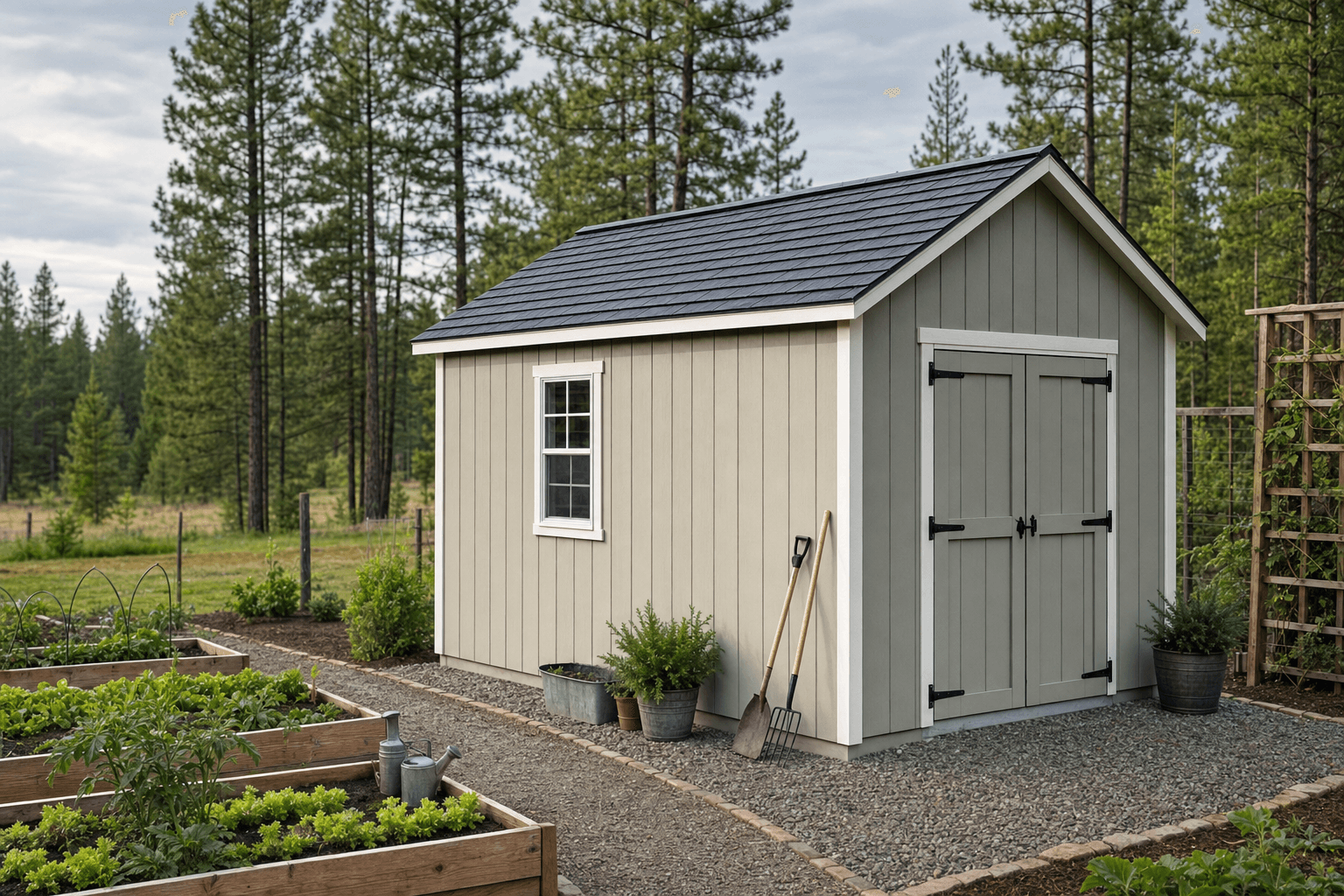
A custom shed built on-site on a Blanchard acreage, set on a gravel pad out where the property actually needed it.
Most Blanchard customers come to us because acreage generates stuff that needs a home: a tractor and implements, hay and feed, tools, fencing supplies, and the seasonal gear that piles up on a working property. We build all of it on your land. A farm storage building gives the tractor, mower, and implements a dry place to sit out of the weather; a detached garage or shop adds real bay space for trucks, the side-by-side, and a heated workbench; and a dedicated workshop turns a corner of the property into a place to actually get projects done.
Access is the first thing we sort out on a rural lot. A long driveway, a soft spot in the field, a tight turn past the barn, or a gate that a finished building could never fit through are all things we plan around — because the building is assembled where it stands. That means the shed ends up out by the pasture, beside the existing outbuildings, or wherever it earns its keep, not parked at the end of the drive because that is as far as a truck could back in. For properties up against the timber or down in the wetter draws, we plan the pad around the grade so the building sits level and drains away from the structure.
Hay, feed, fencing, and the tractor and implements all come out of the weather and into a dry building sized for a working acreage property.
Rural lots usually have room for real bay space — somewhere for the truck, the side-by-side, and a heated bench to keep equipment running through winter.
A covered, ventilated firewood shed keeps a season of split wood dry, and there is room for mowers, ATVs, and the gear that fills up a barn.
Out in Blanchard, accessory buildings run through Bonner County rather than a city, and the county handles them the way most rural North Idaho jurisdictions do: smaller utility sheds under a set square-footage threshold usually skip a building permit, while larger footprints, anything with power or plumbing, agricultural buildings over certain sizes, and any structure you intend to occupy generally need one. Even when a permit is not required, setbacks still are — your building has to sit a minimum distance from property lines, easements, and the road right-of-way, and that matters on long, narrow acreage parcels. We size and place the building with those setbacks in mind from the start.
Most Blanchard property is open acreage rather than HOA land, but if your parcel sits in a covenanted subdivision or a planned community near Spirit Lake, check your CC&Rs before you finalize anything, since architectural rules can go beyond county code. Our permits and placement guide walks through the county basics and setbacks, and the farm storage planning guide helps you lock in a size and layout before you apply.
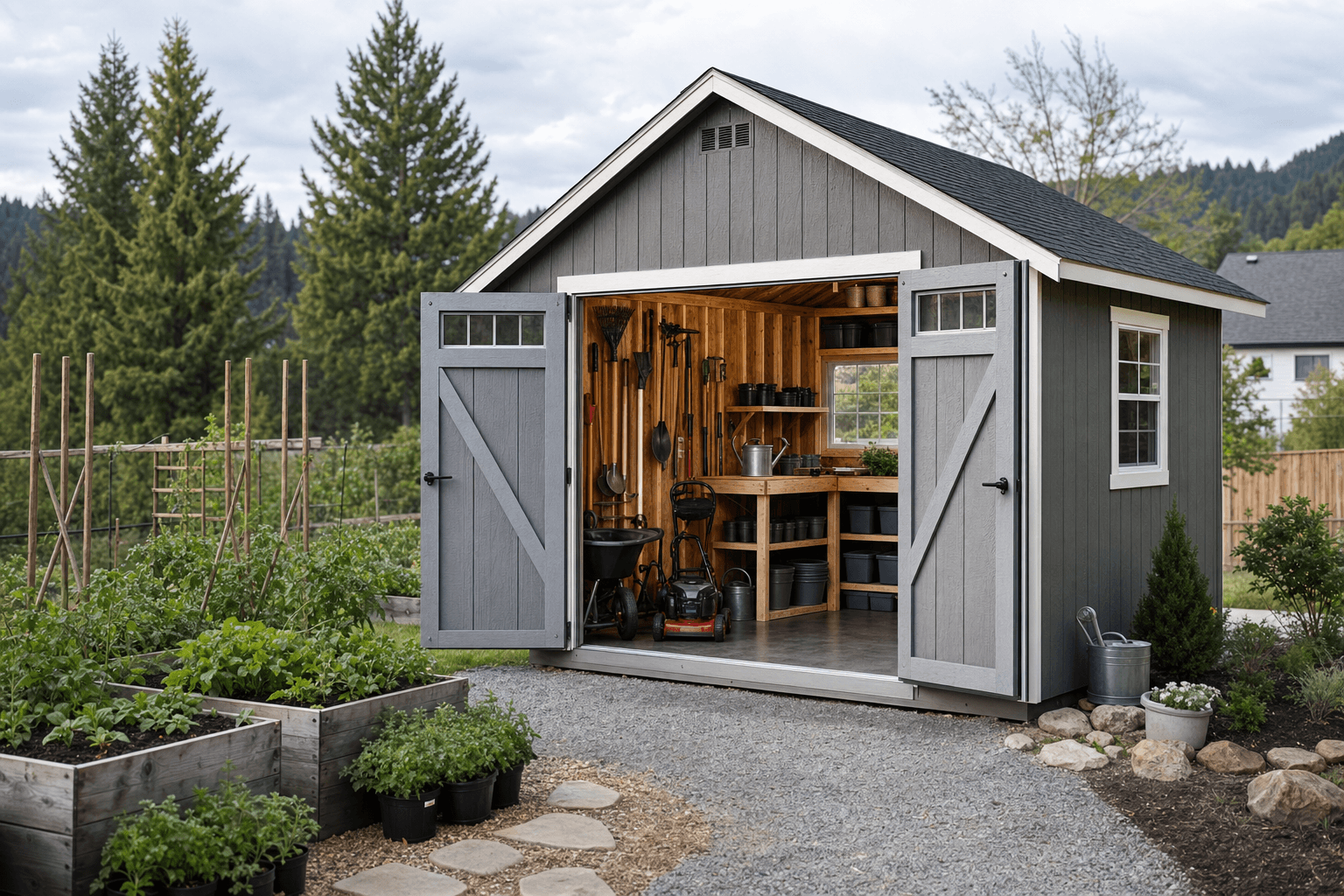
A farm storage building assembled on-site on a Bonner County acreage, with a roof pitch and anchoring rated for Panhandle snow load.
Blanchard winters are real Panhandle winters. The prairie sits at elevation and catches plenty of snow, so a building here has to carry a serious snow load on the roof, shrug off freeze-thaw at the foundation, and keep a door that still swings after a storm. We build to the roof pitch and anchoring the local load calls for, and we set most buildings on a compacted gravel pad that drains snowmelt and keeps the floor up off wet ground — a better fit for open, sometimes soft acreage than a slab that traps water against the structure.
Site matters as much as weather out here. Pasture can stay soggy into spring, parts of the prairie drain slowly, and lots up against the timber stay shaded and damp. We level and compact the pad so the building stays dry and square for the long haul, and we size it to the job. A 12x16 or 12x20 covers most storage and shop needs with room to grow, while a longer 12x24 gives equipment and feed real elbow room on a working farm.
Blanchard, in southwest Bonner County, near the Hoodoo Valley and the Spirit Lake area — as unincorporated acreage, permits and setbacks run through Bonner County Planning.
Small utility sheds often skip a permit; larger footprints, agricultural buildings over set sizes, occupied structures, and anything with power or plumbing usually need one, and setbacks always apply.
Plan for a serious Panhandle snow load on the roof, freeze-thaw at the foundation, and a gravel pad that drains snowmelt away from the building on open acreage.
We build on-site anywhere around Blanchard — long gravel drives, field gates, soft pasture, and parcels up against the timber are all handled in place, no crane needed.
It depends on size, use, and what you are building. Because Blanchard is unincorporated, permits run through Bonner County rather than a city. Smaller utility sheds under the county square-footage threshold usually do not need a building permit, but larger buildings, agricultural structures over set sizes, anything you plan to occupy, and any shed with power or plumbing generally do. Setbacks from property lines, easements, and the road right-of-way apply either way, which matters on long acreage parcels. We help you size and place the building to fit, and our permits guide covers the basics.
Yes — that is exactly where building on-site pays off. We do not truck in a finished shed, so a long gravel drive, a field gate, a tight turn past the barn, or soft pasture are not dealbreakers. The crew assembles the building where it stands, which means it ends up out by the equipment, near the garden, or up by the tree line — wherever you actually want it on the acreage — instead of parked wherever a delivery rig happened to fit. We plan access and the pad location with you before the build.
Yes. A lot of Blanchard work is farm storage — dry space for a tractor and implements, hay and feed, fencing, and the seasonal gear a working property collects. We build larger footprints with the door widths and clearances equipment needs, and we set them on a compacted gravel pad that handles weight and drains snowmelt. A 12x20 or 12x24 is a common starting point for farm storage, and we can scale up from there depending on what has to fit under one roof.
On acreage, the sheds run a little larger than they do on an in-town lot. A 12x16 or 12x20 covers most storage and shop needs with room to grow, and a longer 12x24 gives a tractor, mower, and feed real elbow room on a working farm. A 10x16 is a solid pick when you mainly need to get tools and seasonal gear out of the weather. We size the building to your property, your access, and what you actually need to store.
Most Blanchard property is open acreage with no HOA, so the main thing to plan around is Bonner County code and your property-line setbacks. That said, some covenanted subdivisions and planned communities near Spirit Lake do carry architectural rules that go beyond county requirements. If your parcel is in one, check your CC&Rs and get any required approval before you build. We match the building's style, roofline, and placement to whatever rules apply so it clears review and fits the property.
Blanchard sits up on the prairie and catches real Panhandle snow, so the roof has to carry a serious snow load, the foundation has to handle freeze-thaw, and the doors need to keep working after a storm. We build to the roof pitch and anchoring the local load calls for and set most buildings on a gravel pad that drains snowmelt instead of trapping it against the structure — which also helps on open acreage that can stay soft into spring. If you want the building usable year-round as a shop or workshop, we can insulate and wire it to stay comfortable through the cold months.
Tell us about your acreage, your access, and what the building is for. We will help you size and place it for Panhandle winters and Bonner County setbacks — then you can build and price it online.
Check local permit, setback, and placement rules before you build on site.
We build on site across North Idaho. Explore other cities and towns we serve.