Harrison is a small historic town on the southeast shore of Lake Coeur d'Alene, in Kootenai County, where the Coeur d'Alene River meets the lake. It was a steamboat and lumber port a century ago, and today it is a quiet waterfront community of full-time residents, summer cabins, and rural acreage spread up into the hills behind town. North Idaho On Site Sheds builds right here — boat-gear sheds, storage buildings, and finished backyard rooms assembled on your property instead of trucked in finished from somewhere else.
Building on-site is what makes a shed actually fit a Harrison lot. Waterfront parcels along the shoreline are narrow and slope toward the lake, the cabins tucked along the Trail of the Coeur d'Alenes sit on tight footprints, and the rural lots up Blue Lake Road and out the back roads are reached by gravel drives a delivery truck would rather not attempt. When the crew builds in place, none of that has to be solved by a driver backing a finished building down your driveway — we work to your grade, your access, and the exact spot you want the shed to sit.
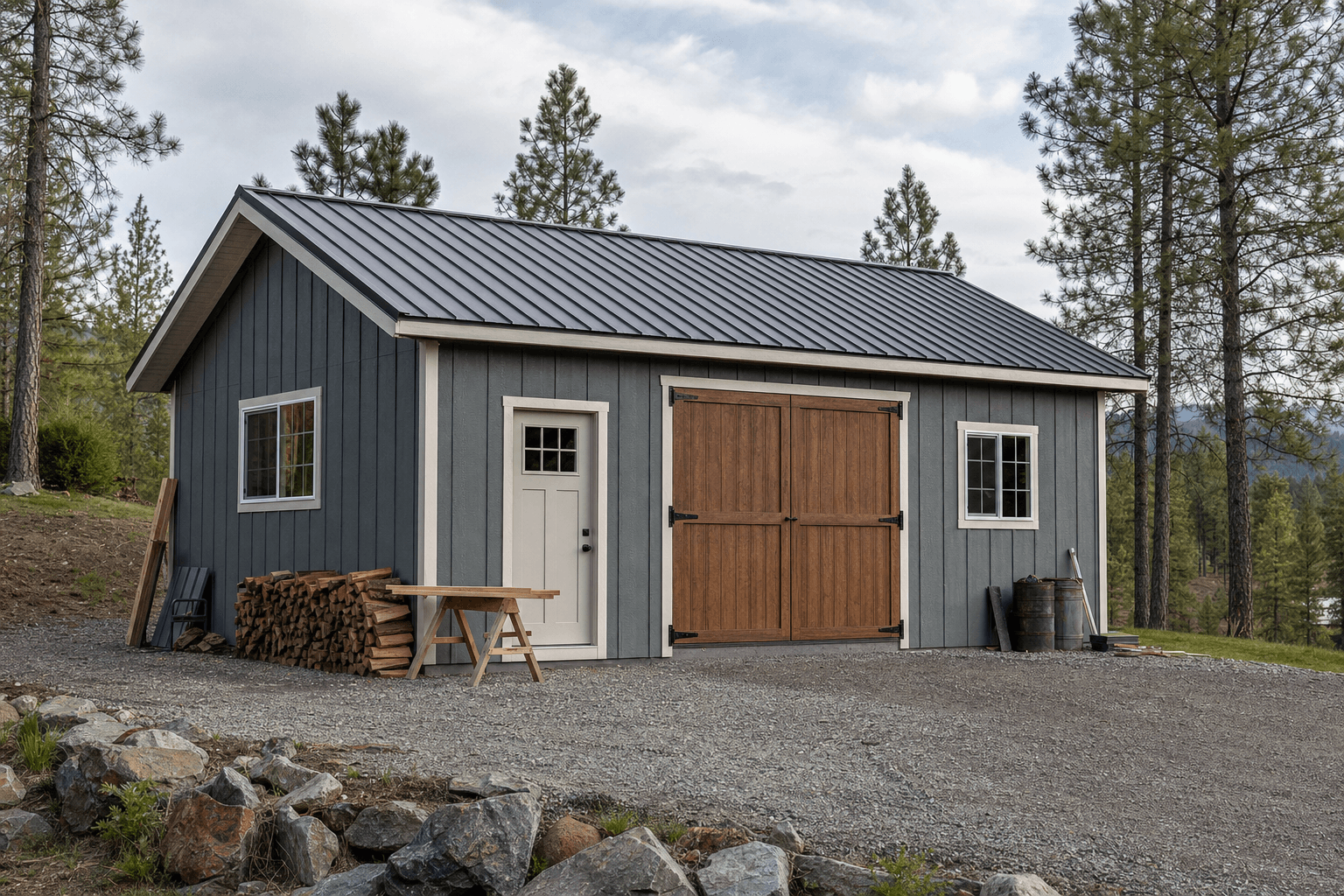
A custom shed built on-site on a Harrison lot near the lake, sized to the slope and the gravel drive it had to reach.
Most Harrison customers come to us for one of a few reasons: the lake gear has taken over the cabin and there is nowhere to dry life jackets and stash the paddleboards, the garage or carport is full and the snowblower lives outside, or they want a finished room in the yard that is not a storage shed at all. We build all of it on your lot. A boat-gear shed gives wakeboards, tow ropes, and wet gear a dry home off the cabin porch; a kayak and paddleboard shed keeps boats up off the ground on racks with a long clear bay; and a storage shed clears the seasonal overflow that piles up when a place sits empty half the year.
Access is the first thing we sort out. Harrison waterfront lots are reached down narrow shore roads, and the rural acreage behind town comes by gravel and dirt that washboards in summer and gets soft in spring. Building in place means the shed still ends up exactly where you want it — no crane, no widening a gate, no settling for the only flat spot a truck could reach. For shoreline parcels that slope toward the lake, we plan the footprint and the pad around the grade so the building sits level and drains away from the structure rather than toward the water.
Life jackets, paddleboards, kayaks, the boat cover, and wet gear come off the cabin porch and into a dry, racked building built for a waterfront lot.
When a place sits empty half the year, a locked, dry shed keeps the off-season overflow, lawn equipment, and winter gear organized and out of the weather.
A finished backyard room for a studio, reading nook, or quiet office above the water, insulated and wired so it works through a Panhandle winter.
Kootenai County handles accessory buildings the way most North Idaho jurisdictions do: smaller utility sheds under a set square-footage threshold usually skip a building permit, while larger footprints, anything with power or plumbing, and any building you intend to occupy generally need one. Even when a permit is not required, setbacks still are — your building has to sit a minimum distance from side and rear property lines. Harrison sits right on the lake and at the river mouth, so shoreline and floodplain lots can carry extra placement rules tied to the high-water line and the Coeur d'Alene River corridor. We size and place the building with those setbacks in mind from the start.
If your parcel is in a covenanted community or a private waterfront association, architectural rules can go beyond the county code, dictating siding, roof color, and where an outbuilding may sit. Check your CC&Rs before you finalize anything. Our permits and placement guide walks through the county basics and setbacks, and the boat-gear shed planning guide helps you lock in a size and a rack layout before you apply.
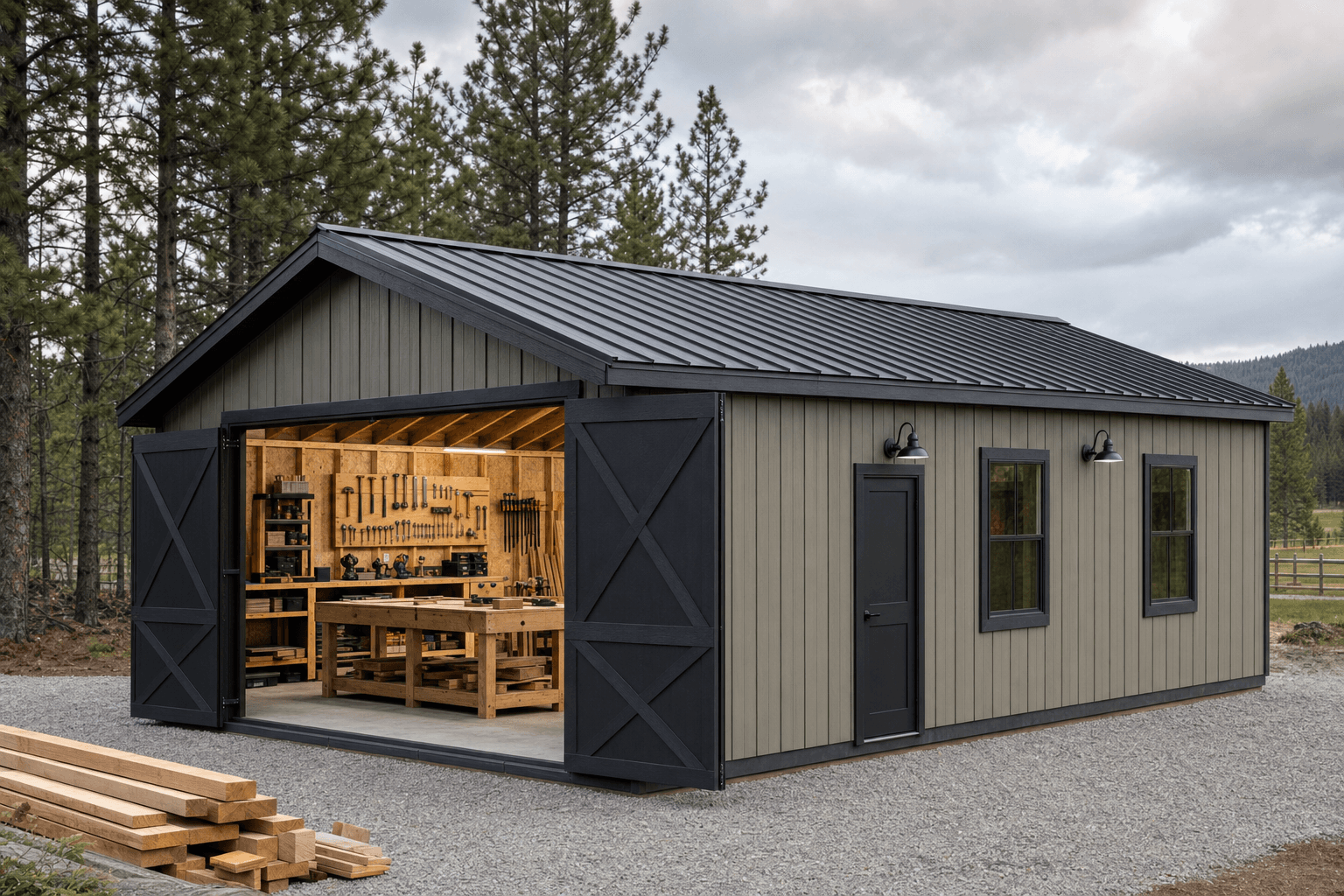
A storage shed built on-site on a rural lot above Harrison, with a roof pitch and anchoring rated for local snow load.
Harrison winters are real Panhandle winters. The town sits at the wet south end of the lake, so a shed here has to carry a meaningful snow load on the roof, shrug off freeze-thaw at the foundation, and keep a door that still swings after a storm drops a foot overnight on a cabin nobody is around to shovel out. We build to the roof pitch and anchoring the local load calls for, and we set most buildings on a compacted gravel pad that drains snowmelt and keeps the floor up off wet ground — a better fit for sloped, shoreline, and tree-shaded Harrison lots than a slab that traps water against the structure.
Site matters as much as weather. Waterfront lots slope toward the lake, lakebottom and river-flat parcels stay damp and can sit in spring high water, and shaded lots up in the timber hold moisture well into spring. We level and drain the pad so the building stays dry and square for the long haul. A 10x16 or 12x16 covers most Harrison lake-gear and storage needs with room to grow, while a compact 8x12 tucks neatly beside a cabin on a tight shoreline lot.
Harrison, Kootenai County, on the southeast shore of Lake Coeur d'Alene at the mouth of the Coeur d'Alene River — permits and setbacks run through Kootenai County, with extra rules near the shoreline and river.
Small utility sheds often skip a permit; larger footprints, occupied buildings, and anything with power or plumbing usually need one, and property-line and shoreline setbacks always apply.
Plan for a meaningful winter snow load on the roof, freeze-thaw at the foundation, and a gravel pad that drains snowmelt away from the building — important on cabins left unattended in winter.
We build on-site anywhere around Harrison — narrow shore roads, gravel rural drives, and sloped waterfront lots are all handled in place, no crane or finished-building delivery needed.
It depends on size, use, and where your lot sits. Smaller utility sheds under the local square-footage threshold usually do not need a building permit, but larger buildings, anything you plan to occupy, and any shed with power or plumbing generally do. Setbacks from property lines apply either way. Because Harrison sits on the lake at the river mouth, shoreline and floodplain parcels can carry extra placement rules tied to the high-water line. Permits and setbacks run through Kootenai County — we help you size and place the building to fit, and our permits guide covers the basics.
Yes. Harrison and the southeast shore of Lake Coeur d'Alene are part of our regular Kootenai County service area, and because we build on-site rather than delivering a finished shed, the drive out and the road in are not the obstacle they would be for a building trucked in whole. Narrow shore roads, gravel rural drives up Blue Lake Road and the back roads, and tight waterfront lots are all things the crew works around in place. The building goes exactly where you want it, not just as far as a truck could back down your driveway.
For most Harrison lots, a 10x16 or 12x16 hits the sweet spot — enough room for lake gear, kayaks and paddleboards on racks, lawn equipment, and the off-season overflow that fills up a cabin, with space to grow. Tight shoreline lots beside a cabin often do well with a compact 8x12 or 10x12, while rural acreage behind town frequently steps up to a larger building or a detached garage. We size the shed to your lot, your access, and what you actually need to store.
Yes — waterfront lots are exactly where building on-site pays off. Harrison shoreline parcels are narrow and slope toward the lake, so we level and drain a compacted gravel pad and plan the footprint so the building sits square and sheds water away from the structure rather than toward the lake. Inside, we can lay out wall and ceiling racks for kayaks, paddleboards, and life jackets with a long clear bay for the boat. Keep in mind that lots near the high-water line or in the river floodplain can carry extra setback rules, which we factor in from the start.
Yes, and that is one of the most common reasons people here build one. A locked, dry shed keeps boat gear, lawn equipment, and seasonal items safe and organized while a place sits empty. Because nobody is around to shovel a Harrison cabin out mid-winter, we build to the roof pitch and anchoring the local snow load calls for and set the building on a gravel pad that drains snowmelt instead of trapping it against the structure, so the shed and its doors are still in good shape when you come back in spring.
Harrison gets real Panhandle winter weather at the wet end of the lake, so the roof has to carry a meaningful snow load, the foundation has to handle freeze-thaw, and the doors need to keep working after a heavy storm. We build to the roof pitch and anchoring the local load calls for and set most buildings on a gravel pad that drains snowmelt instead of holding it against the structure. If you want the shed usable year-round as a studio or office above the water, we can insulate and wire it to stay comfortable through the cold months.
Tell us about your lot, your access, and what the building is for. We will help you size and place it for Lake Coeur d'Alene shorelines, rural Kootenai County access, and Panhandle winters — then you can build and price it online.
Check local permit, setback, and placement rules before you build on site.
We build on site across North Idaho. Explore other cities and towns we serve.