Plummer sits at the top of the Trail of the Coeur d'Alenes in Benewah County, on the Coeur d'Alene Reservation south of Lake Coeur d'Alene. It is a small town surrounded by rolling Palouse-edge farm ground, timbered draws, and gravel county roads — the kind of place where most properties run to acreage and a building has to earn its keep. North Idaho On Site Sheds builds right here on your land, putting up farm storage and workshops on-site instead of trucking in a finished shed that was never sized for your ground.
Building in place is what makes a shed work on a Plummer parcel. Driveways out here are long and graveled, the ground rolls more often than it sits flat, and the spot you actually want a building — back by the shop, out near the field gate, or beside the house — is usually nowhere a delivery truck wants to back a trailer. When the crew assembles on your lot, the building lands exactly where it is useful, set to your grade and your access rather than to whatever a driver could reach.
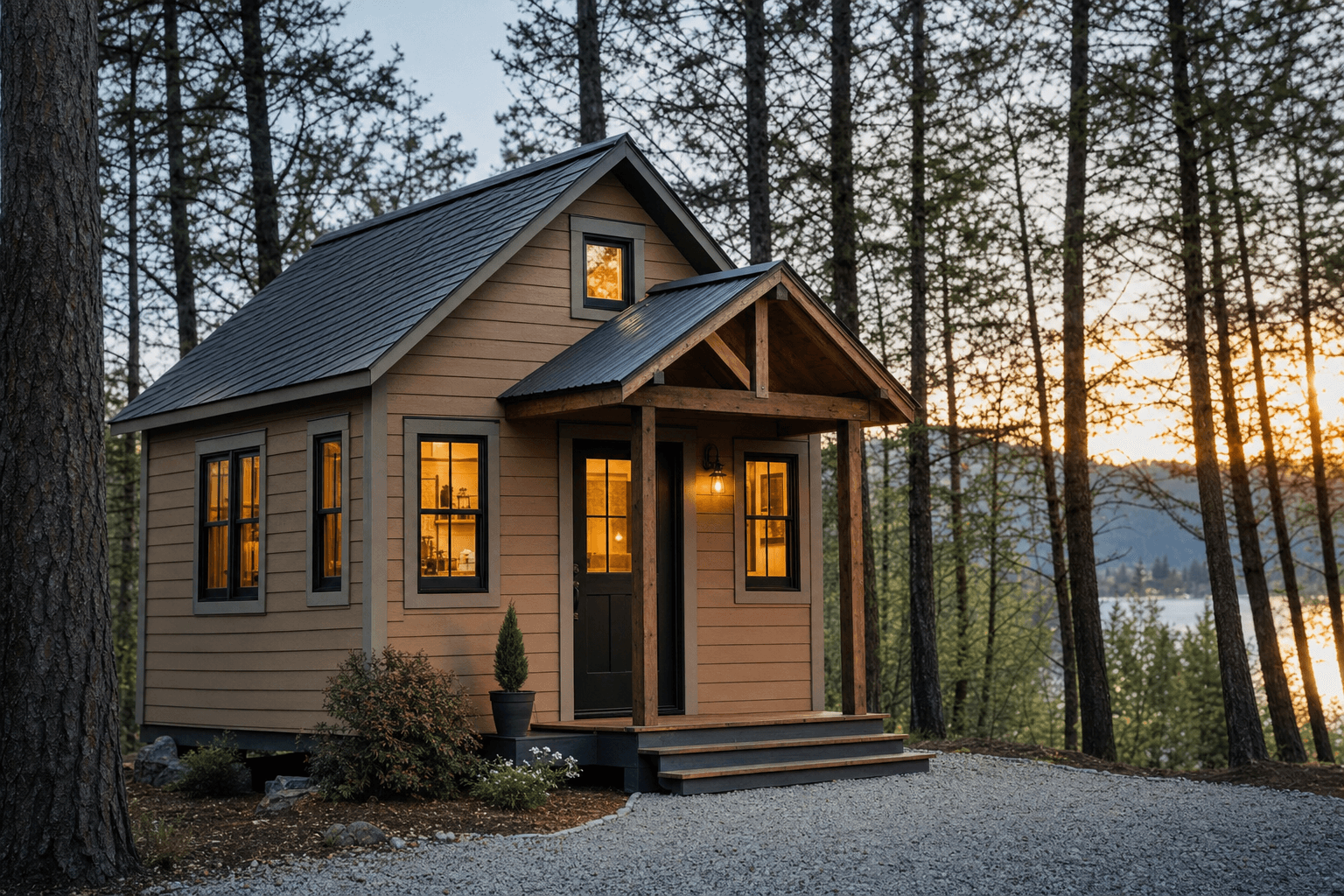
A custom shed built on-site on a Plummer acreage, set level on a gravel pad above the rolling Palouse-edge ground.
Most Plummer-area customers come to us for working buildings. A place to get the tractor, the baler, and the hay out of the weather; a heated workshop for welding and equipment repair through the winter; a real detached garage for the trucks and the side-by-side; or a straightforward storage shed to clear the seasonal overflow off the porch and out of the old barn. We build all of it on your property, sized to the acreage and the way you actually move equipment around the place.
Access on a working property is its own puzzle, and that is exactly where on-site building pays. Gravel drives soften in spring, field approaches turn to mud after a thaw, and the best spot for a hay shed is often the worst spot to land a finished building off a trailer. Because the crew brings materials in and assembles in place, the building ends up where the work happens — near the corral, alongside the shop, or at the edge of the field — instead of parked up by the road because that is as far as a delivery could go. On bigger parcels we plan the footprint and the pad so equipment can pull straight in and the building drains away from the doors.
Tractors, implements, hay, fencing, and feed come out of the weather and out of a leaky old barn into a dry building sized for the gear you run.
Acreage out here usually has room for a real shop bay — somewhere to weld, fix equipment, and park the truck and side-by-side, insulated for winter work.
A covered firewood shed keeps a season's split wood dry, and a plain storage shed clears the porch, the totes, and the overflow off the property.
Benewah County handles accessory and farm buildings the way most rural North Idaho jurisdictions do: smaller utility sheds under a set square-footage threshold usually skip a building permit, and many genuine agricultural buildings on farm-zoned ground fall under an ag exemption — but larger footprints, anything with power or plumbing, and any building you intend to occupy generally still need a permit. Even where a permit is not required, setbacks from property lines apply, and they matter on acreage where a field corner or an easement is closer than it looks. Permitting for the Plummer area runs through Benewah County out of St. Maries, so it is worth a call to confirm before you finalize a footprint.
Two extra wrinkles are worth knowing here. First, Plummer sits on the Coeur d'Alene Reservation, and trust or tribal-jurisdiction land can carry its own review on top of — or instead of — county process, so check who has jurisdiction over your specific parcel. Second, even rural properties sometimes sit in a road district or a small subdivision with its own rules. Our permits and placement guide covers the county basics and setbacks, and the farm storage planning guide helps you settle on a size and layout before you apply.
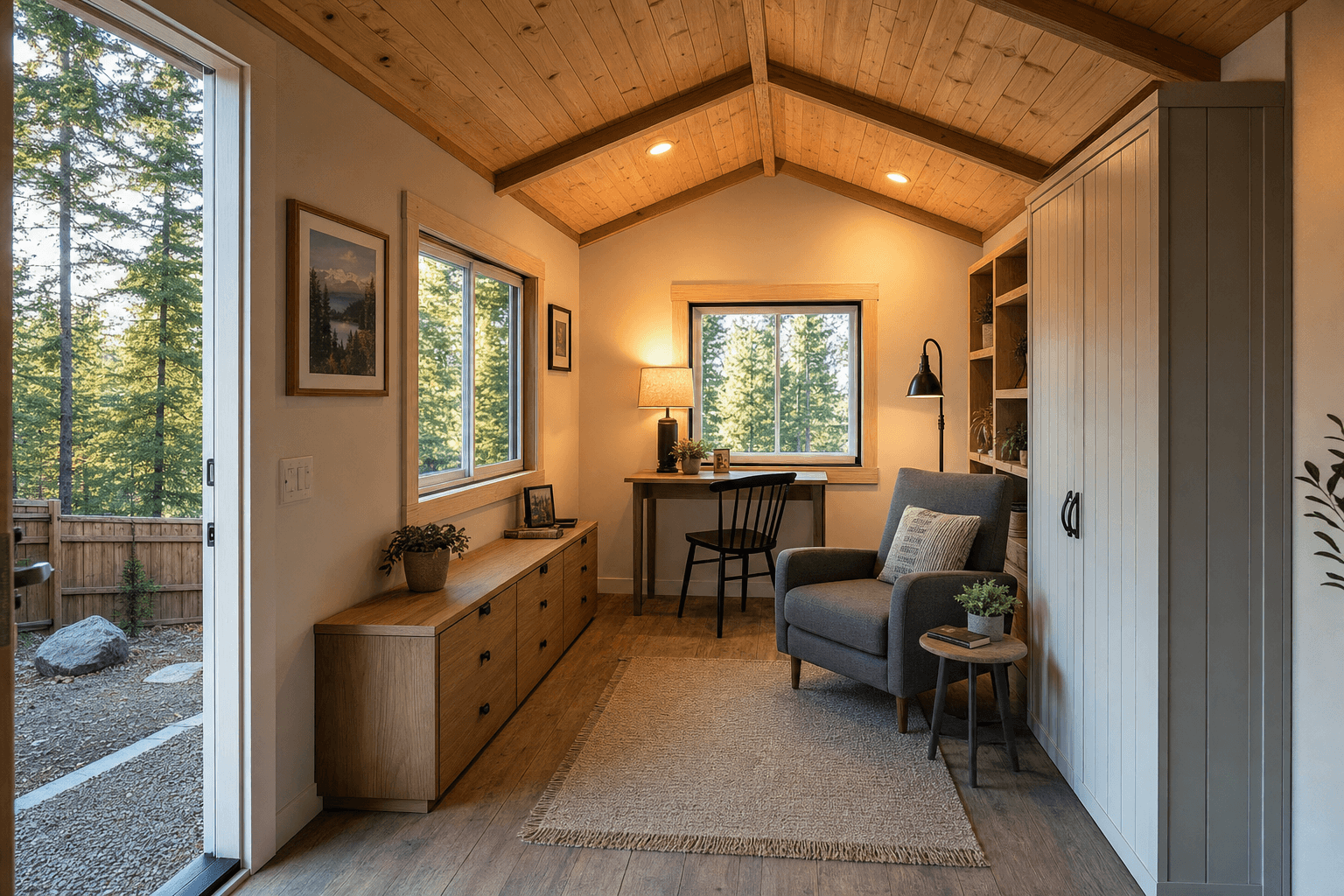
A workshop and garage built on-site on a Benewah County acreage, with a roof pitch and anchoring rated for local snow load.
Plummer sits up on the Palouse edge at elevation, so winter here means real snow on the roof, hard freeze-thaw at the foundation, and wind coming across open ground that a building has to stand up to. We frame to the roof pitch and anchoring the local snow load calls for, and we set most buildings on a compacted gravel pad that drains snowmelt and keeps the floor up off ground that stays wet through breakup. On a working property that gravel pad also stands up to equipment traffic far better than a thin slab that cracks and traps water against the structure.
The ground itself drives a lot of the plan. Plummer-area parcels roll, field edges hold runoff, and timbered draws stay shaded and damp well into spring. We level and drain the pad so the building sits square and the doors keep swinging year after year. A 12x16 handles a solid storage or shop footprint, a 12x20 or 12x24 gives equipment and hay real room, and a compact 10x16 covers firewood and general storage without taking over the yard.
Plummer, Benewah County, at the top of the Trail of the Coeur d'Alenes on the Coeur d'Alene Reservation — county permitting runs through St. Maries, and reservation trust land can carry its own review.
Small utility sheds and many genuine ag buildings often skip a permit; larger footprints, occupied buildings, and anything with power or plumbing usually need one, and setbacks always apply.
Plan for a real winter snow load on the roof, freeze-thaw at the foundation, open-ground wind, and a gravel pad that drains snowmelt away from the doors.
We build on-site across the Plummer area, including longer rural drives — gravel approaches, field gates, and rolling acreage are all handled in place, no finished-shed delivery needed.
It depends on size, use, and where your parcel sits. Smaller utility sheds under the local square-footage threshold usually do not need a building permit, and many genuine agricultural buildings on farm-zoned ground fall under an ag exemption — but larger footprints, anything you plan to occupy, and any building with power or plumbing generally do need one. Setbacks from property lines apply either way. Benewah County handles permitting for the Plummer area out of St. Maries, so it is worth a quick call to confirm before you finalize a footprint. We help you size and place the building to fit, and our permits guide covers the basics.
It can. Plummer sits within the Coeur d'Alene Reservation, and trust or tribal-jurisdiction land can carry its own review process on top of — or in place of — Benewah County permitting. Fee land inside the reservation generally follows county process, while trust land may not. The practical step is to confirm who has jurisdiction over your specific parcel before you commit to a footprint. It does not change how we build on your lot; it just affects which approval you need, and we plan placement and setbacks around whatever applies.
Yes — working farm buildings are a big part of what we do around Plummer. Hay sheds, equipment and implement storage, feed and tack space, and detached shops all get built on-site, sized to the gear you run and set where it actually fits your operation. Because we assemble in place rather than delivering a finished building, we can put the shed near the corral, alongside the existing shop, or at the edge of a field — wherever the work happens — instead of wherever a trailer could reach. On bigger parcels we plan the pad so equipment pulls straight in and the building drains away from the doors.
Yes. Plummer is a longer haul than the towns up around Coeur d'Alene, but it is well within our service area, and because we build on-site the distance is mostly about getting materials and the crew to you rather than threading a finished shed down a rural road. Long gravel drives, field approaches, and rolling acreage are exactly the conditions on-site building is meant for. We confirm access ahead of time so the build day goes smoothly even on a soft spring drive.
It depends on the job. For general and firewood storage, a 10x16 or 12x16 clears the porch and the overflow without taking over the yard. For equipment, hay, and shop use, most Plummer-area properties step up to a 12x20 or 12x24, which gives a tractor or side-by-side real room and leaves space for a workbench. Acreage with serious equipment often goes larger still into a detached shop or garage. We size the building to your ground, your access, and what you need to keep out of the weather.
Plummer sits up at elevation on the Palouse edge, so the roof has to carry a real snow load, the foundation has to handle freeze-thaw, and the building has to stand up to wind across open ground. We frame to the roof pitch and anchoring the local load calls for and set most buildings on a compacted gravel pad that drains snowmelt instead of trapping it against the structure — which also holds up to equipment traffic far better than a thin slab. If you want the building usable year-round as a shop, we can insulate and wire it to stay workable through the cold months.
Tell us about your acreage, your access, and what the building is for. We will help you size and place it for Plummer weather and Benewah County setbacks — then you can build and price it online.
Check local permit, setback, and placement rules before you build on site.
We build on site across North Idaho. Explore other cities and towns we serve.