Sagle sits just south of Sandpoint, strung along US-95 where the highway leaves the Long Bridge and runs down the west side of Lake Pend Oreille. It is a spread-out, unincorporated stretch of Bonner County — acreage and timber lots along the highway, lake-access roads dropping east toward Bottle Bay, Garfield Bay, and Talache, and quiet parcels back in the trees off Sagle and Dufort roads. We build right where you live, assembling storage buildings and boat and gear sheds on your property instead of trucking in a finished shed that was never sized for your ground.
Building on-site is what makes a shed fit a Sagle place. Lots here run large and often unpaved, the road to a lake parcel can be a steep, winding gravel pull a finished-shed trailer cannot manage, and the spot you want is frequently a back corner of the acreage or a bench above the water rather than the first flat patch by the highway. When the crew builds in place, the grade, the trees, and the soft spring ground stop being delivery problems — we work to your site and set the building exactly where it makes sense.
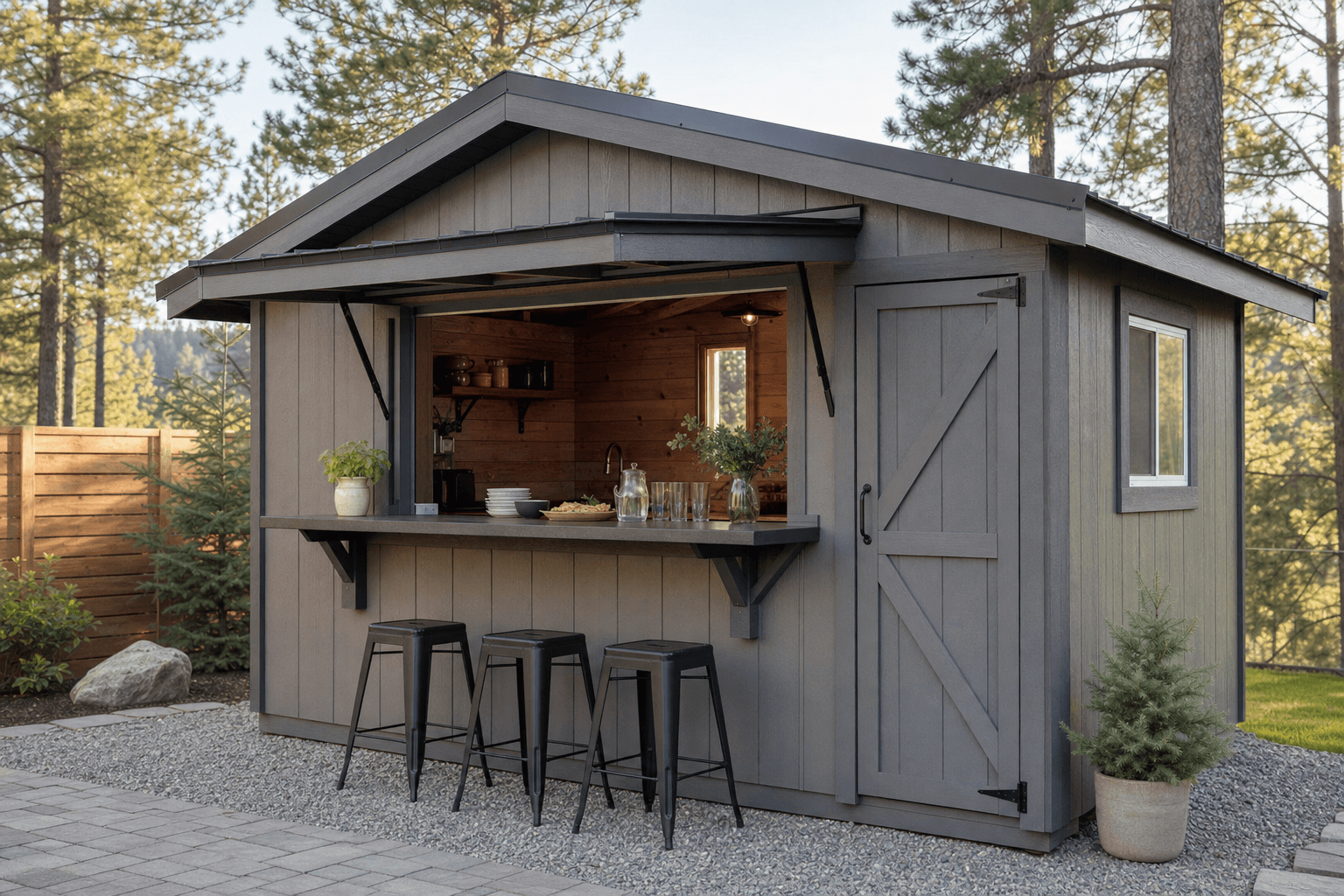
A custom shed built on-site on a Sagle acreage, set on a drained gravel pad back in the trees off the highway.
Most Sagle customers come to us with a North Idaho list: the boat, the trailer, and the lake gear need to come off the driveway before winter; the equipment and seasonal toys have outgrown whatever cover the property had; the firewood that gets the place through a Panhandle winter needs a dry, stacked home; or a new acreage off the highway has nothing but a driveway and a building site waiting. We build all of it on your lot. A boat and gear shed keeps the boat, the kayaks, the wakeboards, and the dock hardware dry between trips down to the lake; a storage shed gets mowers, tools, and overflow out of the weather; farm storage covers hay, feed, and implements on a working parcel; and a dry firewood shed keeps a winter's worth of cordwood split and seasoned.
Access is the first thing we sort out, and around Sagle that usually means grade and the gravel road rather than a city alley. The lake-access roads down to Bottle Bay, Garfield Bay, and Talache are steep and tight, plenty of building sites sit a few hundred feet off the highway behind a gate, and shaded parcels in the timber stay soft into spring — all reasons building in place beats delivery. The crew brings materials in and assembles the shed where you want it, whether that is beside the cabin, on a bench above the water, or tucked near the tree line out of the wind. On lakeside and low ground, we plan the pad and footprint so the building stays up out of seasonal wet.
The boat, kayaks, paddleboards, wakeboards, and dock hardware that go down to Bottle Bay all winter dry and out of the weather instead of cluttering the driveway and the lake cabin.
Mowers, ATVs, snowmobiles, and the gear that piles up on rural acreage come off the tarp and into a dry, organized building sized for a Sagle lot rather than a city yard.
A vented woodshed keeps a Panhandle winter's worth of cordwood split, stacked, and seasoned by the door, while a detached shop adds bay space for the truck, the tractor, and a heated workbench.
Sagle is unincorporated, so accessory buildings here run through Bonner County rather than the City of Sandpoint. The county handles outbuildings the way most rural North Idaho jurisdictions do: smaller utility sheds under a set square-footage threshold usually skip a building permit, while larger footprints, anything with power or plumbing, and any building you intend to occupy generally need one through Bonner County planning and building. Agricultural buildings on a genuine farm parcel can fall under different rules again. Even when a permit is not required, setbacks still are — the building has to sit a minimum distance from property lines and roads, and lakeshore parcels near Lake Pend Oreille can carry extra shoreline, septic, and placement conditions you will want to confirm before you order.
Most of Sagle is open rural and timber ground rather than covenant-controlled subdivisions, but several of the lake-access and platted communities off the bays do carry CC&Rs. If your place sits in one, architectural rules can go beyond county code and dictate siding, roof color, or where an outbuilding may sit, so check them first. Our permits and placement guide walks through the county basics and setbacks, the storage shed planning guide helps you lock in a size before you apply, and the boat and gear shed planning guide covers laying out a building around a trailer and lake gear.
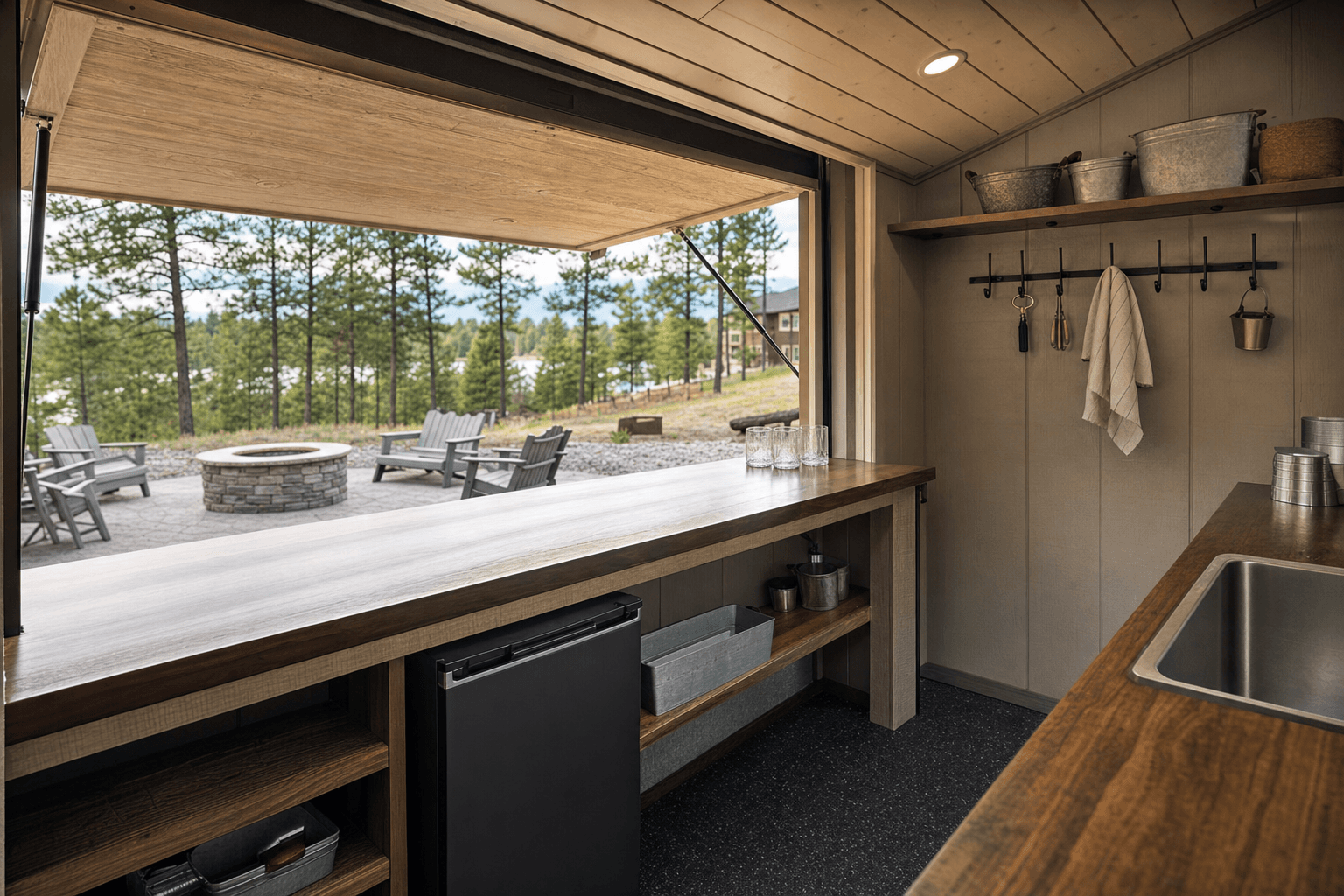
A detached garage built on-site on a Bonner County acreage near Sagle, with a roof pitch and anchoring rated for Panhandle snow load.
Winters along the west side of Lake Pend Oreille are long and snowy, and a shed in Sagle has to be built for it. Snow stacks up and lingers in the timber and on the shaded slopes above the lake, so the roof has to carry a heavy Panhandle snow load, the foundation has to handle months of freeze-thaw, and the doors have to keep swinging after storm after storm and a plow berm. We build to the roof pitch and anchoring the local load calls for, and we set most buildings on a compacted gravel pad that drains snowmelt and keeps the floor up off wet ground — a better fit for sloped, tree-shaded, often soggy-in-spring Sagle ground than a slab that traps water against the structure.
Site matters as much as weather out here. Lots drop and roll toward the water, timber holds snow and shade well into spring, and lakeside benches and low draws collect runoff when the snow lets go. We level and drain the pad so the building stays square and dry for the long haul. A 12x16 or 12x20 covers most Sagle storage, boat, and shop needs with room to spare, while a 10x16 handles general acreage and lake-gear storage without crowding a wooded lot.
Sagle, unincorporated Bonner County, just south of Sandpoint on US-95 along the west shore of Lake Pend Oreille — permits run through Bonner County planning and building.
Small utility sheds often skip a permit; larger footprints, occupied buildings, and anything with power or plumbing usually need one. Ag buildings can differ, setbacks always apply, and lakeshore lots carry extra conditions.
Plan for a heavy Panhandle winter snow load on the roof, months of freeze-thaw at the foundation, and a gravel pad that drains snowmelt away from the building on sloped, shaded ground.
We build on-site across Sagle — steep lake-access gravel roads down to Bottle Bay and Garfield Bay, gated drives, and build sites well back in the timber are all handled in place, no crane needed.
It depends on size, use, and where your property sits. Sagle is unincorporated, so permits run through Bonner County rather than the City of Sandpoint. Smaller utility sheds under the local square-footage threshold usually do not need a building permit, but larger buildings, anything you plan to occupy, and any shed with power or plumbing generally do. Genuine agricultural buildings can fall under different rules. Setbacks from property lines and roads apply either way, and lakeshore parcels near Lake Pend Oreille can carry extra shoreline, septic, and placement conditions. We help you size and place the building to fit, and our permits guide covers the basics.
Yes. Sagle is right in our core service area, a short run south of Sandpoint, and we build across the whole community and the surrounding part of Bonner County — from acreage and timber lots along US-95 to lake-access parcels off Bottle Bay, Garfield Bay, and Talache, and quiet ground back off Sagle and Dufort roads. Because we build on-site rather than delivering a finished shed, steep gravel lake roads, gated drives, soft timber ground, and a build site a few hundred feet off the highway are all things the crew works around in place. The building goes exactly where you want it on the property, not just as far as a truck could reach.
Yes — with Lake Pend Oreille right out the door and the bays just down the hill, boat and gear storage is one of the most common things we build around Sagle. We size the building around your trailer and tow vehicle, with the door width and depth to back a boat in clean and room along the walls for kayaks, paddleboards, wakeboards, life jackets, and dock hardware. A 12x20 or longer suits most trailered boats, while a 10x16 handles smaller craft and the pile of lake gear that otherwise lives in the cabin. We build it on-site on a drained gravel pad so the floor stays dry through a snowy winter.
On Sagle acreage, a 12x16 or 12x20 tends to hit the sweet spot — enough room for a boat, equipment, lake gear, firewood, and the seasonal overflow that rural lake-country property generates, with space to grow. A 10x16 covers general storage and lake gear without crowding a wooded lot, while properties with a boat, a tractor, and a real project list often step up to a longer building or a detached garage and shop. We size the building to your lot, your access, and what you actually need to store.
Yes — sloped, tree-shaded ground above Lake Pend Oreille is exactly where building on-site pays off. A finished-shed trailer often cannot make a steep, winding lake-access road or reach a bench tucked back in the timber, but the crew brings materials in and assembles the building where you want it. We level and drain a compacted gravel pad so the building sits square and sheds water on ground that drops toward the water and holds snowmelt in the spring. If the spot sits near the shoreline, we factor any Bonner County shoreline setbacks in from the start.
Sagle sits in snowy Panhandle country along the west side of Lake Pend Oreille, where snow stacks up and lingers in the timber and on the shaded slopes above the lake. That means the roof has to carry a heavy snow load, the foundation has to handle months of freeze-thaw, and the doors need to keep working after repeated storms and a plow berm. We build to the roof pitch and anchoring the local load calls for and set most buildings on a gravel pad that drains snowmelt instead of trapping it against the structure. If you want the shed usable year-round as a shop or workspace, we can insulate and wire it to stay comfortable through a long winter.
Tell us about your acreage, your lake access, and what the building is for. We will help you size and place it for Panhandle snow load and Bonner County setbacks — then you can build and price it online.
Check local permit, setback, and placement rules before you build on site.
We build on site across North Idaho. Explore other cities and towns we serve.