Pet Shelters Built On-Site in North Idaho
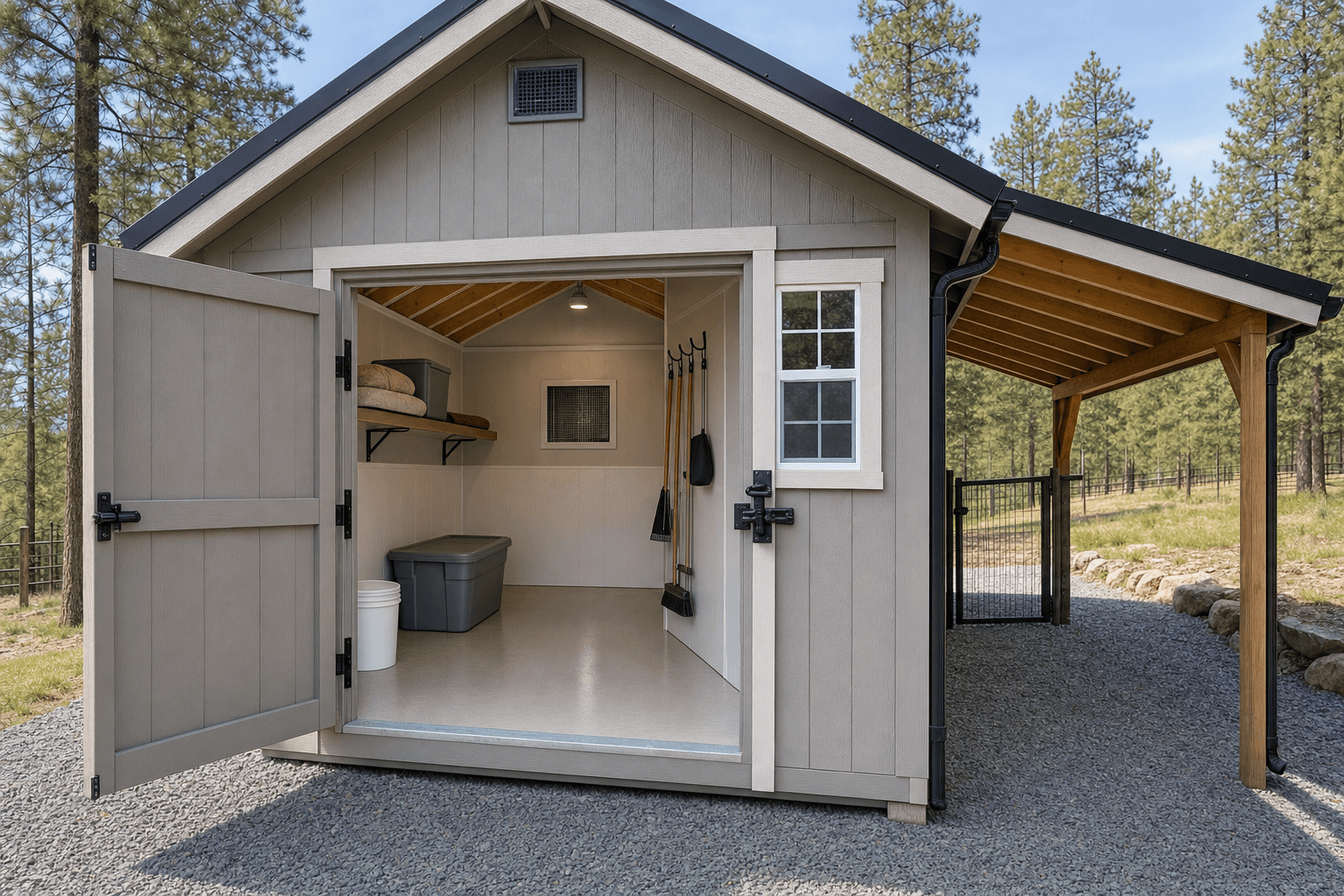
A pet shelter shed only works if the structure matches the animal, the property, and the weather instead of treating every animal housing need as the same problem. We build pet shelters on-site so insulation, airflow, easy-clean surfaces, predator-resistant details, and the actual footprint can be matched to your animals and your North Idaho lot instead of forcing the project into a prefab box that was never designed for real year-round care.
Pet Shelters Built for North Idaho Weather
A pet shelter shed in North Idaho has to do more than provide a roof. It has to keep animals drier, safer, and easier to care for through winter cold, shoulder-season mud, and the day-to-day mess that comes with outdoor animal housing. That is true whether the building is for companion animals, mixed small-animal use, or a more general-purpose shelter on a working property.
Local weather is a big part of why these projects need real planning. Snow-ready framing matters because even smaller animal buildings still have to survive North Idaho winters. Site prep matters because a shelter set in a soggy, rutted part of the lot becomes harder to clean and harder for the animals to use. The common 24-inch frost-depth standard still affects how foundations and anchoring should be handled, especially when the owner expects the structure to last and stay level through repeated freeze-thaw cycles.
Ventilation matters just as much as insulation. A lot of owners think warmth alone is the answer, but enclosed animal spaces that trap moisture and stale air can turn into odor, condensation, and health problems quickly. The shed has to balance airflow with weather protection. It needs to feel calmer and more protective than the open yard without becoming a damp box.
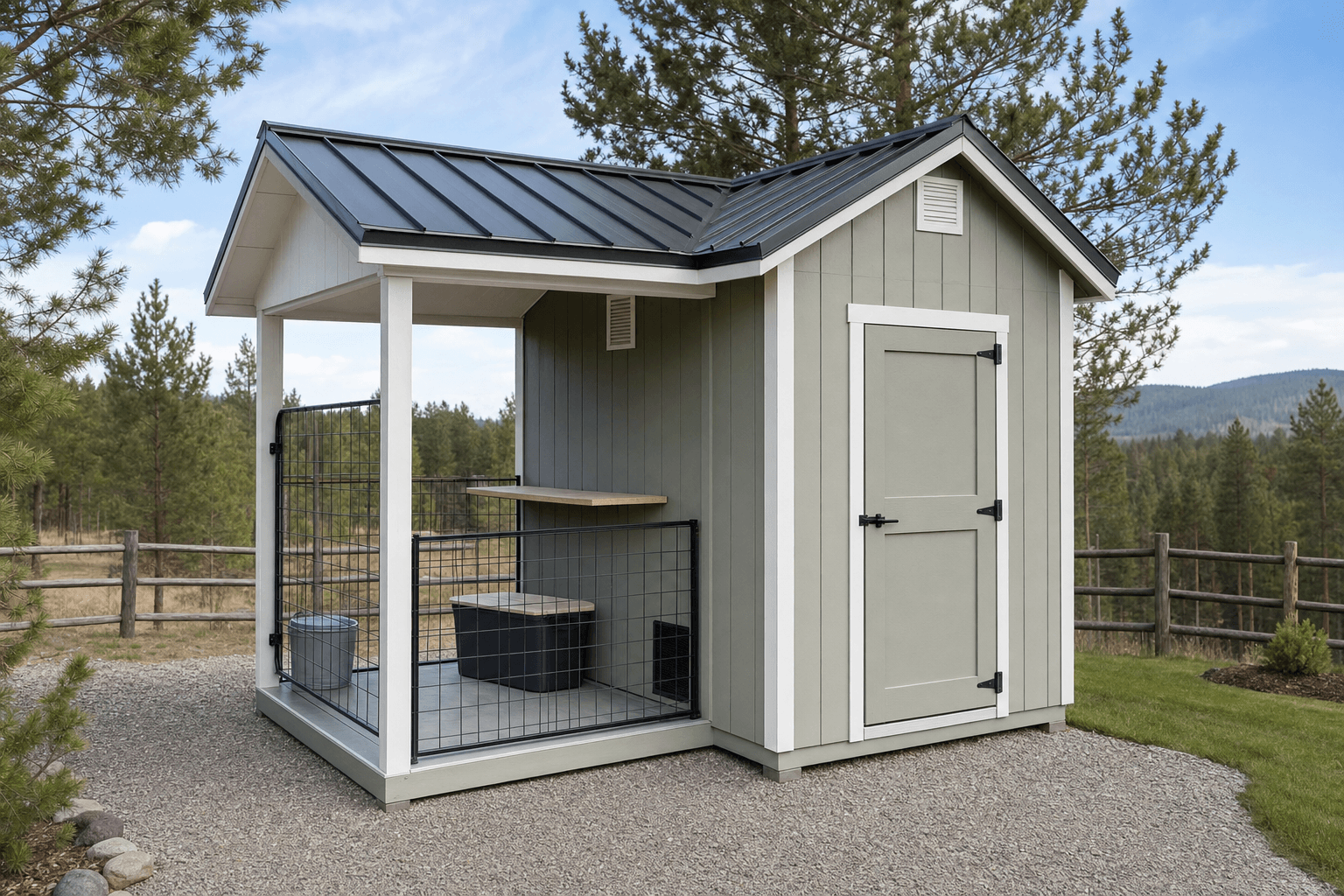
That is one reason on-site building makes so much sense here. Pet shelters are often tied to gates, runs, fencing, terrain, and the natural traffic pattern of the property. The room works best when it is built where the animals actually move, where humans can clean and service it easily, and where snow and runoff are less likely to make daily care miserable.
Pet Shelter Features & Build Options
The right pet shelter features depend on the animals first. Some shelters need more enclosed resting space. Others need better airflow, easier washdown, or stronger protection from claws, chewing, or repeated moisture. In most cases, the best options are the ones that make cleaning simpler while still giving the animals a calmer, more protected place to rest.
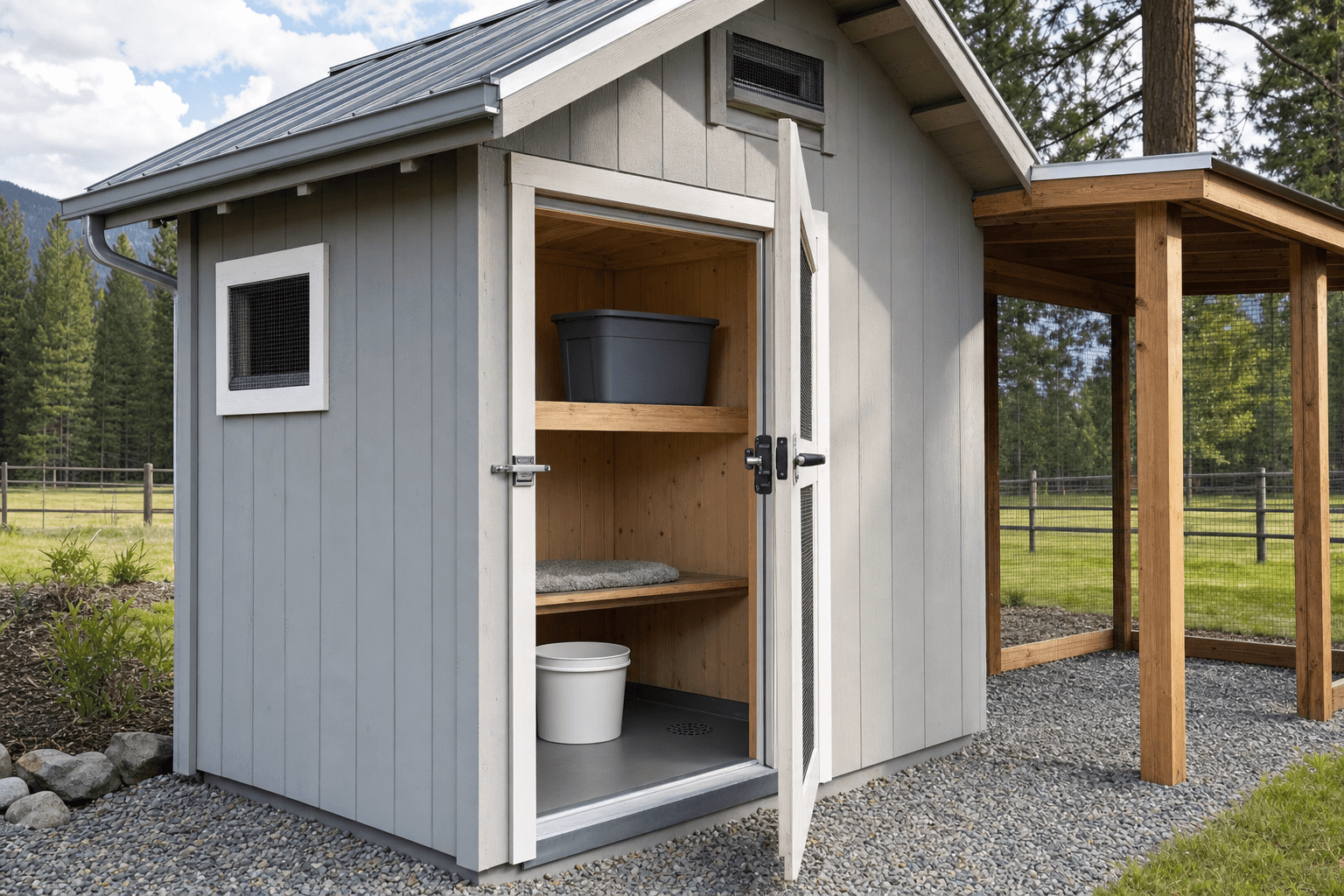
Insulation and ventilation often work as a pair. If the room is insulated but cannot exchange air well, moisture and odor build up. If it is overly open, the shelter loses the weather protection that makes it useful in the first place. Easy-clean surfaces matter because animal buildings do not stay tidy on their own. Floors, lower walls, and entry areas all benefit from being planned for real maintenance instead of just looking nice on day one.
Predator resistance is also a bigger issue than people expect, especially on rural North Idaho parcels. Hardware choices, openings, latch quality, and how the shelter ties into runs or fencing can all affect how secure the space feels. That is one reason some owners compare a general pet shelter to a dog kennel shed or a chicken coop shed. Those comparisons are useful because they clarify whether the room is really a broad shelter or whether it should be designed more like a specialized animal building.
If you are working out the details, cold-weather pet shelter basics with airflow, insulation, and cleaning is a good starting point. Chicken coop vs goat shelter vs dog kennel and how needs differ helps because the wrong assumptions usually come from trying to make one animal-housing pattern do everything.
The shelter also works better when daily servicing is simple. That may mean a Dutch-style door, a protected overhang, removable bedding zones, or a feeding edge that does not force the owner to step all the way into the resting area. Small improvements like that matter a lot in winter because the easier it is to clean, check, and reset the space, the more consistently the shelter actually gets maintained the way it should.
Popular Pet Shelter Sizes & Layouts
A 6x8 is a practical starting point for a compact shelter meant primarily for protected resting space and a modest amount of animal traffic. It works well when the project is focused, the animal count is low, and the property already has supporting fencing or run space in place.
An 8x8 or 8x10 gives more breathing room and often allows a better split between resting space and the entry or cleanup side. For many households or small properties, that is where the shelter starts feeling noticeably more workable from a maintenance standpoint.
An 8x12 or 10x10 makes sense when the building has to support more daily activity, broader use, or a little more separation between animals, supplies, and the service path. Those footprints usually give more flexibility on bedding, entry placement, and airflow without pushing the project into an oversized footprint.
The best layout usually keeps the most protected resting area away from the main door and gives the owner one easy cleanup path that does not force them to cross through the entire shelter to service it. Even a smaller building can work well if the entry, venting, and interior arrangement are planned honestly around the real use.
What Size Pet Shelter Works Best?
The right size depends on the animal type, how much time the animals spend inside the shelter, and whether the room also needs to absorb storage or service functions. A general shelter that mainly provides weather protection may be perfectly comfortable in a 6x8 or 8x8. Once the owner wants more room for feeding, easier cleaning, or a calmer arrangement for multiple animals, 8x10 and larger footprints start helping quickly.
A good rule is to size the room around care and cleanup, not just the resting footprint. Animals need room, but so do buckets, bedding, entry swings, and the person taking care of the space in winter. That is why the compact sizes can work beautifully when the plan is disciplined, but they can feel cramped fast if the project is asked to do too many jobs at once.
Placement also matters. A slightly larger shed in the wrong muddy corner can perform worse than a smaller shelter in a cleaner, more practical part of the lot. On-site construction helps because the structure can be sized around the lot, the run layout, and the way the animal care routine actually happens every day.
How Does On-Site Pet Shelter Building Work?
On-site construction is a strong fit for pet shelters because these buildings are almost always tied to the property layout. We look at fences, gates, grade changes, winter access, drainage, and how the animals and humans move through the space. That matters more here than it does on a generic storage shed because the shelter is part of a daily care system, not just an extra building.
The process usually starts with the intended use. From there, the shed can be framed around the resting zone, the entry and cleanup path, and the level of weather protection and airflow the animals actually need. If the lot has awkward corners, uneven ground, or tight access, those can be addressed before the footprint is locked.
On-site building also avoids the compromise of picking a prefab first and then trying to force the fencing or run layout to adapt to it. That usually leads to a better fit and a shelter that feels like part of the property instead of an afterthought.
Pet Shelter Service Areas Across North Idaho
We build pet shelters across Kootenai, Bonner, Boundary, Shoshone, and Benewah counties. Around Rathdrum, Athol, Hayden, and the broader North Idaho working-property corridor, these structures often make sense because owners want something sturdier and more weather-aware than a lightweight shelter bought off the shelf.
On smaller properties, the challenge is often fitting a truly useful shelter into a limited footprint while keeping odor, cleanup, and runoff manageable. On larger rural parcels, the bigger issues usually involve wind exposure, predator pressure, and how the shelter connects to runs, barns, or fenced areas. In both cases, the building works best when it is designed around the real animals and the real site instead of around a generic animal-housing template.
If you are comparing budget or footprint options, the next practical stops are the pricing guide and the free estimate page. Pet shelters benefit from a quick site-specific conversation because ventilation, washability, and placement all matter more here than they do in a simple yard shed.
That local fit is a major part of why custom shelters outperform one-size-fits-all kits. The right answer for an exposed rural parcel is often different from the right answer in a tighter suburban yard. A shelter that works beautifully for one owner may be wrong for another if wind, predator pressure, drainage, or daily access are different.
Frequently Asked Questions About Pet Shelter
The FAQ section below covers the quick answers on cost, permits, timeline, and common sizes. Those are useful, but the real success of a pet shelter usually comes from whether the room keeps animals cleaner, drier, safer, and easier to care for through all four North Idaho seasons.
If you want a shelter that functions like a real long-term animal-housing solution instead of a thin outbuilding with bedding inside, request a free estimate. That is the best way to line up the footprint, ventilation strategy, and site placement with your actual animal-care routine.
Built for North Idaho weather
Engineered for snow load
Roofs framed for North Idaho's 70+ psf ground snow load.
Wind-rated
Anchored and braced for the gusts that funnel down our valleys.
Sealed for freeze-thaw
Detailed drip edges, sealed penetrations, and breathable wraps.
12-year warranty
Bumper-to-bumper coverage on materials and workmanship.
What you get
Insulated
ventilated
easy-clean
predator-resistant
How it works
- Step 1Site visit
We come to you, listen to how you want to use the shed, and read the site.
- Step 2Free estimate
You get a single, all-in price — no surprises, no upsell.
- Step 3Build day
We build it on your property in a single visit. No delivery permits, no crane fees.
- Step 4Walkthrough
We hand it over with a walkthrough of materials, doors, and aftercare.
Frequently asked questions
How much does a pet shelter cost in North Idaho?
Most pet shelter projects in North Idaho start around $3,100 and can reach $7,100 depending on size, foundation, utilities, insulation, and finish level. Site access, snow loads, and feature upgrades can move pricing higher. See our pricing guide or request a free estimate.
What size pet shelter works best in North Idaho?
Do I need a permit for a pet shelter in North Idaho?
Sometimes. A simple pet shelter under 200 square feet may follow the common North Idaho permit-exempt path, but setbacks, HOA rules, utilities, and placement still need review. Once you go larger or add power, plumbing, or finished interiors, permitting becomes more likely. Review permit basics and request a site-specific estimate.
How long does it take to build a pet shelter on-site in North Idaho?
Most pet shelter projects take about 1-2 on-site days once the site is ready and materials are staged. Larger footprints, slab work, insulation, wiring, plumbing, and muddy or tight North Idaho access can extend the schedule. See how our build process works.
Ready to get started?
Get Your Free Estimate