A pet shelter is the building you reach for when the animal you are housing does not fit one of the single-species boxes. Maybe it is a pair of pygmy goats and a couple of barn cats, or meat and angora rabbits, or a rotating cast of small livestock and rescues that change with the seasons. What they share is a need for the same handful of things done right: a dry, draft-free place to bed down, fresh air without a chill, surfaces you can actually clean, and construction that keeps them in and predators out. A pet shelter is built around adapting to the animal in front of you, not around one rigid floor plan — which is exactly why it differs from a purpose-built dog kennel or chicken coop.
North Idaho On Site Sheds builds every pet shelter on your property, so the door, the run, the windows, and the prevailing-wind side line up with your fence lines, your hose, and the way you do chores morning and night. This guide walks the real welfare decisions: which roofline gives headroom and airflow for the animals you keep, what size genuinely suits the species and number you have in mind, how to lay the interior out so feeding, bedding, and cleaning each have a place, and the ventilation, insulation, flooring, and secure construction that carry small animals safely through a cold northern winter. The goal is a shelter that is humane first and easy to keep clean second — because a building you can clean is a building that stays healthy.
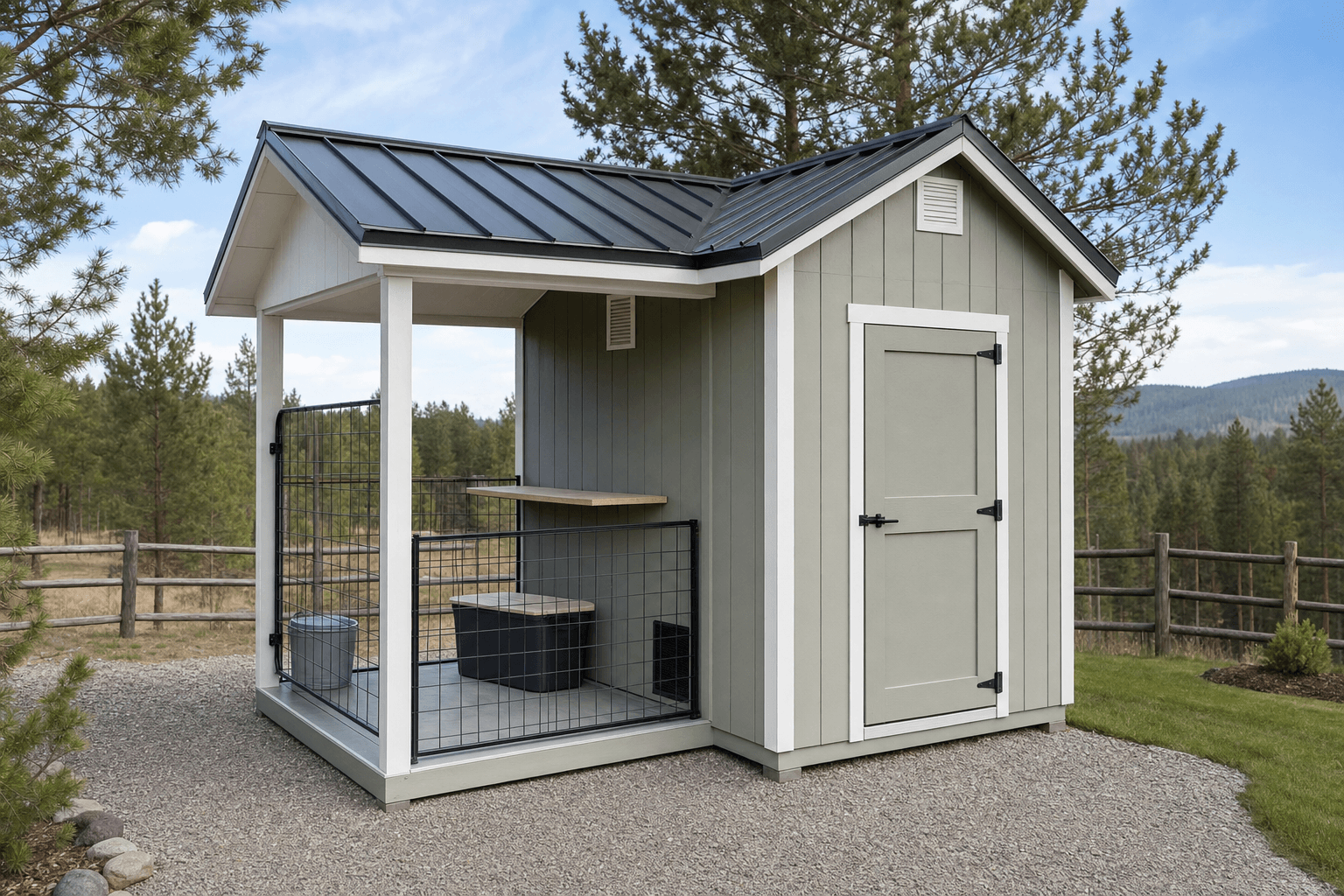
A good pet shelter starts with a dry, draft-free interior, real airflow, and a door and run built to keep animals safe.
Because a pet shelter has to flex to the animal, the roofline you choose is really a headroom-and-airflow decision. A standard gable is the dependable all-rounder: the peak lets warm, stale air rise and exhaust through a ridge or gable vent while the animals stay in the calmer air below, and the straight eave walls make it easy to hang nest boxes, hutches, or a hay rack at the right height. For goats and taller small livestock that need to stand, browse a feeder, and move without ducking, that ceiling height matters, and it pairs naturally with a covered run off one wall. A lean-to or modern single-slope is the other strong choice on a tight site — its tall front wall takes a wide secure door and a band of upper windows, throwing daylight and cross-breeze across the floor where rabbits and cats are happiest.
A lofted barn (gambrel) earns its keep when you want to store hay, bedding, and feed overhead while keeping the animals' floor clear and dry below — a tidy way to keep a feed storage zone close without it crowding the living space or inviting damp into the bedding. Add a covered porch or roof overhang on the door side and you create a sheltered transition where animals can stand out of rain and driving snow without leaving the dry zone. Whatever the style, plan the building so the prevailing winter wind hits a solid wall, not the door, and so you can open things up for summer airflow. Unlike a dog kennel built for one species' size and temperament, here you are designing a humane shell that can be re-divided as your animals change, so let headroom, ventilation, and a secure door lead.
Stocking density is a welfare number. Goats need far more space per head than rabbits, so set the footprint from the species and count you actually keep. A 6x8 suits a few small animals; an 8x12 carries mixed or larger stock with room to separate.
A pet shelter should adapt. Plan enough width that you can run a partition or panel down the middle to separate species, sexes, or a sick animal without rebuilding. Crowding is what turns a clean shelter into a sick one.
Most small livestock need outdoor space too. Size the shed as the dry, secure sleeping and feeding core, then plan a covered run or attached pen off one wall so animals get air, sun, and movement.
For a small, simple group — a few rabbits in hutches, a bonded pair of barn cats, or a single bottle goat — a 6x8 pet shelter is an honest starting point: room for hutches or a raised bed, a feed bin, and a cleaning aisle, with a covered run doing the rest of the work outside. Step up to an 8x8 when you want square, dividable floor space — enough to put a low partition down the middle and keep two kinds of animal, or two does and a buck, from sharing the same air and feed. The most flexible size for a genuinely mixed or growing menagerie is an 8x10: a clear chore aisle down one side, stacked or tiered housing on the other, a sealed feed corner, and room to set down a wheelbarrow and a cleaning tote without stepping over an animal.
If you keep a couple of standard goats, a larger rabbitry, or several species you need to house apart, move up to an 8x12. The extra length lets you split the shelter cleanly into zones — a bedded sleeping bay, a separate feeding and watering bay, and a quarantine or kidding stall you can close off — so a new or sick animal never has to mix with the rest. That depth is also where a built-in feed storage corner stops being a luxury, keeping hay and grain sealed, dry, and rodent-proof a few steps from the animals instead of in a damp pile by the door. Size up one increment if your numbers tend to grow, because animals, hutches, and hay fill a shelter faster than you expect.
These three buildings get treated as interchangeable, and choosing the right one keeps you from forcing the wrong animal into the wrong space. A dog kennel is purpose-built around one species: insulated sleeping boxes sized to the breed, chew-proof and scratch-proof surfaces, a secure attached run, and drainage tuned to hosing down after dogs. A chicken coop is just as specialized the other way — roost bars at the right height, nest boxes, a pop door, a predator-proof apron, and ventilation placed to clear ammonia off the litter without drafting the birds at night. Each is excellent at its one job and not meant to be reassigned.
A pet shelter is the deliberate generalist that sits between them. It is built to be re-divided and re-fitted as your animals change: hutches and a raised platform for rabbits this year, a goat stall and hay rack next year, a heated corner for barn cats through the cold months. You give up some of the species-perfect detailing of a dedicated kennel or coop and gain adaptability, a building that humanely houses goats, rabbits, barn cats, and assorted small livestock under one roof and re-purposes without a rebuild. If you know you will only ever keep dogs, build the dog kennel; if it is only ever poultry, build the chicken coop. If your animals are mixed, changing, or small and varied, the pet shelter is the welfare-smart middle.
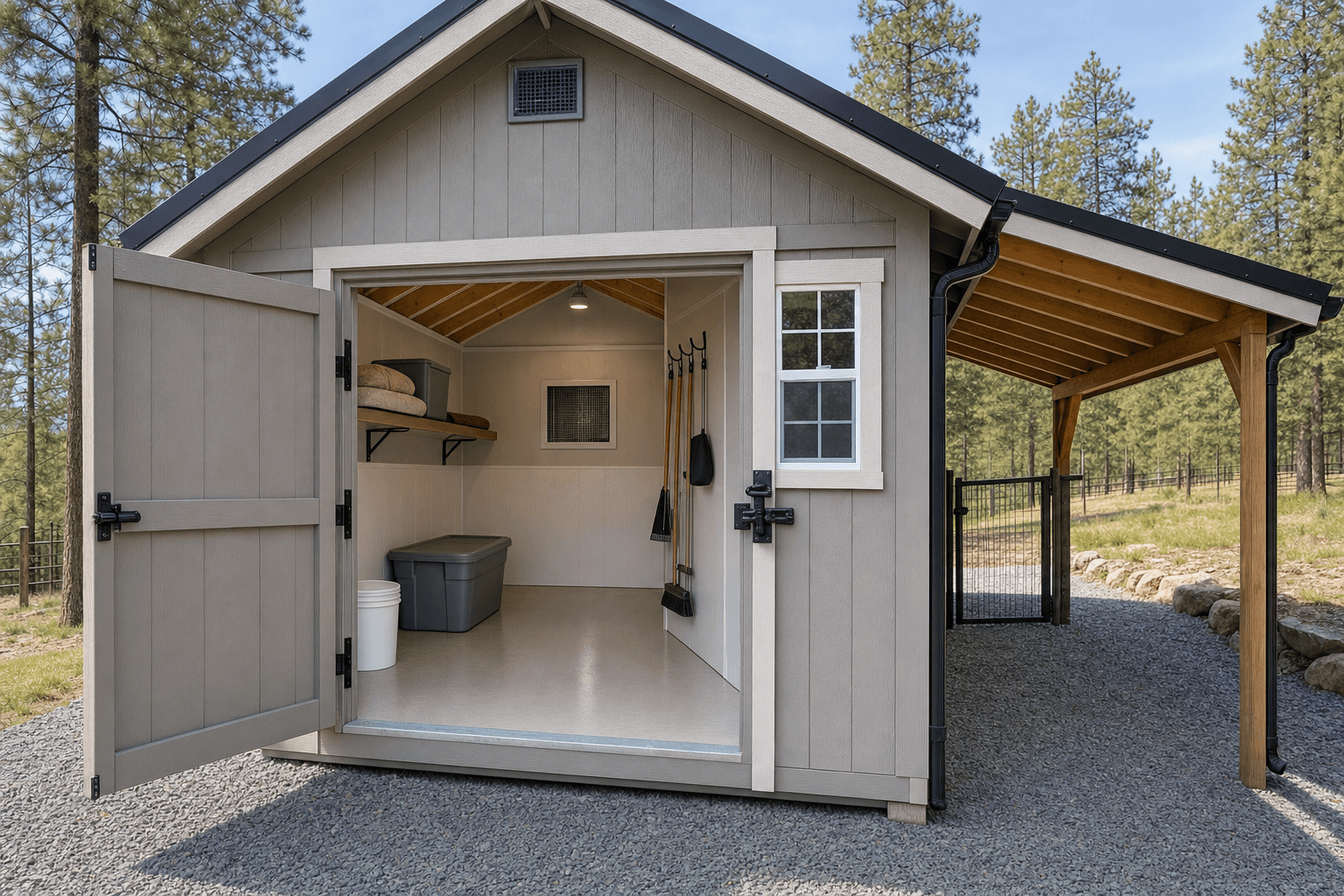
Zoning a pet shelter into sleeping, feeding, and cleaning bays keeps mixed animals healthy and chores quick.
A pet shelter works when sleeping, eating, and cleaning each have their own place and stop fouling one another. Lay it out in clear zones and chores get faster while the animals stay healthier. The bedding zone is the dry, draft-free heart: a raised platform, deep-litter bay, or row of hutches set against the most sheltered wall, off the cold floor, where animals den down out of the wind. The feeding and watering zone sits apart from the bedding so spilled feed and splashed water never soak the bedding — a wall-mounted hay rack or feeder, a spill-catching mat beneath, and waterers a step from the door for easy daily refills.
The cleaning zone is the aisle and the floor: keep one clear lane you can run a wheelbarrow or muck cart down, and slope or seal the floor toward a point where you can sweep or hose waste out without flooding the bedding. The fourth zone is the one a pet shelter needs more than a single-species building does — a separation bay you can close with a panel or gate to quarantine a new arrival, isolate a sick or injured animal, or split sexes during breeding season. Lay the zones out so your daily round flows in one direction — feed, water, check, then muck — and so a partition can drop in to divide the room without trapping an animal in a corner. Plan the people door wide enough to wheel a loaded muck cart through, and any animal door sized and placed so the species using it can pass without injury.
Hutches, a raised platform, or a deep-litter bay set off the cold floor against the sheltered wall, so animals bed down warm and dry. Removable panels and lift-out trays under hutches make daily cleaning a two-minute job instead of a chore.
A galvanized or rodent-proof bin for grain and pellets and a dry rack or overhead loft for hay, kept sealed and off the floor. Dry, secure feed protects animal health and keeps mice and their disease load out of the shelter.
Panel tracks, removable partitions, or hinged gates that let you re-section the floor to separate species, sexes, or a sick animal. Adaptability is the whole point of a pet shelter, so build the dividing in from the start.
Sealed or rubber-matted flooring, a coved or sloped base, and washable wall surfaces to wainscot height. Smooth, non-porous surfaces hose down fast, dry quickly, and give parasites and bacteria nowhere to hide between cleanings.
The fittings are where a pet shelter proves it was planned for the welfare of real animals, so plan storage and mounting for the exact kit you use. Around the bedding zone: rabbit hutches with slide-out trays, a raised goat platform or pallet bed, straw or shavings for deep litter, heat lamps or panel heaters with guards for the coldest nights, and lift-out nest or sleeping boxes. In the feeding zone: a wall-mounted hay rack and a hay net, rubber feed pans and a no-tip mineral feeder, heated water buckets or a heated base so waterers do not freeze solid, and a sealed grain bin with a tight lid.
The cleaning and care kit is the part owners under-plan and regret: a muck fork and flat shovel, a wheelbarrow or muck cart, a stiff broom, lime or stall freshener for odor, and a hose end or fill station for washing pans and floors. Hang a hook board for leads, halters, and a goat collar, and keep a labeled tote of basics — hoof trimmers, nail clippers, a thermometer, wound spray, syringes, and a first-aid kit — locked where animals cannot reach it. A wall-mounted thermometer and a simple hygrometer let you actually watch the conditions the animals live in. Bulk hay, straw, and feed are happiest in or beside a sealed feed-storage zone so the living space stays clean, and the heated waterers and any lamps want their own thought before winter. Sort by how often you grab it: daily feed and cleaning tools by the door, health and grooming kit secured up high, and bulk bedding stacked dry and off the floor.
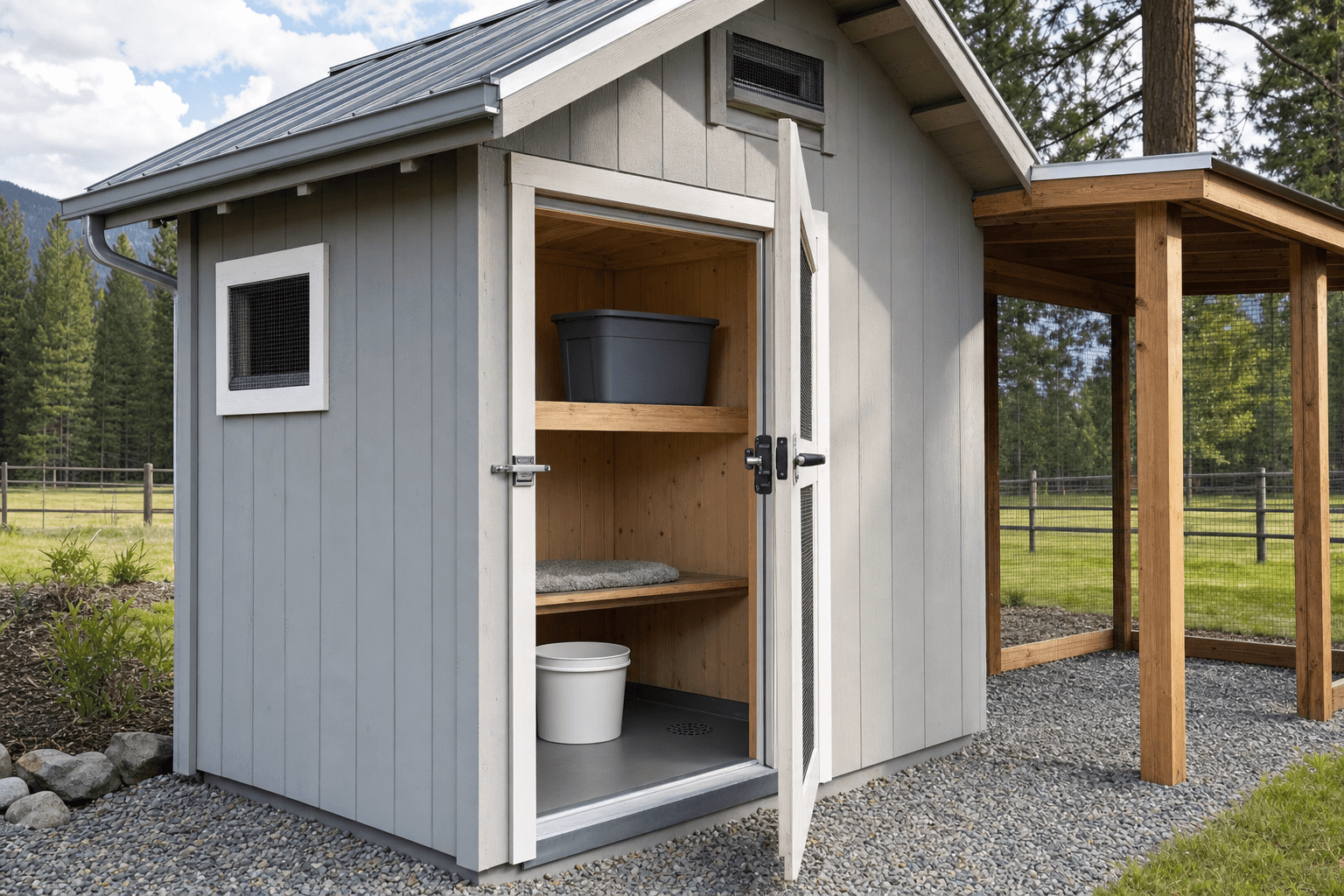
Easy-clean surfaces, sealed feed, and a divider gate let one shelter adapt safely to different animals.
| Pet shelter planning checklist | |
|---|---|
| Best all-round size | 8x10 for a mixed group, with a chore aisle, dividable floor, sealed feed corner, and room for a covered run |
| Bedding | Raised platform, hutches, or deep-litter bay off the cold floor against the most sheltered, draft-free wall |
| Ventilation | Ridge or high gable vents to exhaust stale, humid air, plus low or operable openings for cross-flow without floor-level drafts |
| Flooring and surfaces | Sealed or rubber-matted floor sloped to drain, with washable walls to wainscot height for fast hosing and quick drying |
| Separation | Removable panels or a gated bay to quarantine new arrivals, isolate sick animals, or split species and sexes |
| Winter warmth | Insulated walls and roof, draft-blocking, guarded heat lamps or panel heaters, and heated waterers on a GFCI circuit |
Air, warmth, and water are the working welfare systems of a pet shelter, not afterthoughts, and they pull in slightly different directions in a northern winter. Animals, manure, and damp bedding give off moisture and ammonia, and that stale, humid air has to leave the building or it settles into respiratory illness and frostbite risk. The fix is ventilation that exhausts high and brings fresh air low without blowing a draft across sleeping animals: a ridge or upper gable vent to let warm, foul air rise out, paired with smaller, baffled low openings so cool air enters gently. You want the air changed, not the animals chilled — a shelter that is sealed tight to stay warm but goes damp and ammonia-heavy is worse for welfare than one a few degrees cooler and dry.
Warmth comes mostly from a dry, draft-free, insulated shell rather than from cranking heat. Insulate the walls and roof, block drafts at the floor and door, and bed deeply, and most small livestock hold their own through a North Idaho cold snap; goats and rabbits tolerate real cold far better than they tolerate damp and wind. For the hardest nights, the very young, or thin-coated animals, add a guarded heat lamp or a panel heater fixed clear of bedding, and run real power — dedicated outlets on a GFCI circuit, since water and electricity share this room — to keep heated waterers from freezing and a couple of LED fixtures lit so morning chores in the dark are safe. Plan an upper window or two for natural daylight, which animals need for healthy rhythms, and place it to catch winter sun on the bedding while keeping the cold north side solid.
Because we build on your property, the pad and placement are part of the welfare plan. A level, well-drained gravel pad is the standard base: it lifts the floor framing off wet ground, sheds the water and waste an animal shelter generates, and keeps bedding from wicking up damp that breeds parasites and rot. Set the shelter where a gravel path or driveway reaches the door so feed and bedding deliveries and the daily muck cart roll right up, and orient it so a solid wall faces the prevailing winter wind while a window or the run catches the warming winter sun. Keep it off the lowest, soggiest spot in the yard, and leave space alongside for the covered run or pen most small livestock need.
North Idaho weather drives the structure. We build for local snow load, so the roofline and framing carry a heavy winter without sagging onto the animals below, and we use treated and pine materials suited to the freeze-thaw swings that come with a humid, animal-occupied building. Site the shelter so snow sliding off the roof clears the door and the run instead of trapping animals inside or burying the entrance, and so meltwater drains away from the bedding rather than under it. Permitting depends on size and your jurisdiction in Kootenai County or your city, and keeping livestock can bring zoning, setback, or animal-density rules into play on top of the building code — most smaller pet shelters stay under the structural threshold, but confirm setbacks, drainage, allowed animals, and any HOA rules before the build. When you are ready, get a free estimate or build and price a shed to see your size, layout, and ventilation come together.
Build the shell and fittings to be re-sectioned rather than fixed to one species. Plan removable partitions or a panel track so you can divide the floor, then fit the zones to the animal: hutches with slide-out trays and a raised platform for rabbits, a stall with a hay rack and headroom for goats, and a warm, draft-free corner with a covered bed for barn cats. Keep the bedding, feeding, and cleaning zones consistent and just swap the gear inside them. The keys that carry across every animal are a dry draft-free bed, sealed feed, ventilation that clears stale air, and surfaces you can clean — get those right and the shelter adapts as your animals change without a rebuild.
Warmth in a northern winter comes mostly from a dry, draft-free, insulated shell, not from heaters. Insulate the walls and roof, block drafts at the floor and door, face the solid wall into the prevailing wind, and bed deeply, and most goats and rabbits hold their own — they tolerate real cold far better than damp or wind. We build for local snow load on a gravel pad so meltwater drains away from the bedding instead of soaking it. For the coldest nights, the very young, or thin-coated animals, add a guarded heat lamp or fixed panel heater clear of bedding, and run heated waterers on a GFCI circuit so water never freezes solid. The goal is dry, wind-free, and above freezing where the animals sleep, not hot.
Ventilation and cleanability are the two things that keep an animal building from making animals sick, and they work together. For air, exhaust the warm, ammonia-laden, humid air high through a ridge or upper gable vent and bring fresh air in low through small baffled openings, so the air changes without drafting across sleeping animals — damp, stale air is what drives respiratory illness. For cleaning, seal or rubber-mat the floor, slope it to a drain or sweep-out point, and run washable surfaces up the walls to wainscot height so you can muck and hose in minutes and the room dries fast. The two reinforce each other: good airflow dries the surfaces you just cleaned, and clean, dry surfaces keep the air from going foul between cleanings.
Secure construction protects the animals more than any other single feature in North Idaho, where coyotes, raccoons, weasels, and birds of prey all test a shelter. Use solid framing and tight-fitting doors with real predator-proof latches that raccoons cannot work, cover any vents and windows with heavy welded-wire hardware cloth rather than flimsy chicken netting, and close gaps at the eaves and floor where a weasel or rat can squeeze through. If you attach a run, bury or apron the wire outward at the base so diggers cannot tunnel under, and fully enclose the top against climbers and hawks. Inside, the same secure dividers that let you separate animals also keep them from injuring each other, so plan smooth, gap-free panels with no sharp edges or trap points.
Separation is a core welfare job in a mixed shelter, both to stop species and sexes from fighting or breeding and to isolate a new or sick animal. Plan the building wide enough to drop in removable panels or gated partitions so you can split the floor without trapping an animal in a corner, and give each section its own feed and water so animals are not forced to compete across a divider. Keep at least one bay you can fully close for quarantine — a new arrival or a sick animal should be able to share the building's air as little as possible until it is cleared. Pair animals sensibly: prey species like rabbits should never share an open run with a predator, and intact males usually need their own space, so build the dividing in from the start rather than improvising it later.
Size from the species and head count, because stocking density is a welfare number, not a convenience one. A 6x8 suits a small, simple group — a few rabbits in hutches, a bonded pair of barn cats, or a single bottle goat — with a covered run doing the rest of the work outside. An 8x8 gives square, dividable floor for two kinds of animal or two does and a buck kept apart, while an 8x10 is the most flexible for a genuinely mixed or growing menagerie, with a chore aisle, tiered housing, and a sealed feed corner. For a couple of standard goats, a larger rabbitry, or several species you need to house separately, step up to an 8x12 so you get a sleeping bay, a feeding bay, and a quarantine stall. Goats need far more room per head than rabbits, so size up one increment if your numbers tend to grow, and plan outdoor run space on top of the shed.
Small animals and cold weather are a serious combination in North Idaho. Goats, rabbits, and barn cats need shelter that stays above freezing without requiring you to run a heater continuously through a January low of 5°F. The difference between a structure that keeps animals safe and one that merely keeps them dry is in the framing: insulated walls, a tight ceiling, and a door sized to minimize cold air flooding in when you open it. A pet shelter built on site in Coeur d'Alene or out in the county can be framed to whatever R-value the animal type and your heating plan actually require.
Ventilation is the other side of the equation. Ammonia from bedding accumulates fast in a tight, unventilated enclosure and damages respiratory health in small animals. The right build has controlled ridge or soffit venting — enough to exhaust moisture and gas, not enough to let in a Kootenai County wind chill. That balance is easier to achieve when the venting is designed into the framing rather than cut in after the fact.
Easy cleaning matters for biosecurity. A concrete or sealed wood floor with a slight pitch toward a drain, smooth-painted interior walls, and a door wide enough to roll a wheelbarrow through makes the difference between a shelter you maintain weekly and one you dread.
Rural properties in Rathdrum, Athol, and Sandpoint often have irregular grades or soft ground that rules out a delivered shed on skids. On-site construction uses a gravel pad or pier foundation sized to the actual ground conditions. Design the footprint in the configurator or get a free estimate to see what a properly framed shelter runs on your lot.
Size the bedding, ventilation, and secure run for your animals, then get a free estimate or price it in the configurator.
Keep planning your build with related North Idaho shed guides.