A backyard cottage is the building people fall a little in love with. It is not a storage box with a nicer door — it is a finished, characterful little place with a porch, real windows, and cozy interior touches, built to be lived in rather than just used. Folks plan a cottage to give themselves a quiet studio at the back of the lot, a writing or art room with good light, a weekend getaway a few steps from the house, or a charming spot to put up family that feels like a tiny home instead of a spare room. The whole point is charm and livability: a place you want to walk out to with a cup of coffee, not somewhere you only visit to grab a tool.
North Idaho On Site Sheds builds every cottage on your property, so the plan answers to your yard, your trees, and the view you want from the porch. That on-site build is a real advantage with a cottage, because so much of the charm comes from siting — which way the porch faces, where the morning light lands, how the roofline sits against the pines. This guide walks through how to plan one for the North Idaho climate: the rooflines and porch styles that read as cottage, the right size for a studio or getaway, how to lay out and finish the interior for comfort, and how to decide between seasonal and year-round use. The goal is a building with genuine character that still handles a hard winter — pretty on the outside, warm and welcoming on the inside.
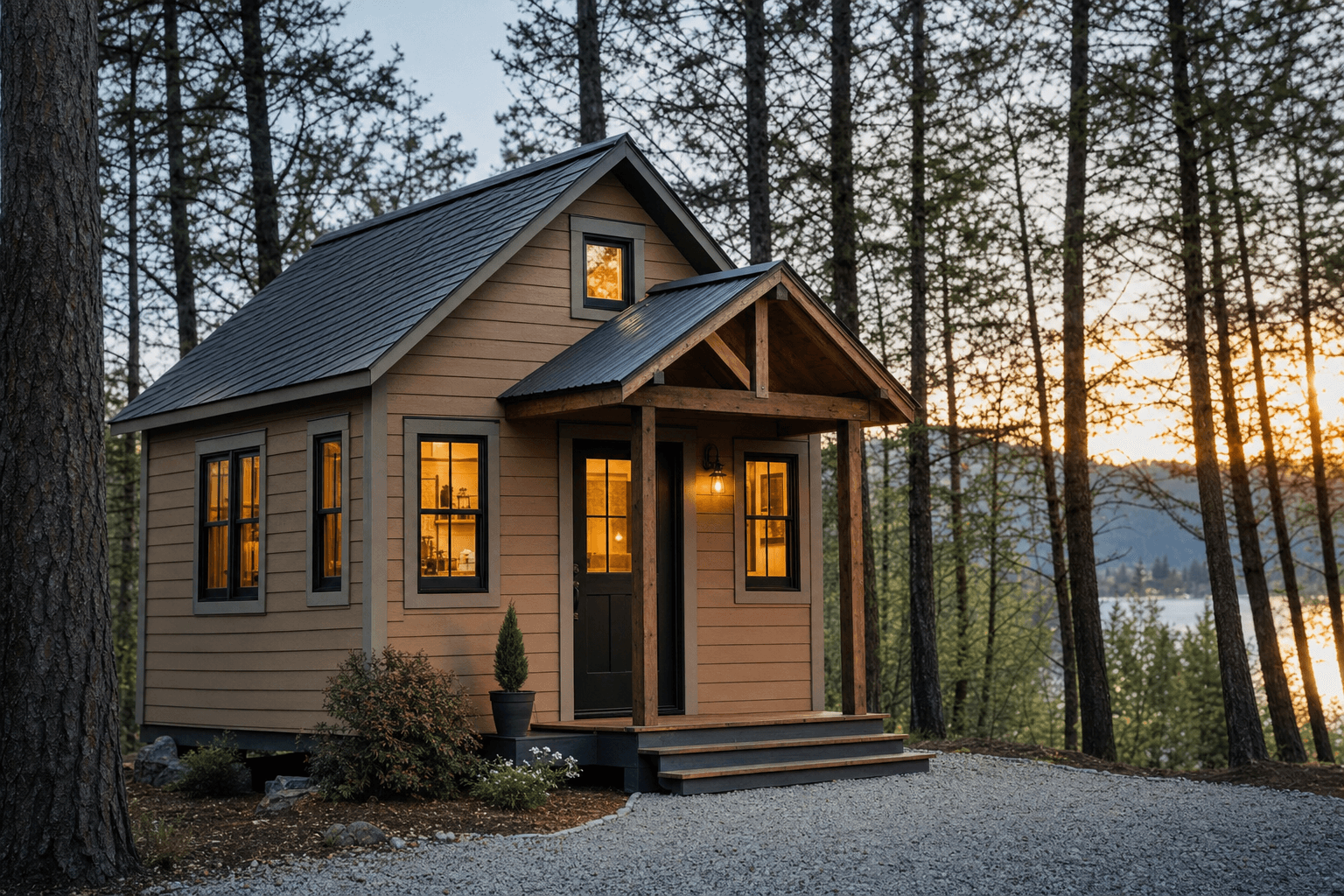
A cottage plan starts with charm — a porch you want to sit on, windows that pull in daylight, and a roofline that fits the trees.
Charm lives in the roofline and the porch, so this is where a cottage plan starts. A standard gable is the classic cottage shape: a steep, symmetrical roof that reads like a little house, sheds North Idaho snow cleanly, and gives you a bright, airy ceiling inside. Pair that gable with a covered front porch — even a modest one with room for two chairs and a small table — and the building instantly stops looking like a shed and starts looking like a destination. That porch is the single most cottage-defining feature you can add, and in our climate it doubles as a dry, covered spot to shed snowy boots before you step inside.
From there, the style choices are about taste. A lofted barn (gambrel) brings a storybook, cottage-in-the-woods feel and adds a sleeping or storage loft up top, which is a smart way to keep the main floor open in a small footprint. A steeper-pitched gable with a deep porch overhang leans more traditional and cottage-y; a cleaner lean-to or single-slope with a tall window wall feels more modern and frames a view of the trees. The details do the heavy lifting: divided-light cottage windows, a real front door with a window, board-and-batten or lap siding, flower-box-ready sills, and trim around the windows and corners. If your plan is leaning toward a feminine retreat or craft studio specifically, look at a she shed build; if it is mostly about hosting overnight visitors, a guest house is the closer fit. A cottage is the choice when you want all-around charm and livability rather than a single dedicated job.
A cottage should feel roomy and calm, not crammed. Give yourself a little more floor than the bare task needs so there is space to sit, breathe, and decorate.
A covered porch is part of the charm, but it eats into your buildable length. Decide on the porch depth early so the interior still has the room you want.
A cottage is meant to be seen and enjoyed, so size it to sit gracefully in the yard — big enough to feel like a real building, not so big it crowds the trees or the main house.
For a charming studio, a quiet office-and-reading retreat, or an art room with good light, a 10x16 cottage is a lovely starting point — long enough for a work zone at one end, a sitting nook at the other, and a porch on the gable end, while staying compact and affordable. When you want more breathing room or plan to mix uses — a studio that also hosts the occasional overnight guest, or a getaway with a daybed and a coffee bar — a 12x16 is the sweet spot most North Idaho homeowners land on. It gives you square, flexible space for furniture, a real sitting area, and the kind of interior that feels finished rather than tight.
If the cottage doubles as a true getaway with a bed, a sitting area, and a coffee-and-snack kitchenette, step up to a 12x20 so each part of the room gets its own zone without crowding. And when you want the cottage to feel like a small home — room for a bed, a comfortable sitting area, a kitchenette, and maybe a half-bath, with a generous porch — a 14x20 gives you that without drifting into a different kind of project. Let the use and the feeling you are after set the size: a cottage earns its charm partly from not being packed wall to wall, so it is better to give a modest footprint room to breathe than to oversize and lose the cozy character entirely.
These three buildings can look almost identical from the driveway, but they solve different problems, and naming yours correctly saves real money and paperwork. A cottage is about charm and livability: a finished, characterful little building you want to spend time in — a studio, a getaway, a craft room, a quiet retreat. You decide how far to take the comforts, and you are buying the experience of a pretty, cozy space, not a particular legal status. A [guest house](/services/guest-house) is more narrowly a comfortable place for visitors to sleep and unwind — a bed, a sitting corner, usually a half-bath, and at most a small kitchenette. It is built for hosting rather than for housing someone permanently.
An [accessory dwelling unit](/services/adu) is the heaviest of the three: a full, legal second dwelling with a complete kitchen, a full bathroom, permanent utility connections, and the permits and inspections that come with a real residence. If you intend to rent the space, house an adult full-time, or add a legal dwelling to the property, that is an ADU, and the planning is genuinely more involved. The honest way to think about it: a cottage is the look and feel many people actually want, and you can build it light (a charming studio or seasonal getaway) or finished (closer to a tiny home) as your needs grow. Just know where the line sits — the moment you add a full kitchen and intend it as a permanent residence, you have crossed into ADU territory and should price it that way on purpose. Crossing that line deliberately is fine; stumbling across it mid-build is not.
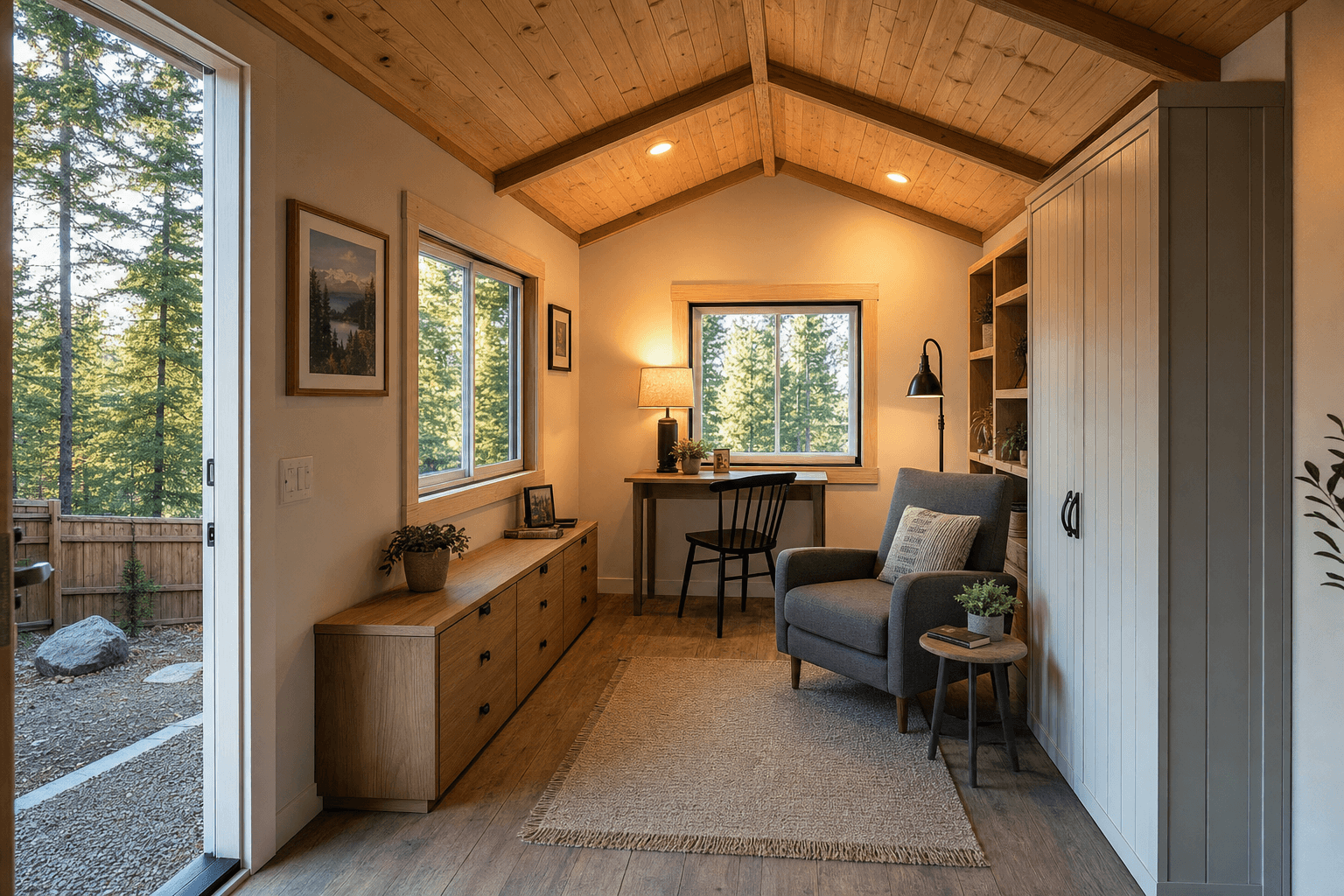
Zoning a cottage into a sitting nook and a work or sleep area keeps a small footprint feeling like a finished little room, not one cramped space.
A cottage feels generous — even a small one — when it is planned as a few distinct corners rather than one undivided box. Most cottages come together around three or four zones. The sitting zone is the heart of it: a comfortable chair or a small loveseat, a side table, a reading lamp, and a window or the porch door nearby. This is the corner that makes a cottage feel livable instead of utilitarian, so give it the best light and the best view. Anchor the room here and build everything else outward.
The purpose zone is whatever the cottage is mostly for — a desk and shelving for a studio or office, an easel and a worktable for an art room, a daybed or a real bed for a getaway. Keep it along one wall or at one end so it does not swallow the sitting area. If the cottage is a getaway or doubles for guests, add a small rest or sleep zone with a bed or daybed against the most private wall, away from the door. Finally, keep an entry zone by the door clear for a boot mat, a coat hook, and a place to set keys — a small but real comfort in a North Idaho winter. Leave a clean walking path from the door through the room so the space flows and never feels obstructed. Good zoning is what lets a 12x16 cottage live much larger than its square footage.
Divided-light or generous cottage-style windows are the heart of the charm. Place them to catch morning light and frame the trees, and add a window in the door so the entry feels bright and welcoming.
A covered porch with room for two chairs turns the cottage into a place you want to sit. It is the most cottage-defining upgrade and a dry, sheltered spot to shed snowy boots before you head inside.
Finished walls, a wood or vinyl-plank floor with a rug, painted trim, and a thoughtful color palette make the inside feel like a tiny home rather than a shed. This is where cozy livability is won.
Soft overhead light plus a reading lamp, a string of porch lights, and a couple of well-placed outlets. Warm, layered light does more than almost anything to make a small cottage feel inviting after dark.
Charm is built from specific, small things, so plan for the items that will actually fill the space. On the porch: two comfortable chairs or a small bench, a side table, a doormat, a hanging plant or two, and an exterior light or a string of café lights for evenings. In the sitting nook: a cozy chair or loveseat, a soft rug, a throw blanket, a small bookshelf with a few books, a reading lamp, and a side table for a coffee mug. For the windows: simple curtains or blinds, a window box for herbs or flowers, and a deep sill where a small plant or a candle can sit. These are the details people notice the moment they walk in, and they cost very little to get right.
If the cottage is a working studio or office, plan for a desk or worktable, open shelving, a pinboard or pegboard, a comfortable task chair, and bins or baskets for supplies. If it is an art or craft room, add a worktable with good task lighting, flat storage for paper or canvas, a utility sink if you want one, and easy-to-clean flooring. For a getaway, plan a daybed or real bed with good bedding, nightstands, a coffee-and-kettle bar with a mini-fridge for snacks, and a few mugs in a small cabinet. Round it out with the comforts that make a cottage feel like a retreat — a small electric fireplace or heater, a clock, a fan for summer, soft pillows, and good Wi-Fi reach from the main house. A cottage lives or dies on these touches; the building is the easy part, and the way it is furnished and finished is what turns it into the spot everyone wants to escape to.
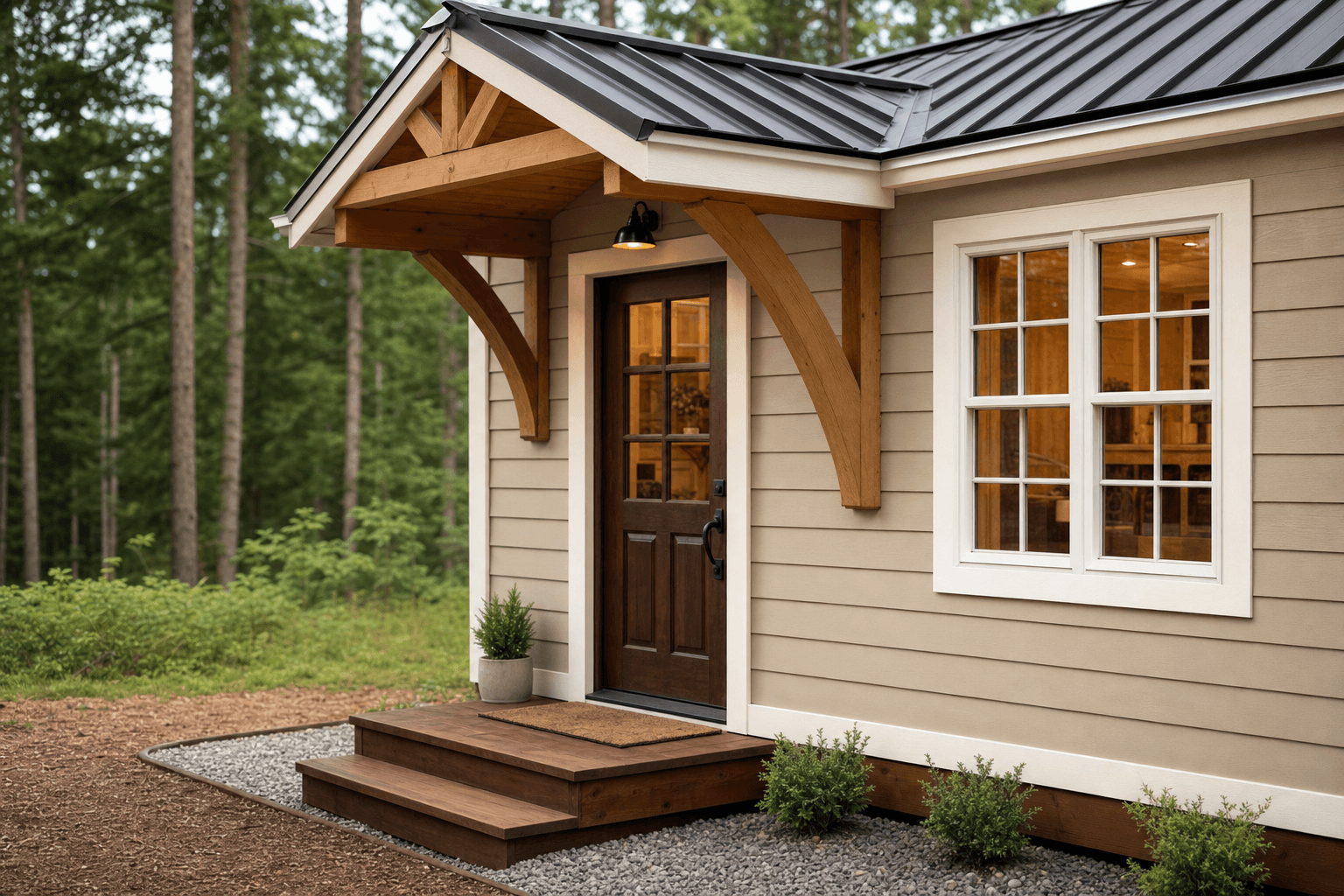
A porch with two chairs, a plant, and string lights is where a cottage stops looking like a shed and starts feeling like a getaway.
| Backyard cottage planning checklist | |
|---|---|
| Best all-round size | 12x16 for a charming studio or getaway; 12x20 or 14x20 when it doubles as a bed-and-sitting retreat |
| Roofline | Standard gable with a porch for classic cottage charm; gambrel for a storybook look and a loft; single-slope for a modern, view-framing feel |
| The charm features | A covered porch, divided-light cottage windows, a windowed door, trim, and warm siding — these define the cottage look |
| Interior finish | Finished walls, plank or vinyl flooring with a rug, painted trim, and a cozy palette so it reads as a tiny home, not a shed |
| Heat and insulation | Insulated with a small heat source for seasonal use; fuller insulation and a mini-split for on-demand year-round comfort |
| Seasonal vs. year-round | Decide before the walls close up — it drives insulation, the heat source, and how much power you run |
Whether a cottage is a three-season getaway or a year-round retreat comes down to how you plan heat, insulation, and power — and that depends on when you will actually use it. For a seasonal cottage you visit spring through fall and on the occasional bright winter day, insulate the walls and ceiling and add one efficient heat source you can switch on before you head out: a wall-mounted electric heater, a small electric fireplace that adds charm as well as warmth, or a compact mini-split. That takes the chill off a cool morning or a shoulder-season evening without the cost of heating an empty building all winter.
If you want the cottage comfortable on demand all year — a writing room you use in January, a getaway for snowy weekends, a studio you do not want to abandon for four months — plan for it from the start: fuller insulation, a mini-split that both heats and cools so summer afternoons stay pleasant, and a thermostat you control. Run enough power for the heat source, lighting, chargers, and any kitchenette or studio equipment on a circuit sized for the load, and plan your outlets and switches before the walls close up so you are not running extension cords later. Layered lighting matters more in a cottage than in almost any other building — warm overhead light, a reading lamp, and porch lights are part of the charm, not an afterthought. Even a seasonal cottage benefits from a thermostatically controlled heater left on low in deep cold so the space stays dry and any plumbing never freezes.
Because we build on your property, where the cottage sits is part of its charm, and a cottage rewards thinking hard about placement. A level, well-drained gravel pad is the standard base: it keeps the floor framing off wet ground, drains snowmelt away from the building, and gives you a clean, solid approach to the porch steps. Site the cottage to make the most of what you have — point the porch and the best windows toward the morning sun, a garden, or a stand of pines so the view does some of the decorating, and angle it for a little privacy from the main house and the neighbors so it feels like a true retreat. A short gravel path from the house or driveway keeps you off wet grass and snow when you walk out in the evening.
North Idaho weather shapes the structure and the siting both. We build for local snow load, so the roofline and framing carry a heavy winter without strain, and we use treated and pine materials suited to freeze-thaw swings. Place the cottage so snow sliding off the roof clears the porch, the door, and the windows rather than burying them, and keep it off the lowest, soggiest spot in the yard. On materials, a steeper pitch and a metal or quality architectural-shingle roof both shed snow well and suit the cottage look; lap or board-and-batten siding gives you that classic charm and stands up to the climate. Permitting depends on how you finish and use the building: a charming studio or seasonal getaway is usually a lighter lift than a full accessory dwelling unit, which triggers dwelling permits, inspections, and utility requirements. Size, plumbing, and whether anyone lives there all affect how the build is classified, so confirm setbacks, septic capacity, and any HOA rules with Kootenai County or your city before you finalize the plan. When you are ready, get a free estimate or design and price a cottage to see your roofline, porch, and window options come together.
A covered porch is the single most cottage-defining feature you can add, so it is worth planning carefully. The simplest version is a roof overhang on the gable end with room for two chairs and a small table — even a four- to six-foot-deep porch reads as a real cottage porch and gives you a sheltered place to sit and to shed snowy boots. A deeper, full-width porch feels more generous but eats into your buildable length, so decide the depth before you lock in the footprint. In North Idaho, position the porch so roof snow sheds clear of it rather than dumping onto the steps, point it toward the morning sun or the best view, and budget for porch lighting and an outlet so it stays usable in the evenings.
Charm comes mostly from the roof and the windows. A steep, symmetrical gable reads as a classic cottage and sheds snow cleanly; a gambrel gives a storybook, cottage-in-the-woods look with a loft up top; a single-slope feels more modern and frames a view. For windows, divided-light or cottage-style windows do the most work — place generous ones to catch morning light and frame the trees, add a window in the front door so the entry feels bright, and use deep sills that can hold a plant or a window box. Finish the look with trim around the windows and corners, warm lap or board-and-batten siding, and a porch. Those details are what separate a cottage from a plain shed with the same footprint.
It comes down to when you will actually use it. For a seasonal getaway you visit spring through fall, insulate the walls and ceiling, finish the interior so it feels cozy, and add one efficient heat source you switch on before you head out — a wall heater or a small electric fireplace is plenty. For year-round comfort, when you want the cottage usable in January, plan fuller insulation, a mini-split that both heats and cools so summer stays pleasant too, and a thermostat you control. Either way, run your power and plan outlets before the walls close up, and in deep cold keep a low background heat on so the space stays dry. Deciding seasonal versus year-round up front matters, because insulation and the heat source are far cheaper to get right during the build than to retrofit later.
They can look alike but solve different problems. A cottage is about charm and livability — a finished, characterful little building you want to spend time in, whether that is a studio, a getaway, or a craft room, and you decide how far to take the comforts. A guest house is more specifically a comfortable place for visitors to sleep and unwind: a bed, a sitting corner, usually a half-bath, and at most a small kitchenette. An accessory dwelling unit is a full, legal second residence with a complete kitchen, a full bath, permanent utilities, and the permits and inspections that come with it. The practical takeaway: build a cottage when you want the look and feel of a cozy little home for your own use, choose a guest house when hosting overnight visitors is the main job, and plan an ADU only when you genuinely need a permitted dwelling to rent or live in full-time.
Match the heat to how you will use the cottage. For seasonal use, an insulated cottage with a single wall-mounted electric heater, a small electric fireplace, or a compact mini-split warms up quickly and is cheap to run because you only heat it when you are there. For year-round comfort, a mini-split is the best all-around choice: it heats efficiently in winter and cools the space on hot summer afternoons, all on a thermostat you set. An electric fireplace is a popular companion because it adds real cottage charm along with warmth. Whatever you choose, run a circuit sized for the heater plus your lighting and any kitchenette load, and in deep cold leave a thermostatically controlled heater on low so the building stays dry and any plumbing never freezes.
Pick materials that hold the cottage charm and stand up to the climate. For siding, lap siding and board-and-batten both give the classic cottage look and weather North Idaho's freeze-thaw swings well, especially with trim around the windows and corners. For the roof, a steeper pitch sheds snow better and suits the cottage shape; a standing-seam metal roof sheds snow cleanly and lasts, while quality architectural shingles give a more traditional cottage texture for less. We build for local snow load using treated and pine materials suited to the climate, so the structure carries a heavy winter without strain. Whichever roof you choose, plan the building's placement so sliding snow clears the porch, the door, and the windows rather than piling against them.
A backyard cottage in Coeur d'Alene or Post Falls is a different proposition than a storage building or a workshop. It's a finished structure people actually spend time in — which means the framing, insulation, and weatherproofing need to match what a North Idaho winter demands. Freeze-thaw cycling, heavy snow loads on the roof, and temperatures that can swing forty degrees in a week all show up in a building that wasn't built with those conditions in mind.
The on-site build process is what makes custom detailing practical on a structure this personal. Porch columns, window proportions, roofline pitch, and exterior trim are decisions that affect how the cottage reads on your property — and those choices are easier to execute when the building is framed where it will stand rather than manufactured to standard dimensions elsewhere.
Lot constraints in Kootenai County vary by whether you're inside city limits or in the unincorporated county. Setbacks from the rear property line and from the primary structure affect where the cottage can land. Knowing those numbers before the design is finalized saves time and avoids a redesign mid-project.
For owners in Coeur d'Alene looking at a finished cottage for guests, a studio, or a reading retreat, our cottage page covers finish levels and typical configurations. You can also work through dimensions and features in the configurator or get a free estimate to anchor the budget conversation.
Choose the roofline, the porch, and the cozy finishes, then get a free estimate or price it in the configurator.
Keep planning your build with related North Idaho shed guides.