A backyard smokehouse is two things at once — a small structure that handles real fire and smoke, and a clean room where food hangs for hours or days — so good planning starts with fire safety and food safety, not square footage. Get those right and a dedicated smokehouse shed lets you cold-smoke salmon and trout, hot-smoke a brisket or a batch of sausage, and cure hams and bacon without smoking up the garage, scorching a deck, or wondering whether the surfaces touching your food are actually cleanable. Get them wrong and you have a fire risk leaning against the house and a box that is impossible to keep sanitary. Everything in this guide — the smoke source, the draft, the hanging racks, the wipe-down interior, and the ventilation — exists to serve two priorities: keep the fire controlled and contained, and keep the food clean and at a safe temperature.
North Idaho On Site Sheds builds every smokehouse right on your property, so the firebox clearances, the rack height, the airflow path, and the cleanable interior get specified around how you actually smoke and cure instead of a generic storage shed with a stovepipe poked through the roof. Start with an honest inventory of what you do — cold smoking for fish and cheese, hot smoking for meat, long curing for hams and bacon, or all three — plus how much you process at once and whether the building sits near the house, a deck, or dry pine. This guide covers which roofline suits a smoke and cure room, what size fits the smoke source plus the hanging space, how to zone the interior for clean handling, and how to build, vent, and site it safely for the Panhandle.
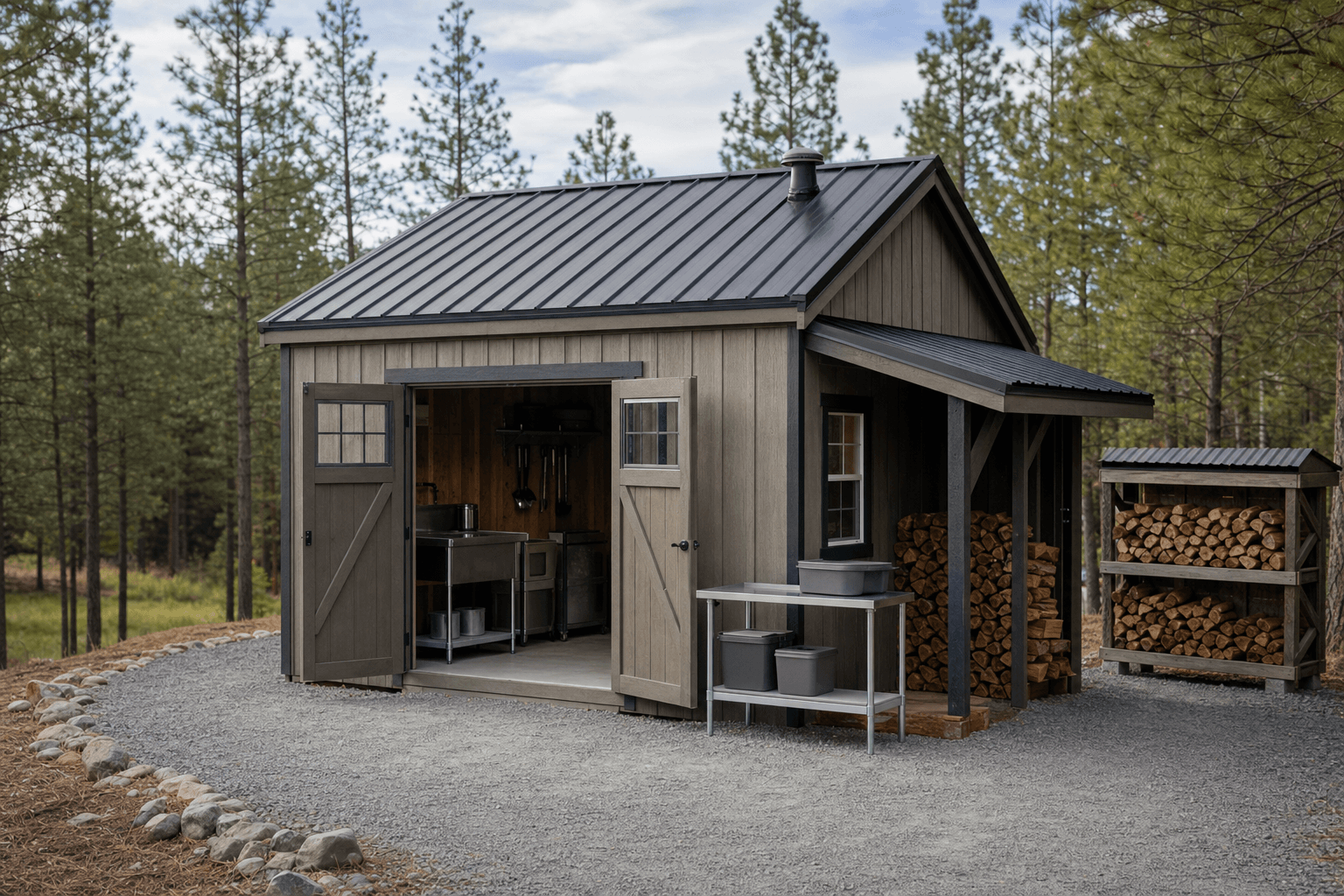
Built for fire and food at once: a controlled smoke source, hanging racks above, draft control low and an outlet high, and a cleanable interior.
A smokehouse asks something unusual of its shell: enough interior height to hang meat and fish well above the smoke source, a roof that can carry a flue and shed snow around it, and construction that keeps heat and embers contained. The standard gable is the natural starting point — the peaked roof gives you the vertical room to hang racks high over the firebox, smoke rises and stratifies the way you want, and the ridge is a clean place to run a flue or a top vent. A lofted barn (gambrel) raises the center even more, which suits a tall smoke chamber and gives extra height for long hanging cures, though you rarely need the loft for storage in a building this purpose-driven. A lean-to or modern single-slope keeps things compact and sheds snow predictably to one side, a tidy option for a smaller cold-smoke setup where you want the flue and the snow shedding away from the door and the house.
Whatever the roofline, the build details matter more than the shape: fire-rated, wipe-clean wall surfaces, a non-combustible zone around the heat source, and a flue or vent path that draws smoke up and out. A smokehouse sits close to a canning kitchen shed for the household that preserves food in volume — smoke and cure in one building, water-bath and pressure can in another — and it pairs naturally with game processing sheds when a hunting family wants a clean place to break down and then smoke or cure the harvest. It also overlaps with a root cellar shed, since cured hams, bacon, and smoked fish need cool, stable storage once they come off the racks. Naming the lead use up front tells you whether to build a tall hot-smoke chamber, a long cold-smoke room, or a flexible building that does both.
A 6x8 fits an external or low-heat smoke source feeding one hanging chamber — right for fish, cheese, and small batches where you want safe clearances and good draft without a big footprint.
An 8x8 or 8x10 gives room for a contained firebox, a tall rack run above it, and a clean prep and hanging zone — enough to hot-smoke meat and cold-smoke fish through the season.
An 8x12 adds a dedicated hanging-cure run for hams and bacon alongside the smoke chamber, plus wall space for a wipe-down prep counter and tool and wood storage.
Footprint decides whether the smokehouse stays safe and workable or turns into a cramped box where racks crowd the heat — so compare the real dimensions before you commit, and remember vertical room matters as much as floor area here. A 6x8 fits a compact cold-smoke or low-heat setup with one hanging chamber and safe clearance around the smoke source, right for fish, cheese, and small batches. An 8x8 opens up a true hot-smoke chamber with a contained firebox and a tall rack run above it, plus a corner to prep and hang. An 8x10 adds length for a separate wipe-down prep surface and more hanging capacity so a big day of sausage or a side of salmon does not overcrowd the racks. If you also cure hams and bacon over weeks, step up to an 8x12 so a dedicated hanging-cure run lives apart from the active smoke chamber. Height is the easy thing to underestimate — racks need to hang well above the heat, so plan the wall and roof height as deliberately as the floor.
These buildings overlap in a food-preserving household, and the right call comes down to which job leads. A smokehouse is built around heat, smoke, and hanging — a contained smoke source, racks that hold meat and fish in the smoke, draft control, and fire-safe, wipe-clean surfaces — focused on smoking and long curing specifically. A canning kitchen shed shifts the emphasis to wet, hot work at a counter: a heat-tolerant range or burners for water-bath and pressure canning, sealed counters, a deep sink, and shelving for jars, with no open smoke or fire chamber. Many households want both, and they make great neighbors on one property — you cure and smoke in the building with the flue and the firebox, and you can and jar in the building plumbed for steam and water — but each is built differently, so naming which leads keeps you from compromising both into one mediocre room.
The other natural neighbor is the processing side. If you hunt, the cutting and breakdown work belongs in a game processing shed with sealed, sanitizable surfaces, good drainage, and a chill space, and then the smokehouse takes over for the cuts you smoke and cure — so the two run as a clean handoff from field to smoke to storage. And because cured and smoked goods need cool, steady storage afterward, a root cellar shed finishes the chain by holding hams, bacon, and smoked fish at a stable temperature once they leave the racks. A pure smokehouse stays focused on fire control, draft, hanging, and cleanability; the moment heavy cutting, canning, or cold storage becomes the main event, that job wants its own building. Decide the lead use first and the smoke source, racks, airflow, and surfaces fall into place before framing is ordered.
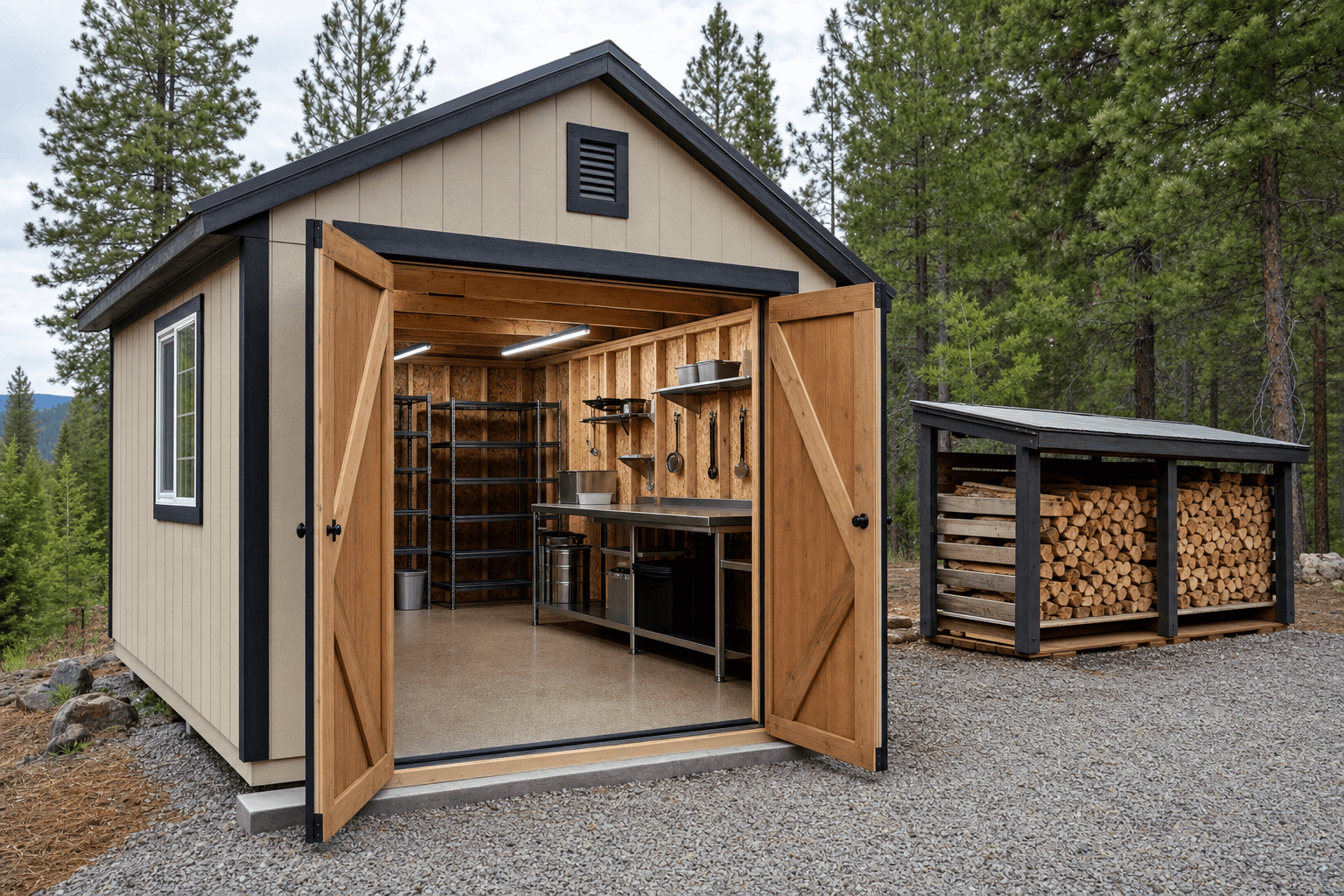
Zone it for safe airflow: a contained heat source low, hanging racks above, a low intake and high outlet for draft, and cleanable surfaces throughout.
Think of a smokehouse as a few clearly separated zones rather than one open box, because the whole point is to keep the heat source, the hanging food, and the clean handling from interfering with one another. A heat and smoke zone anchors the layout — a contained firebox or smoke generator on a non-combustible base with fire-rated surfaces around it and a clear, ember-free buffer overhead and to the sides, sized so nothing combustible sits inside the clearance the heat source needs. A hanging zone rises above and around the smoke, with racks, rails, and hooks set high enough that the food sits in moving smoke at the right temperature, not directly over flame. A draft and airflow zone is not a corner so much as a path: a low intake that feeds the fire and a high outlet or flue that pulls smoke up and out, sized and placed so the smoke rises evenly past the racks and exits rather than pooling. A prep and handling zone keeps a wipe-down surface near the door for loading and unloading racks, brining, and seasoning, away from the active heat.
Good zoning is what makes the building both safe and sanitary at once. Keep the heat source low and contained with its clearances respected, hang the food high in clean, moving smoke, run the intake-to-outlet airflow so the draft is steady, and put the prep surface where you can load and unload without reaching over the firebox. Leave a clear lane from the door to the racks so carrying trays of fish or a rack of sausage in and out never means squeezing past the heat. Plan it so every surface the food or your hands touch can be wiped and sanitized, and so the fire has its own protected space the rest of the room stays out of.
A firebox or smoke generator on a non-combustible base, set inside fire-rated, non-combustible surfaces with a clear ember-free buffer overhead and to the sides, so heat and sparks stay contained and nothing combustible sits within the clearance the heat source needs.
Stainless or food-safe rails, racks, and hooks set high above the heat so meat and fish hang in moving smoke at the right temperature, with adjustable height to tune the distance from the source and the capacity to the batch.
A low, adjustable intake that feeds the fire and a high outlet or flue with a damper, sized and placed so you can dial the draft up or down, hold a steady temperature, and pull smoke evenly past the racks and out rather than letting it stall.
Sealed, non-porous wall and counter surfaces and a cleanable floor that wipe down and sanitize between batches, plus a prep surface near the door for brining and seasoning, so creosote, grease, and residue never build up where food is handled.
Naming what lives inside the shell tells you how to size the chamber, the racks, the airflow, and the storage. The smoke source leads: a contained firebox or a separate smoke generator, a supply of seasoned hardwood — alder and fruit woods for fish, hickory, oak, maple, or cherry for meat — chunks, chips, or pellets kept dry, plus a way to manage the coals and ash safely. The hanging hardware comes next: food-safe rails and racks, S-hooks and sausage sticks, screens or trays for smaller items and cheese, and adjustable supports so you can set the height for cold or hot smoke. Temperature and time control is essential for food safety — keep a reliable smoker thermometer for the chamber and a probe thermometer for internal meat temperature, plus a damper to hold the range you need and a timer for long runs.
Around the chamber you handle, season, and store. The prep kit wants a sealed, wipe-down surface for brining, curing, and seasoning — brine containers, curing salts and seasoning, food-safe gloves, sharp knives, and a sanitizing setup — kept away from the active heat. Curing and storage rounds it out: hanging space for hams and bacon during a long cure, and a plan to move finished goods into cool, stable storage, where a dedicated root cellar earns its keep. Keep cleaning gear close too — brushes and scrapers for creosote and grease, a covered ash can for cooled coals, and a fire extinguisher rated for the heat source by the door. The right contained smoke source, honest racks, real temperature control, and surfaces you can sanitize are what turn a shed into a smokehouse you run safely all season.
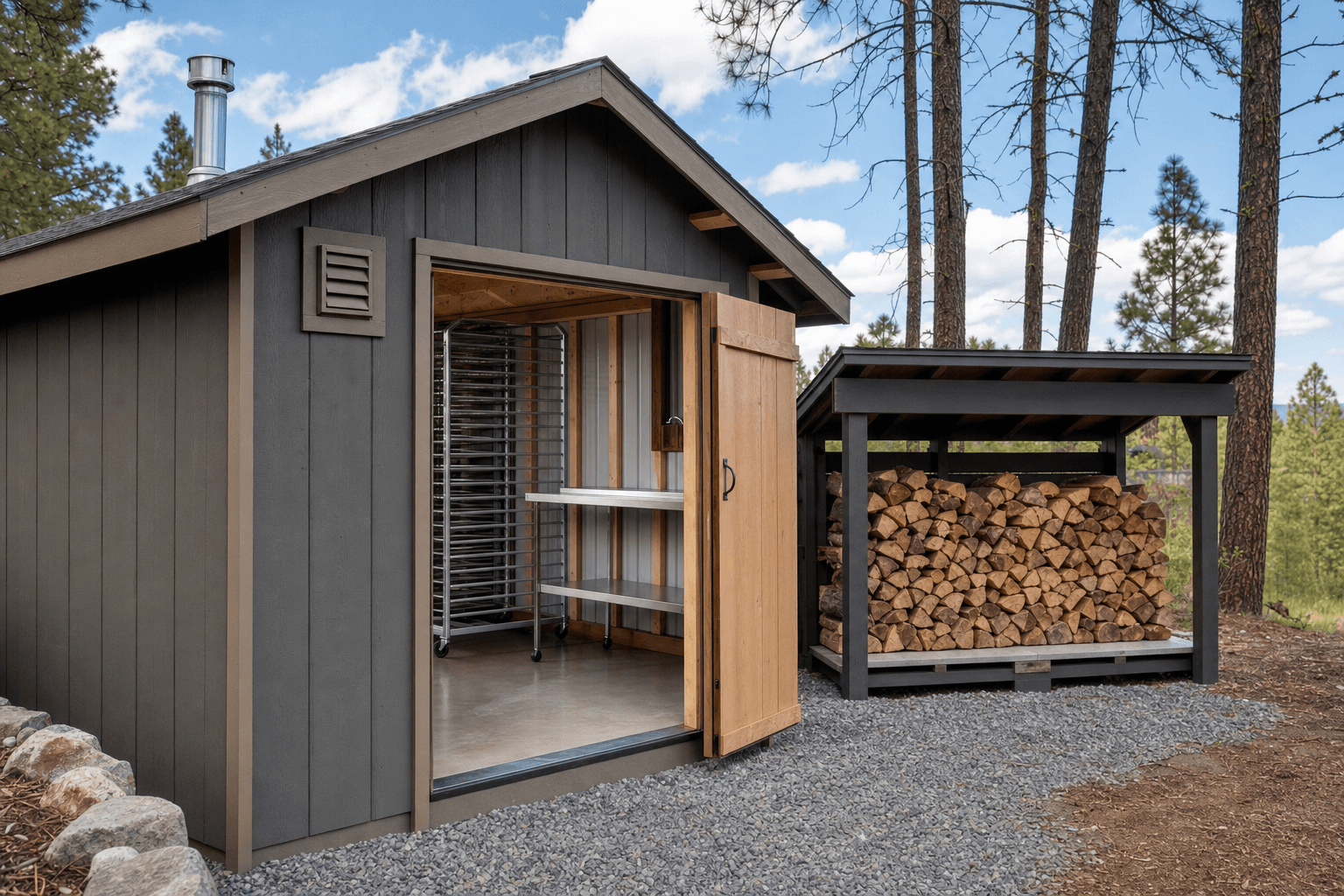
The working details: food-safe rails and hooks set high above a contained source, a chamber thermometer, and a damper to control draft and temperature.
| Backyard smokehouse planning checklist | |
|---|---|
| Smoke source & clearances | A contained firebox or smoke generator on a non-combustible base, surrounded by fire-rated surfaces with a clear ember-free buffer so nothing combustible sits within its clearance |
| Hanging racks | Food-safe, adjustable rails, racks, and hooks set high above the heat so meat and fish hang in moving smoke at the right height for cold or hot smoking |
| Draft & airflow | A low adjustable intake to feed the fire and a high outlet or flue with a damper, so you can hold a steady temperature and draw smoke evenly past the racks and out |
| Food-safe surfaces | Sealed, non-porous walls and counters plus a cleanable floor that wipe down and sanitize between batches, with a prep surface near the door away from the heat |
| Ventilation & creosote control | A flue and vent path that exhausts smoke fully, sized to limit creosote buildup, with racks, walls, and the flue scraped and cleaned on a regular schedule |
| Fire safety & siting | Spark-safe clearance from the house, deck, and dry pine, a non-combustible footing, a cooled-ash plan, and a fire extinguisher mounted by the door |
Ventilation in a smokehouse does three jobs at once — it feeds the fire, it controls the temperature, and it carries smoke and combustion byproducts out — so plan the airflow path as carefully as the firebox itself. The core is a low intake and a high outlet: an adjustable intake near the heat source feeds it the air it needs and lets you throttle the burn, and a flue or top vent with a damper at the high point pulls the smoke up past the racks and out. By opening or closing those, you control the draft and with it the chamber temperature — more air for a hotter hot-smoke, a tighter, cooler draw for a long cold-smoke run. Place the outlet so smoke exits cleanly above the roofline and away from the door and the house, and size the path so the smoke moves steadily rather than stalling and souring the flavor or settling on the food.
Creosote is the part new smokers underestimate. Smoke deposits creosote and grease on the racks, the walls, and especially the flue over time, and a heavy buildup is both a sanitation problem and a real fire hazard, since creosote in a flue can ignite. Plan the building to make cleaning easy: a flue and vent path you can reach and scrape, wipe-clean wall surfaces that do not let residue soak in, and racks that come out for washing. Then keep a cleaning schedule — scrape and wash the racks and the interior between batches, and clean the flue regularly so creosote never accumulates to a dangerous depth. Good ventilation that exhausts the smoke fully, paired with non-porous surfaces and routine cleaning, is what keeps a smokehouse both safe from fire and clean enough to handle food — treat the airflow and the cleaning plan as core to the design, not an afterthought once the building is up.
A smokehouse handles fire, so siting and site prep carry more weight here than for an ordinary shed. Set the building a spark-safe distance from the house, the deck, fences, and any dry pine or brush — embers and a hot flue are exactly the ignition sources you keep clear of anything combustible, and North Idaho summers leave plenty of dry fuel around a yard. A compacted gravel pad drains well and gives a clean, non-combustible footing under and around the building, and it is a sensible base for a smokehouse; for the toughest, easiest-to-clean floor under a heat source and food handling, a small concrete slab wipes and hoses out clean and adds a fire-resistant base. Point the flue and any roof snow shedding away from the door and the house, and read how to prep a shed site so the pad, drainage, clearances, and access are squared away before delivery.
North Idaho weather shapes the rest. A roof and anchoring rated for the local snow load are not optional — Kootenai, Bonner, and Shoshone county winters pile wet snow on a roof, and you do not want a season's load bearing on a structure built around a flue. The freeze matters for cold smoking and curing in particular, since you are working with temperature ranges that winter swings can push around, so think through how the building performs in the cold months you plan to use it. Because a smokehouse involves a heat source, a flue, and often added electrical, it is more likely to trigger local rules than a plain storage shed — fire and life-safety requirements around solid-fuel appliances, clearances, and any wiring can apply. Confirm what your town and county require, and check defensible-space and burning guidance, on the service areas pages before you finalize the size and site. Pine pollen, gravel-driveway dust, and damp air all argue for a well-sealed, well-ventilated, easy-to-clean building so your smoking and curing stay sanitary between batches.
The two methods need different relationships between the heat source and the food, so plan the building to do both. Hot smoking cooks the food while it smokes, so the heat source sits closer and the chamber runs warmer, with racks hung above the fire and the draft opened up to hold a higher temperature. Cold smoking flavors the food without cooking it, so it runs at a low temperature — which usually means keeping the smoke source farther from the food or feeding cooled smoke into the chamber from a separate generator, with a tighter draft so the chamber stays cool. A smokehouse that handles both gives you adjustable rack height to set the distance from the source, a damper and vent control to dial the draft and temperature, and the option to route smoke from an external or low-heat source for cold work. Because cold smoking does not cook the food, follow trusted curing and food-safety guidance for the cure, the salt, and the timing — the building keeps the smoke and temperature controlled, but safe cold smoking depends on doing the cure correctly.
Draft control is how you run a smokehouse, so build the airflow path in from the start: a low, adjustable intake near the heat source and a high outlet or flue with a damper at the top of the chamber. The intake feeds the fire and lets you throttle the burn, and the high outlet pulls the smoke up past the racks and out. Opening the intake and outlet increases the draft and the temperature for hot smoking; closing them down tightens the draw and keeps the chamber cool for cold smoking, while still moving enough smoke to flavor the food. Place the outlet so smoke exits cleanly above the roofline and away from the door and the house, and size the path so the smoke moves steadily rather than stalling — stalled smoke settles on the food and turns the flavor sour. Practice with the dampers and a chamber thermometer until you can hold a target temperature — reading and adjusting the draft is the core skill of smoking well.
Fire safety comes from containing the heat source and keeping everything combustible away from it. Set the firebox or smoke generator on a non-combustible base — concrete, masonry, or steel — and surround it with fire-rated, non-combustible surfaces, with a clear ember-free buffer overhead and to the sides so nothing combustible sits within the clearance the heat source needs. The flue should carry smoke and heat up and out without running hot against framing or roofing. Outside the building, set the whole smokehouse a spark-safe distance from the house, decks, fences, and any dry pine or brush, since embers and a hot flue are exactly what you keep away from combustible material — especially during a dry North Idaho summer. Keep a fire extinguisher rated for the heat source mounted by the door, manage and cool ash and coals in a covered metal can away from the building, and follow the manufacturer and local clearance requirements for any solid-fuel appliance. We build the non-combustible zone and clearances into the structure so the fire has its own protected space.
Plan every surface the food or your hands touch to be sealed, non-porous, and wipeable, because a smokehouse builds up grease and creosote that have to come off between batches. Use cleanable wall and counter surfaces and a floor that wipes or hoses out, and choose food-safe rails, racks, and hooks — stainless or comparable — that you can pull out and wash. Keep a dedicated prep surface near the door for brining, curing, and seasoning, set away from the active heat so raw handling and smoking stay separated. Avoid porous, hard-to-clean materials in the food zone where residue can soak in and harbor bacteria. Then keep a real cleaning routine: scrape and wash the racks and interior between batches, sanitize the prep surfaces, and clear creosote off the walls and flue on a schedule. A smokehouse built with non-porous, wipe-down surfaces and cleaned regularly stays sanitary, while one finished in rough, absorbent materials becomes nearly impossible to keep clean once it is seasoned with grease and smoke.
Hang the racks high above the heat source so meat and fish sit in moving smoke at the right temperature rather than directly over flame, and make the height adjustable so you can set the distance for cold or hot smoking and tune the capacity to the batch. Use food-safe rails and racks with S-hooks and sausage sticks for hanging cuts and links, and add screens or trays for smaller items, fillets, and cheese that cannot hang. Capacity comes down to chamber height and rack run, which is why vertical room matters: a compact 6x8 cold-smoke setup holds enough for fish, cheese, and small batches, an 8x8 or 8x10 gives a tall rack run for hot-smoking meat and bigger fish loads, and an 8x12 adds a dedicated hanging-cure run for hams and bacon alongside the active smoke chamber. Leave space between hanging items so smoke and air circulate around each piece — overcrowding the racks blocks the airflow and gives you uneven results, so plan the rack capacity a little above your typical batch.
Smoke deposits creosote and grease on the racks, the walls, and especially the flue over time, and a heavy buildup is both a sanitation problem and a genuine fire hazard, since creosote in a flue can ignite. Manage it on two fronts. First, build for good ventilation and easy cleaning: a flue and vent path that exhausts the smoke fully and that you can reach and scrape, non-porous wall surfaces that do not let residue soak in, and racks that come out for washing. Second, keep a cleaning schedule — scrape and wash the racks and interior between batches, and clean the flue regularly so creosote never accumulates to a dangerous depth. Good ventilation that draws the smoke out cleanly, rather than letting it stall and settle, slows the buildup in the first place and keeps the flavor clean. Treat the airflow path and the cleaning routine as core to running the smokehouse safely; a building that exhausts well and gets cleaned on schedule stays both fire-safe and food-safe season after season.
A backyard smokehouse handles open heat and slow combustion inside a wood-framed structure — so fire-safe construction details that get skipped on a generic storage shed become non-negotiable here. The firebox or smoke source needs separation from combustible framing, the interior surfaces need to be cleanable and food-safe, and the draft system needs to move smoke out in a controlled direction rather than pressurizing the building. These details are straightforward to frame correctly during an on-site build and significantly harder to add to a structure after the fact.
Coeur d'Alene and Post Falls properties often have neighborhood setback considerations for any structure with an open fire component. Knowing those limits before settling on a location saves a redesign. On wooded or sloped lots in Hayden or Rathdrum — where a delivered box can't easily reach — building in place means the smokehouse lands exactly where site drainage and prevailing winds make the most sense.
North Idaho's fall hunting and harvest season lines up with the best smoking weather: cool overnight temps that help hold the low-and-slow chamber temps serious smokers prefer. A well-insulated structure holds that ambient advantage and gives you more control over the smoke environment than a building that bleeds heat freely. Interior stainless or sealed surfaces are worth specifying at build time rather than lining after the fact.
Ventilation sizing at the ridge or via a stack affects draft performance more than any other single variable. Getting that spec right during framing is far cleaner than cutting a new penetration later. See custom build examples in our portfolio or get a free estimate for your property.
Tell us whether you cold-smoke, hot-smoke, or cure, how much you process at once, and where the building sits relative to the house and dry pine, and we will help spec the contained smoke source, hanging racks, draft control, food-safe surfaces, and ventilation around your property — then you can build and price it online.
Keep planning your build with related North Idaho shed guides.