Almost everyone who calls about a backyard living space starts in the same place: they want somewhere for family to stay, or a separate roof for a parent, an adult kid, or a long-term renter — and they are not sure whether what they want is a guest house or a full ADU. The two look nearly identical from the driveway. The difference is not the siding or the porch; it is whether the building is a legal, independent dwelling that someone can live in full-time and the county will recognize as housing. That single distinction decides your permits, your utilities, your kitchen, your cost, and whether you can ever rent it out. This is the guest house and ADU decision guide — it exists to help you pick the right one before you fall in love with a floor plan.
North Idaho On Site Sheds builds both, on your property, sized and finished to your real lot and grade. This guide does not re-tread the full build details of either path — for that, read the dedicated ADU and guest house pages once you know which direction you are headed. What this guide does is draw the line clearly: what makes an ADU an ADU, where a guest house stops, the code and utility gap between them, and how to match the choice to how you actually plan to use the space. Get this decision right and everything downstream — the size, the permit path, the plumbing — falls into place.
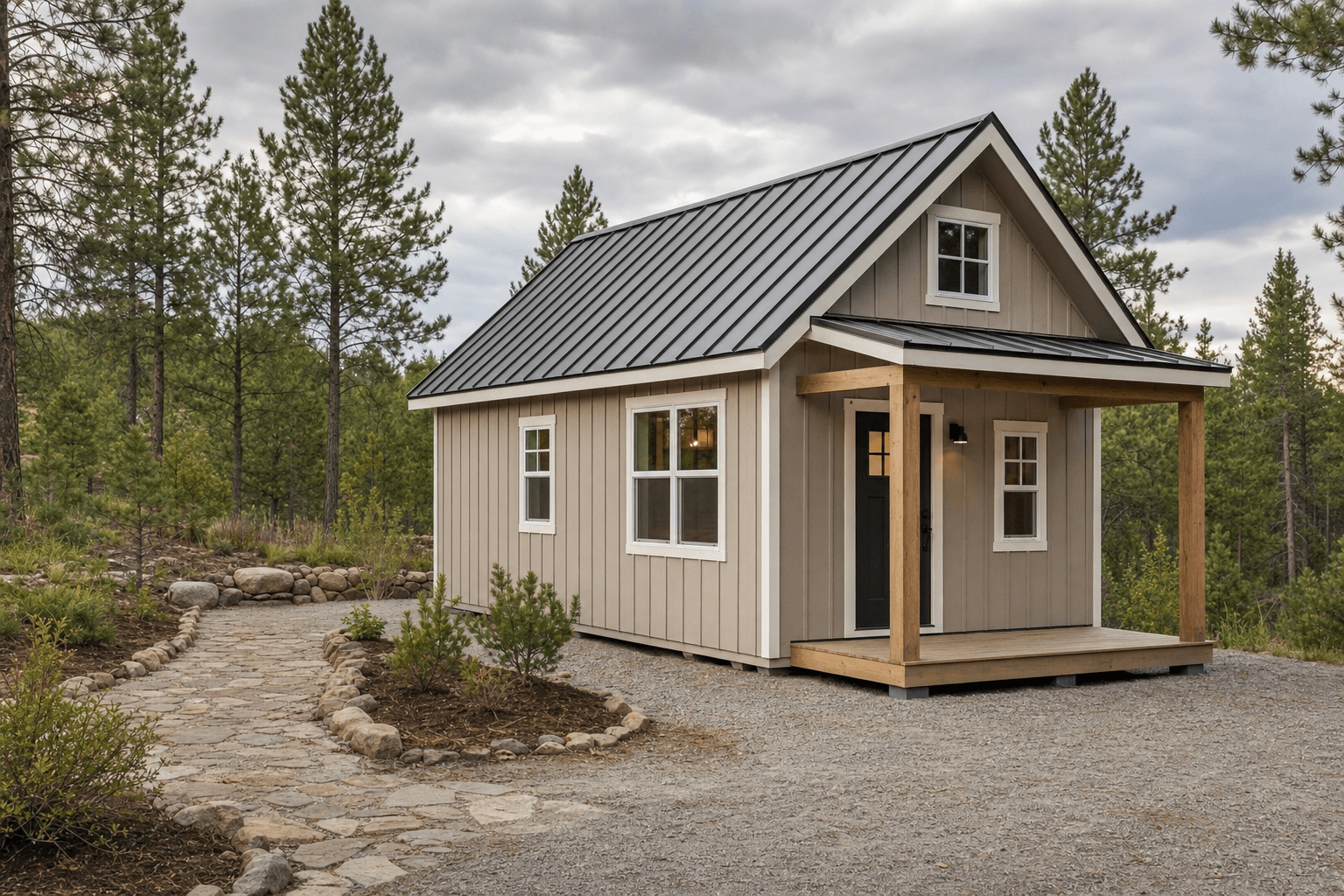
Guest house or full ADU? From the outside they look the same — the difference is what is legal to live in and rent.
Strip away the marketing and the difference comes down to one word: dwelling. An ADU — accessory dwelling unit — is a legally independent, self-contained home on the same lot as your main house. It has its own permitted kitchen, its own full bathroom, its own sleeping and living space, and its own metered or sub-metered utilities, and the county records it as a second dwelling. Someone can live there year-round, get mail there, and — where zoning allows — rent it. A guest house, by contrast, is accessory living space that deliberately stops short of being a full dwelling. It gives you a comfortable bedroom, a sitting area, and usually a bathroom, but it is built and permitted as a guest or accessory structure — not as a unit anyone is meant to occupy permanently or rent as a separate residence.
The dividing line that most jurisdictions watch is the kitchen. A full cooking kitchen — a permitted range or cooktop, a sink, and the gas or 240-volt service to run them — is usually what tips a building from "accessory space" into "second dwelling," and that reclassification pulls in a longer permit, dwelling-grade utilities, and sometimes impact fees. A guest house typically keeps a kitchenette instead: a sink, a microwave, a small fridge, maybe a hot plate, but no permitted full range. That is not a loophole — it is the honest difference between a place to host people and a place for someone to live independently. Knowing which side of that line you want is the whole decision, and it is why naming your real use up front matters more than picking a roofline.
A 12x20 or 12x24 holds a real bedroom, a sitting area, a full bathroom, and a kitchenette — plenty for hosting family or a part-time stay without crossing into full-dwelling territory.
Step to a 14x24 for a true studio dwelling: a combined living and sleeping space, a full kitchen, and a full bath, all metered to live in year-round.
A 16x24 gives a separated bedroom, a living room, a full kitchen, and a full bath — the footprint that lives like a small apartment and rents like one where allowed.
Because a guest house and an ADU are built around different jobs, they tend to land on different footprints — and standing a layout inside the real dimensions is the fastest way to feel the difference. A 12x20 building is a comfortable guest house: a queen bedroom, a chair or loveseat, a full bath, and a kitchenette along one wall, without the floor area that invites a full kitchen. A 12x24 building adds the depth to separate the sleeping area from the sitting area, which is what makes a guest stay feel like a real room rather than a hotel box. When you cross into ADU territory, you need room for a permitted kitchen and a genuine living zone, so a 14x24 building is the honest floor for a studio dwelling — kitchen, bath, and a living-sleeping space that works full-time. Step up to a 16x24 building when you want a separated bedroom, a real living room, and a kitchen that someone cooks in every day; that is the one-bedroom ADU that lives and rents like a small apartment. The rule of thumb: a guest house can be smaller because it is hosting, while an ADU needs the extra footprint to be a complete home.
Four labels get used loosely for backyard living space, and sorting them keeps you from building the wrong thing. A guest house is accessory space for hosting — comfortable, but not a permitted standalone residence. A full ADU is a legal second dwelling with its own kitchen, bath, and utilities, meant for year-round living and, where zoning allows, renting. A cottage is a finished, charming small home that can be built either way — as accessory guest space or, with a full kitchen and the right permits, as a dwelling — so the label describes the style, not the legal status. A tiny home usually points at the smallest end of the dwelling spectrum, where every square foot does double duty.
The trap is treating these as interchangeable when only the legal status matters for permits and rental. If your real goal is a place a relative or tenant can live in independently and you might rent someday, you want an ADU regardless of whether you call it a cottage — the kitchen, the utilities, and the recorded second-dwelling status are what make it possible. If your goal is hosting guests, a home office with a daybed, or overflow space you will never rent, a guest house is cheaper, simpler, and faster to permit, and you can still finish it as beautifully as any cottage. Decide the job first; the prettiest name in the world will not let you legally rent a building that was never permitted as a dwelling.
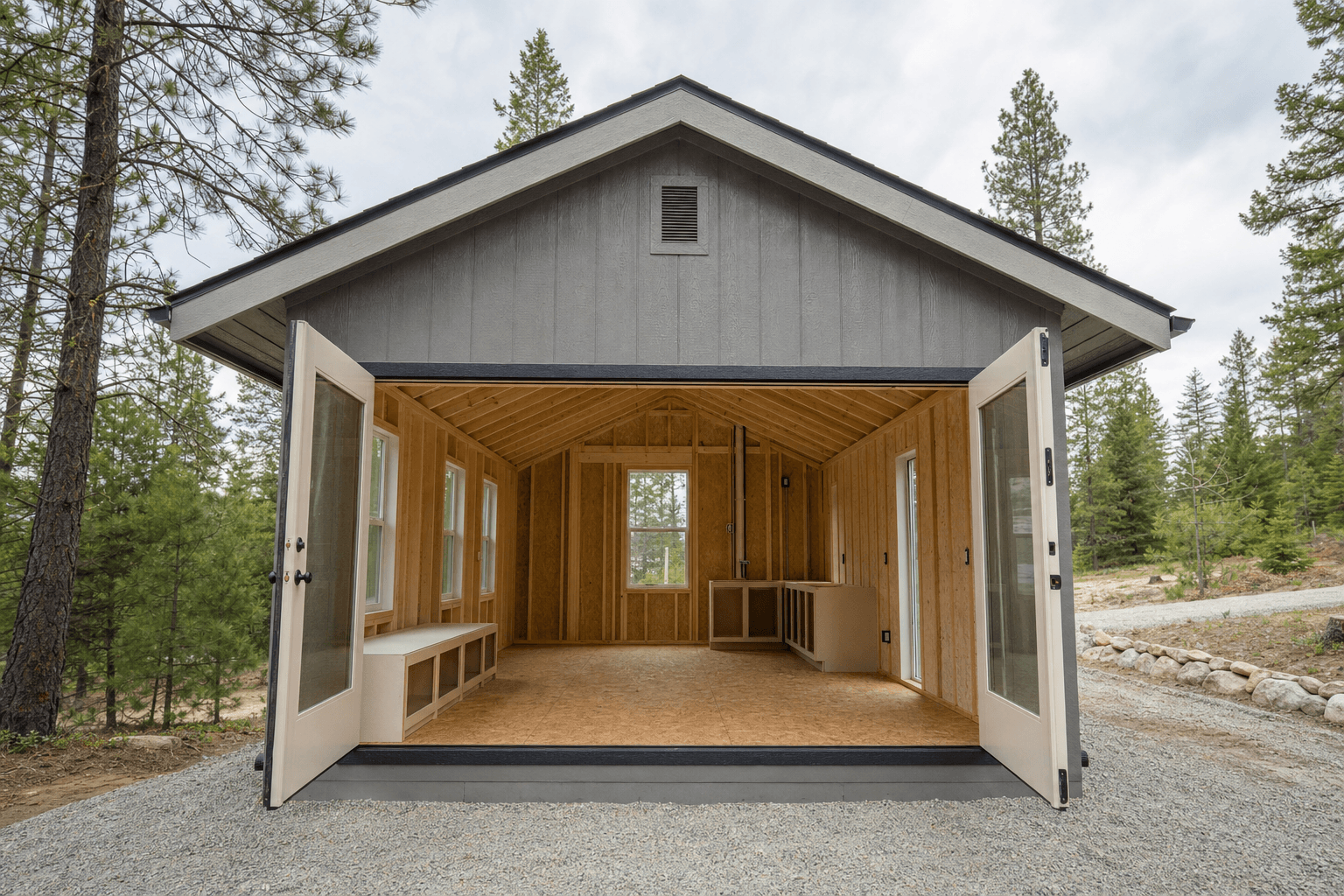
An ADU has to fit a full kitchen, a full bath, and a living zone — which is why it needs more footprint than a guest house.
Once you know whether you are building a guest house or an ADU, the interior almost designs itself, because each one has a fixed set of zones. A guest house breaks into a sleeping zone, a small sitting zone, a bathroom, and a kitchenette wall — and the smart move is to keep the kitchenette deliberately light, because the moment you add a permitted full range you have changed the building's classification. Keep the bath full and comfortable, give the bed a real wall, and let the sitting area double as a reading nook or a quiet office, and you have a space guests actually want to stay in.
An ADU adds two zones a guest house does not need: a real kitchen with counter, full-size appliances, and the plumbing and power to support them, and a clearly separated living area that functions as a home rather than a guest room. In a studio you blend the living and sleeping space and let the kitchen and bath anchor the corners; in a one-bedroom you wall off the bedroom so the unit lives like an apartment. Plan the utility runs early either way — where the water comes in, where the drain ties out, and how the panel is fed — because the difference between a kitchenette and a full kitchen, or a guest bath and a dwelling bath, is mostly a difference in plumbing and electrical you want roughed in correctly from day one rather than chased later.
The ADU gets a full permitted kitchen — range, full fridge, real counter, and the gas or 240-volt service to run it. The guest house keeps a kitchenette: sink, microwave, and a compact fridge that hosts a stay without triggering dwelling rules.
Both want a full bath, but a dwelling bath is plumbed and vented to year-round, lived-in standards. Plan the supply, drain, and venting for the path you chose so an inspector signs off the first time.
A guest house can often run off the main house service. A full ADU usually needs dwelling-grade water, sewer or septic capacity, and its own metered or sub-metered power — the single biggest cost and complexity gap between the two.
Anything someone sleeps in through a North Idaho winter needs insulated walls, ceiling, and floor, plus a sized heat source. An ADU that is occupied full-time leans on this even harder than a part-time guest house.
This is where the abstract decision becomes a concrete list of what goes inside, and the two paths name different things. A guest house is furnished to host: a real bed, a nightstand and reading lamp, a dresser or closet, a loveseat or two chairs, and a kitchenette wall with a bar sink, a countertop microwave, a compact under-counter fridge, a coffee setup, and a couple of cabinets — enough to make coffee, heat leftovers, and feel at home for a weekend or a season without a permitted range. The bathroom carries a full shower, a vanity, and a toilet on dwelling-quality plumbing. Add good blackout shades, a small dining table, and a wall-mounted heater or mini-split, and a guest house earns its keep.
A full ADU is outfitted to live in. The kitchen runs a full-size range or cooktop and oven, a full refrigerator, a real sink with a disposal, dishwasher plumbing if you want it, and a run of base and upper cabinets with usable counter. The bathroom is a complete dwelling bath. Beyond that, you are planning the things a home needs and a guest room does not: a hot-water heater sized for daily use, a panel or sub-panel with circuits for the kitchen, laundry hookups if you have room, smoke and CO detection to code, and storage for the stuff a full-time resident accumulates. The appliances, the water heater, the metered service, and the kitchen cabinetry are exactly the line items that push an ADU above a guest house on cost — and exactly what make it a place someone can actually live.
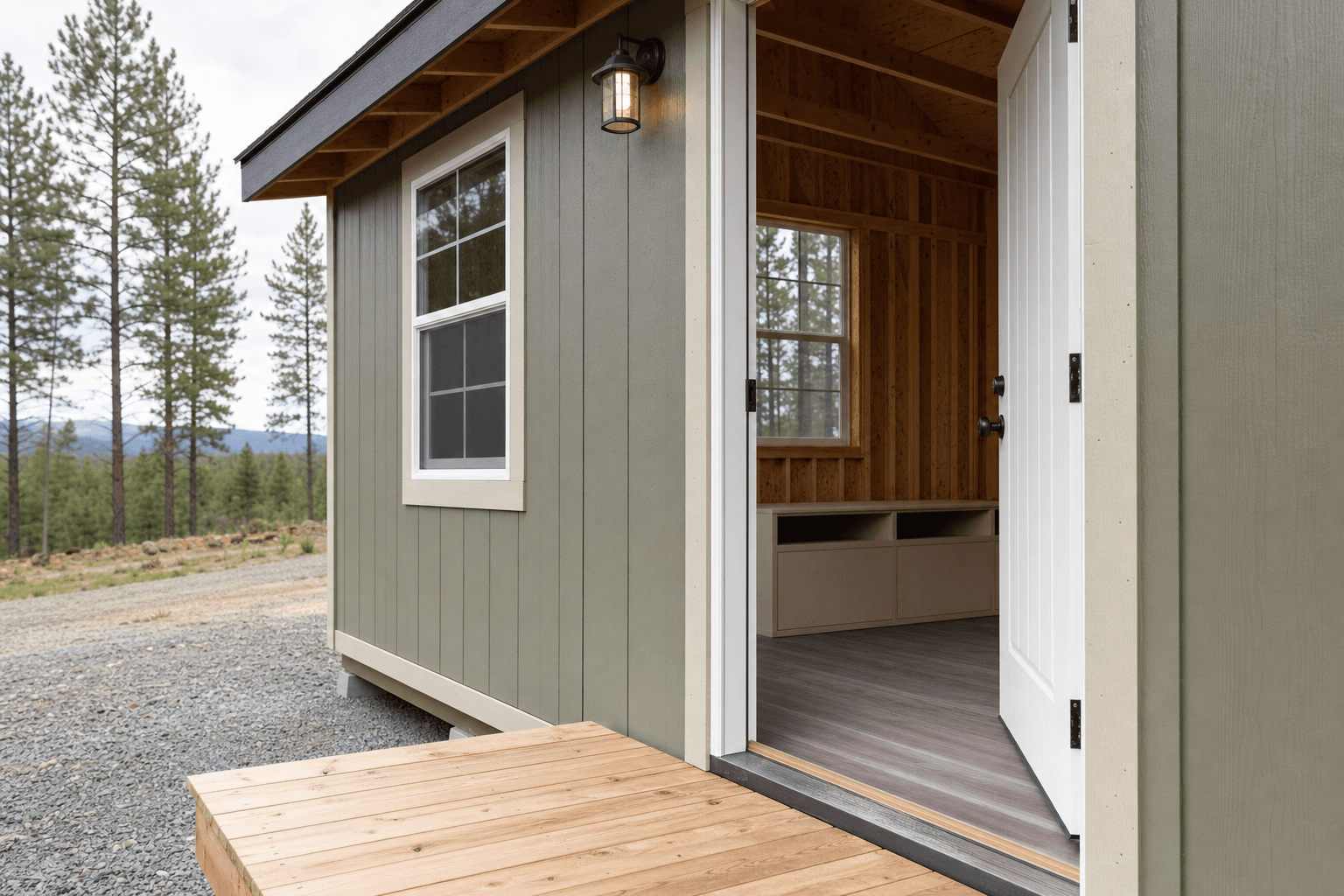
A kitchenette keeps a guest house on the accessory-space side of the line; a full permitted range moves it into ADU territory.
| Guest house vs ADU planning checklist | |
|---|---|
| Legal status | Guest house: accessory space, not a standalone dwelling. ADU: a recorded, independent second dwelling |
| Kitchen | Guest house: kitchenette (sink, microwave, compact fridge). ADU: full permitted kitchen with a range |
| Bathroom | Both want a full bath; the ADU bath is plumbed to year-round dwelling standards |
| Utilities | Guest house often runs off main-house service; ADU usually needs dwelling-grade water, sewer or septic, and metered power |
| Renting | Guest house: generally not as a separate residence. ADU: yes, where local zoning allows it |
| Footprint | Guest house: 12x20 to 12x24. ADU: 14x24 for a studio up to 16x24 for a one-bedroom |
Utilities are where the guest-house-versus-ADU gap shows up most in your budget, so plan them around the choice. A guest house with a kitchenette and a single bathroom can often be served off the main house — a sub-feed for lights, outlets, a heater, and the kitchenette, plus a water line and a drain tied into the existing system. That keeps the build simpler and cheaper, which is much of why people choose it. Even so, insulate it and give it a proper heat source, because a guest sleeping out back in January wants a warm room, not a cold cabin, and an uninsulated structure in North Idaho holds almost no heat.
A full ADU asks for dwelling-grade systems, and that is the heart of the cost difference. It typically needs water and sewer or septic capacity rated for full-time occupancy, its own metered or sub-metered electrical service sized for a kitchen and a hot-water heater, and heat that holds a comfortable temperature all winter for someone living there every day. Plan the panel, the water line, and the drain or septic tie-in at the very start, because retrofitting dwelling utilities into a building that was wired and plumbed as guest space is the expensive way to do it. Whichever path you pick, insulated walls, ceiling, and floor plus a sized mini-split or wall heater are non-negotiable for a North Idaho winter — the difference is that the ADU leans on them every single day.
Both buildings sit on a pad you have to get right, and a heated, plumbed living space asks more of the foundation than a storage shed does. A level, well-drained gravel pad or a poured slab keeps the building square, keeps water out, and gives plumbing and insulation a stable base — pour or grade it so meltwater drains away from the walls, and plan a clean, walkable approach so the path to the door does not turn into a mud or ice run every winter. Read how to prep a shed site before build day so the pad, the utility stubs, and the access are ready when we build it on your property.
Permits are the clearest place the two paths split. A guest house built as accessory space generally follows a simpler permit track. A full ADU is reviewed as a second dwelling, which means a longer permit, dwelling-grade plumbing and electrical inspections, conformance with setbacks and lot rules, and sometimes utility-connection or impact fees — and local zoning is what decides whether an ADU is even allowed on your lot and whether you can rent it. North Idaho winters drive the rest: a roof and anchoring rated for local snow load, insulation that keeps condensation off the structure, and a heat plan for the cold months. Confirm what your town and parcel allow on the service areas pages before you commit to the footprint and the kitchen, because the ADU you can build is the one your zoning permits — and that is a decision worth nailing down before the slab goes in.
An ADU — accessory dwelling unit — is a legally independent second home on your lot, with its own permitted kitchen, full bath, living and sleeping space, and metered utilities, recorded by the county as a separate dwelling someone can live in year-round. A guest house is accessory living space that deliberately stops short of that: a comfortable bedroom, a sitting area, and usually a full bath, but built and permitted as a guest structure rather than a standalone residence. The dividing line most jurisdictions watch is the kitchen — a full permitted range typically pushes a building from accessory space into second-dwelling status.
The ADU. Because it is a recognized second dwelling, it is reviewed on a longer permit track with dwelling-grade plumbing and electrical inspections, and it usually needs water and sewer or septic capacity rated for full-time occupancy plus its own metered or sub-metered power for a kitchen and water heater. A guest house built as accessory space generally follows a simpler permit path and can often run off the main house's service. That utility-and-permit gap is the single biggest difference in cost and complexity between the two.
If you want to rent the building as a separate residence with someone living there independently, you need a full ADU — and only where your local zoning allows ADUs and short- or long-term rental of them. A guest house is not permitted as a standalone dwelling, so renting it as a separate residence generally is not allowed. This is the most important reason to decide the path up front: you cannot legally rent a building that was never permitted as a dwelling, and converting one later means adding the kitchen, utilities, and inspections you skipped. Confirm the rental rules for your parcel before you build.
No — it just keeps a kitchenette instead of a full permitted kitchen. A guest house can have a bar sink, a countertop microwave, a compact under-counter fridge, a coffee setup, and cabinets, which is plenty to host a relative or a weekend guest comfortably. What it avoids is a permitted full-size range or cooktop, because that full cooking kitchen is usually what reclassifies the building as a second dwelling and pulls in the longer permit and dwelling utilities. If you want a real cooking kitchen, you are describing an ADU, not a guest house.
Meaningfully more, and it comes down to four things: the full kitchen with full-size appliances, dwelling-grade water and sewer or septic, its own metered electrical service sized for that kitchen and a water heater, and the longer permit and inspection track for a second dwelling. A guest house skips most of that — a kitchenette, a single bath off the main service, and a simpler permit — so it is faster and cheaper to build and finish. You can make a guest house just as comfortable and attractive; you are trading the legal independence and rentability of an ADU for lower cost and complexity.
Match the footprint to the job. For a guest house, a 12x20 holds a queen bedroom, a sitting area, a full bath, and a kitchenette, and a 12x24 adds depth to separate the sleeping and sitting zones. For an ADU, you need room for a full kitchen and a real living area, so a 14x24 is the honest floor for a studio dwelling, while a 16x24 gives a separated bedroom plus a living room and a full kitchen — the one-bedroom that lives and rents like a small apartment. The principle: a guest house can be smaller because it hosts, while an ADU needs more footprint to be a complete, year-round home.
Once you've worked through the permit gap and the kitchen question, the next decision is how this building actually gets built — and that matters a lot on a typical Coeur d'Alene or Post Falls lot. Delivered, pre-built structures can't always reach a rear-of-lot placement on a sloped or wooded parcel, and they arrive as a finished box with no ability to modify dimensions to fit your setbacks. A guest house or ADU built on site is framed in place: door placement, ceiling height, window count, and utility rough-ins are all decisions made to your plan, not whatever dimensions came off a truck.
In Kootenai County, an ADU triggers a more involved permit path than an accessory structure used only for guests. If you're in city limits — CDA, Post Falls, Hayden — zoning rules on ADU setbacks, lot coverage, and owner-occupancy differ from unincorporated county parcels, and your county assessor will want clear documentation of the building's classification. Getting that classification right from the start avoids costly reclassification when you refinance or sell.
North Idaho winters are a real design factor for either building type. A structure used year-round — whether it houses a renter or visiting family — needs insulation, a reliable heat source, and a foundation or blocking system that handles the freeze-thaw cycle this region delivers each spring. A building that's only guest overflow for summer weekends can be built more lightly, but it still needs a ventilated attic and a roof engineered for our winter snow load.
If you're ready to move from the decision to the design, start pricing your building or request a free estimate with the configuration you have in mind.
Tell us how you plan to use the space — hosting family, housing a relative, or renting it out — and we will help you pick the right path, size it to your lot, and plan the kitchen and utilities to match, then you can build and price it online.
Keep planning your build with related North Idaho shed guides.