North Idaho On Site Sheds

Home Brewery & Fermentation Shed Built On-Site in North Idaho

Need a home brewery shed in North Idaho? Built on-site with temp control and water access, custom sizes, and snow-ready details. Get a free estimate today.

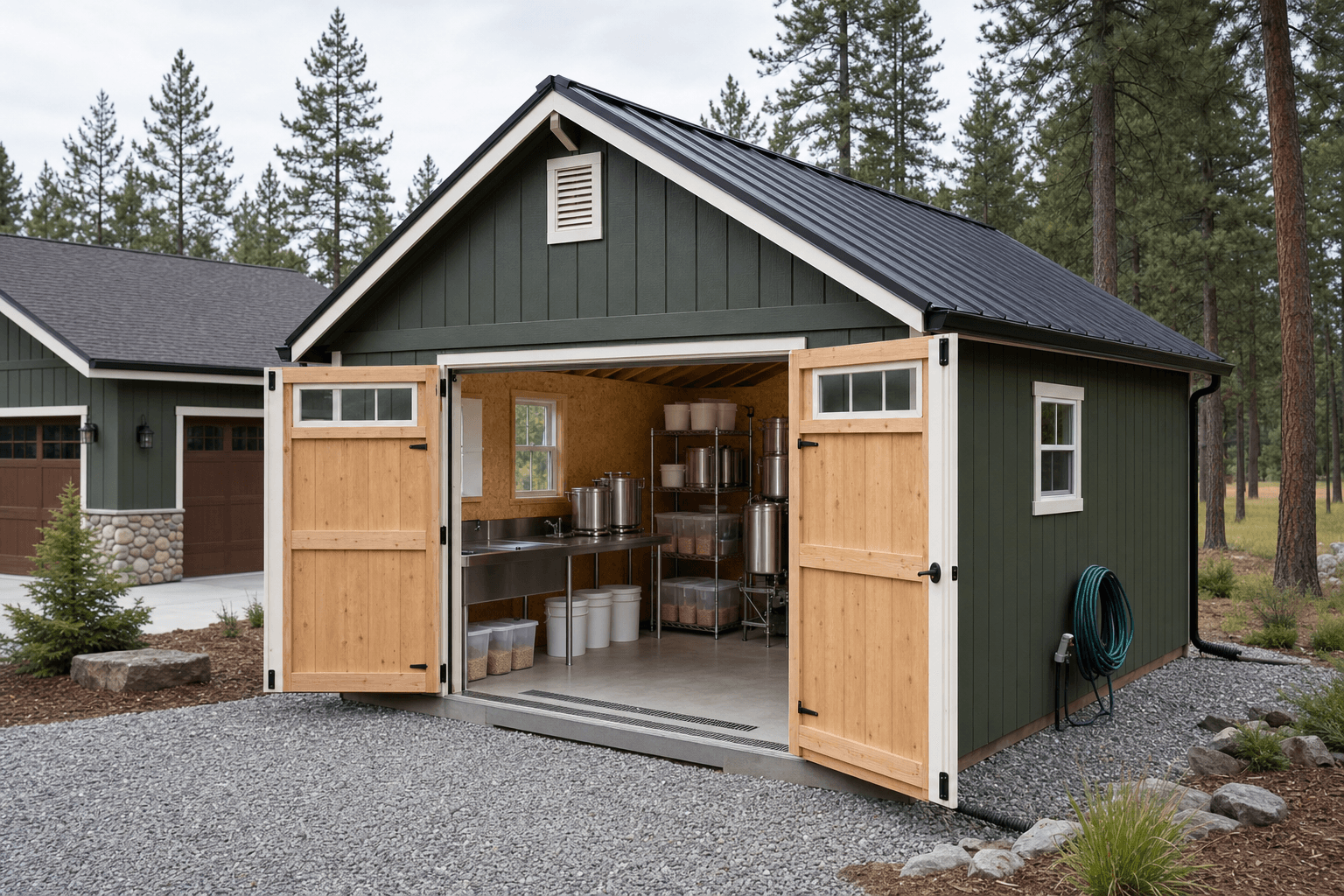
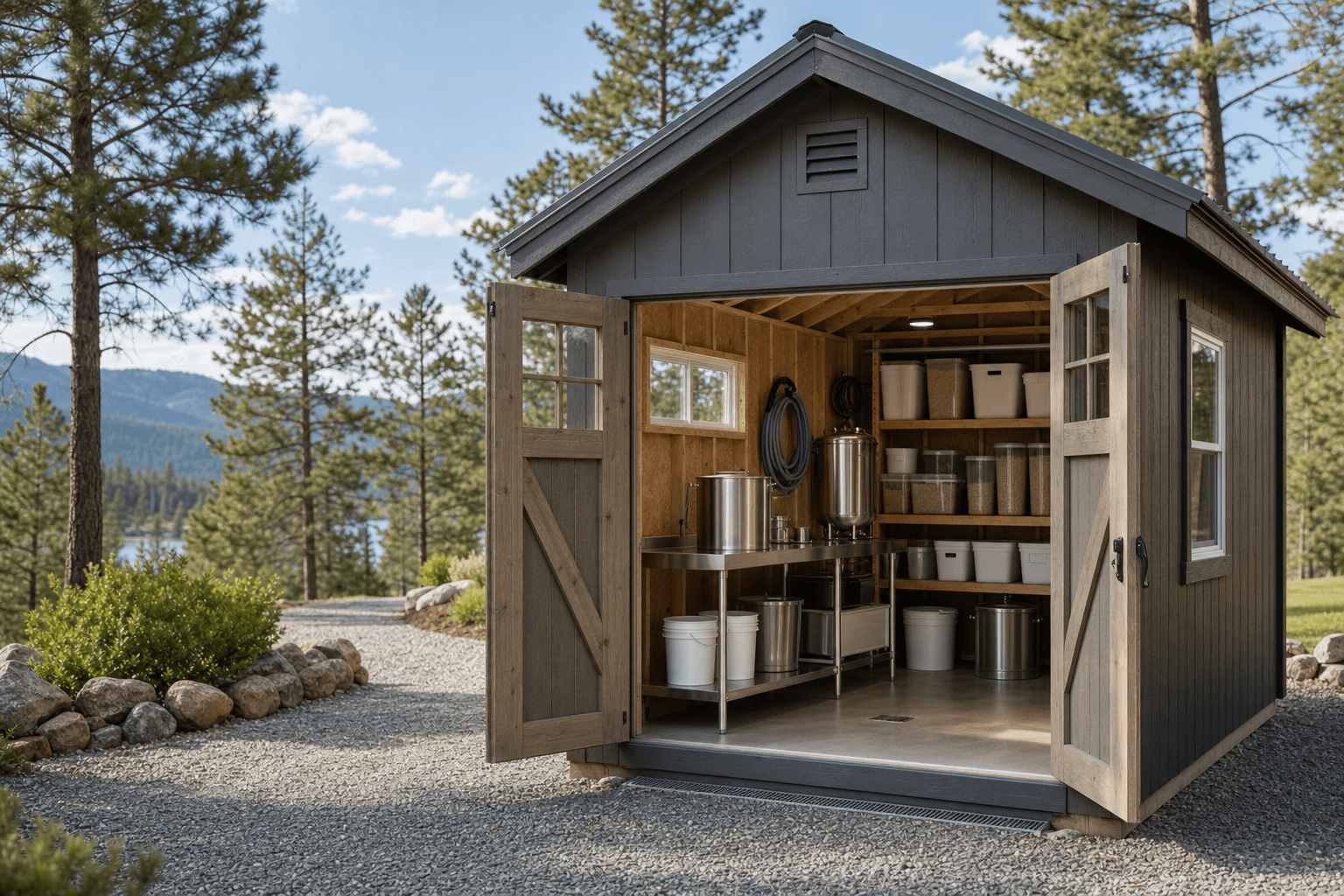
A home brewery or fermentation shed only works if the room is built around cleanliness, temperature control, water use, and workflow instead of treated like a hobby bench in a storage building. We build these sheds on-site so washdown, ventilation, fermentation space, keg storage, and utility routing can be matched to your brewing process and your North Idaho property instead of being forced into a prefab shell that was never meant for real brewing work.

Home Brewery & Fermentation Shed Built for North Idaho Weather

A home brewery shed in North Idaho has to do more than give you extra square footage. Brewing and fermentation both care about temperature, cleanliness, drainage, and workable access to water and equipment. If the room is too cold, too hot, hard to clean, or hard to move through with full vessels and gear, the brewing process becomes more frustrating than it needs to be.

The structure still has to handle the same North Idaho basics as any serious outbuilding: snow-ready framing, site prep that respects the common 24-inch frost-depth standard, and an entry path that stays usable through mud season and winter. But a brew shed adds another layer because the room is often actively washed down, heated, ventilated, and occupied while handling liquid, grain, and fermentation equipment.

That is one reason on-site construction matters so much. The room can be placed where utility routing, drainage, and year-round access make sense, and the shell can be built around the actual brew workflow instead of around the size and shape of a generic delivered shed. A fermentation room should fit the process first.

Fermentation is where North Idaho weather really shows up. Summer heat spikes and winter cold snaps can both push a batch away from the steady conditions it wants, especially if the room is basically an unconditioned shed with brewing gear inside. A serious brew room usually benefits from a shell that is easier to heat, easier to cool, and easier to keep dry after cleanup. That is not about making the room fancy. It is about making the brewing process more repeatable from batch to batch.

Home Brewery Shed Features & Build Options

The main features that separate a brewery shed from a general hobby shed are temperature control, water access, washable surfaces, ventilation, and storage for heavy brew gear. Fermentation is especially sensitive to temperature swings, which is why fermentation temperature control and why HVAC matters is one of the first planning guides worth reading.

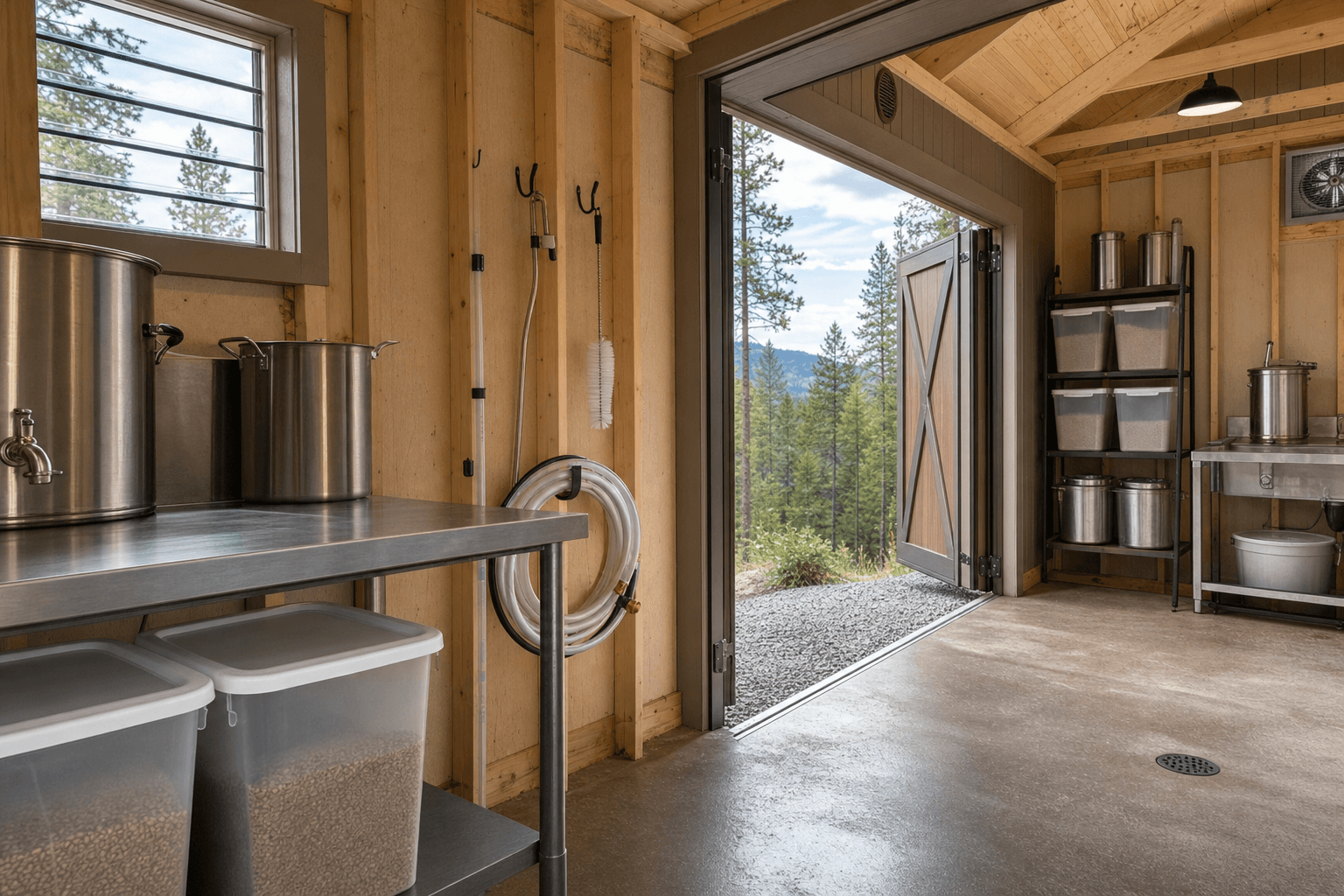
Water and washdown planning are the next major issues. Brewing is messy in a very specific way. Rinsing, cleaning, sanitizing, and handling spills all become much easier when the room has a realistic plan for water, cleanup, and flooring. Water and washdown planning for brew sheds matters early because it influences layout, not just finish choices.

Keg, bottle, grain, and equipment storage also deserve more planning than most owners expect. Fermenters, brew kettles, hoses, cleaners, bottles, kegs, grain, and packaging supplies take up room quickly, and the shed only works well if the storage supports sanitation instead of fighting it. Some owners compare the project to a bulk food storage shed or smokehouse shed because all three can be part of a broader homesteading system. That is useful context, but a brewery shed usually needs more washdown logic and tighter climate control than either of those rooms.

Electrical planning matters too. Brewing setups often want dedicated circuits, better task lighting, and enough power flexibility for pumps, temperature-control gear, fridges, freezers, or keg equipment. The room also works better when the hot side, the clean side, and the storage side do not all overlap. A brew shed that gives you one clear brew zone, one realistic cleaning path, and one protected fermentation area is much easier to sanitize and much less stressful to use on a long brew day.

Popular Home Brewery Shed Sizes & Layouts

A 10x12 is a practical starting point for a compact brew room with one main brew side and a small fermentation or storage edge. It works best when the owner has a disciplined system and the room is focused on small-batch brewing.

A 10x16 is one of the strongest all-around sizes because it allows more separation between active brewing, fermentation, and storage. That extra length helps a lot once hoses, bins, kettles, and fermenters are all in the same space.

A 12x12 works well when the room wants a squarer layout with more flexible circulation. A 12x16 or 12x20 makes sense when the shed has to support more serious fermentation control, more gear storage, or a cleaner split between brewing and cleaning functions.

The best layout usually treats the room as a process flow: ingredient and gear storage, brew area, fermentation area, cleanup path, and keg or bottle storage. When those functions overlap too much, the room starts feeling crowded and harder to keep sanitary.

Larger footprints start paying off when the room has to support both active brewing and quieter post-brew functions. Chest freezers, fermentation chambers, kegerators, grain bins, and bottle or keg storage all want more floor and wall space than people assume at first. If the room will host more than one fermenter at a time or keep packaging supplies close at hand, stepping from a compact size into a 12-foot-wide layout often feels like the point where the shed becomes a real small brewery space rather than a hobby corner.

What Size Home Brewery Shed Works Best?

The right size depends on how much of the room is really dedicated to brewing versus fermentation and storage. A compact brew setup may not need a huge footprint, but once the room also has to hold grain, kegs, bottles, cleaners, and a realistic fermentation zone, the square footage goes quickly.

Most owners start by comparing 10x12, 10x16, and 12x12. Those sizes usually cover the jump from a modest detached brew room to a more capable brewing-and-fermentation space. Moving up to 12x16 or 12x20 starts making sense when the room needs broader cleanup space, more stable fermentation control, or a heavier equipment load.

Placement matters too. A slightly bigger room is not worth much if it is awkward to reach in winter or poorly located for water and washdown. On-site construction helps because the room can be positioned around the real workflow, not just around the largest structure the property might technically accept.

How Does On-Site Home Brewery Shed Building Work?

On-site building is especially useful for brewery sheds because these projects are workflow-driven. We look at where utilities should come from, how the room should be approached, what the cleanup path needs to be, and how the interior should separate active brewing from fermentation and storage. Those are hard problems to solve cleanly if the shell is generic from the start.

The process usually begins with site placement and the intended brewing setup. From there, the room can be framed around the washdown plan, temperature-control strategy, and how much storage the owner needs for grain, kegs, bottles, and equipment. If the shed is supposed to function like a real brewery room, it is much easier to build honestly for that from day one.

That flexibility matters even more on North Idaho properties with longer utility runs, snow-prone walkways, or uneven ground. A brewery shed that looks workable in August can become annoying fast if water routing, drainage, or winter access were treated as afterthoughts. Building on-site lets the room respond to those realities before the footprint is locked, which is usually the difference between a space that gets used consistently and one that feels like a seasonal compromise.

Home Brewery Shed Service Areas Across North Idaho

We build home brewery and fermentation sheds across Kootenai, Bonner, Boundary, Shoshone, and Benewah counties. Around Athol, Spirit Lake, Hayden, and rural parts of the region, these sheds often make sense because owners want a dedicated process room without taking over indoor living or garage space.

On more compact lots, the challenge is usually fitting a clean, practical brew room into the property while keeping it convenient for water access and regular use. On larger rural parcels, exposure, longer utility routes, and winter access become bigger concerns. In both cases, the room works best when the process flow and the site plan are considered together.

If you are comparing budget or sizes, the next practical stops are the pricing guide and the free estimate page. Brewery sheds benefit from a quick site-specific conversation because washdown, fermentation control, and access all matter more here than they do in a basic hobby room.

The same shed can serve very different brewing styles depending on the property. Some owners want a compact detached room for small-batch brewing close to the house. Others want more separation so grain handling, boil-day humidity, and cleanup stay out of the garage entirely. Around North Idaho, that makes site-specific planning valuable. The best brewery sheds are not generic hobby rooms. They are built around the owner's batch size, utility realities, and how often the room needs to function through winter.

Frequently Asked Questions About Home Brewery Shed

The FAQ section below covers the short answers on cost, permits, timing, and common sizing. Those help, but the real value of a brewery shed usually comes from whether the room supports a clean, repeatable process from brew day through fermentation and storage.

If you want a room that functions like a true homebrew workspace instead of a storage shed with equipment in it, request a free estimate. That is the quickest way to line up the utilities, layout, and temperature-control needs with the way you actually brew.

Built for North Idaho weather

  • Engineered for snow load

    Roofs framed for North Idaho's 70+ psf ground snow load.

  • Wind-rated

    Anchored and braced for the gusts that funnel down our valleys.

  • Sealed for freeze-thaw

    Detailed drip edges, sealed penetrations, and breathable wraps.

  • 12-year warranty

    Bumper-to-bumper coverage on materials and workmanship.

What you get

  • Temp control

  • water access

  • washable floor

  • ventilation

  • keg storage

How it works

  1. Step 1Site visit

    We come to you, listen to how you want to use the shed, and read the site.

  2. Step 2Free estimate

    You get a single, all-in price — no surprises, no upsell.

  3. Step 3Build day

    We build it on your property in a single visit. No delivery permits, no crane fees.

  4. Step 4Walkthrough

    We hand it over with a walkthrough of materials, doors, and aftercare.

Frequently asked questions

  • How much does a home brewery shed cost in North Idaho?

    Most home brewery shed projects in North Idaho start around $6,400 and can reach $13,700 depending on size, foundation, utilities, insulation, and finish level. Site access, snow loads, and feature upgrades can move pricing higher. See our pricing guide or request a free estimate.

  • What size home brewery shed works best in North Idaho?

    Most home brewery shed builds land in the 10x12, 10x16, 12x12 range, while 12x16, 12x20 works better when you need more clearance, storage zones, or finished space. North Idaho lot layout, setbacks, and access matter as much as square footage. Compare 10x12, 10x16, and 12x12.

  • Do I need a permit for a home brewery shed in North Idaho?

    Often yes. Many home brewery shed projects land at or above 200 square feet or include utilities, which makes permit review more likely in North Idaho. Even when a simpler footprint follows the under-200-sq-ft path, setbacks, HOA rules, and intended use still matter. Review permit basics and request a site-specific estimate.

  • How long does it take to build a home brewery shed on-site in North Idaho?

    Most home brewery shed projects take about 2-3 on-site days once the site is ready and materials are staged. Larger footprints, slab work, insulation, wiring, plumbing, and muddy or tight North Idaho access can extend the schedule. See how our build process works.

Ready to get started?

Get Your Free Estimate