A honey extraction shed should make a short, seasonal workflow easier: bring supers in, stage frames, uncap, extract or strain, hold blank food-safe buckets, clean tools, and keep the work surface organized. It is not meant to imply a commercial processing plant or regulated certification. It is a buildable support shed shell for beekeepers who want the messy parts of harvest out of the house and protected from weather.
Good design starts with separation. Sticky tools, clean buckets, empty frames, cappings, and hive gear should not all land on one table. The shed needs washable work surfaces, storage that keeps tools off the floor, screened or ventilated openings, a clean threshold, and enough aisle width to move full buckets without clipping corners.
Food handling, sanitation, labeling, sale requirements, and inspection rules depend on applicable guidance and local rules. North Idaho On Site Sheds can build the shed envelope and help plan the workflow, but the owner remains responsible for food-safety practices and any requirements that apply to how the honey is handled or sold.
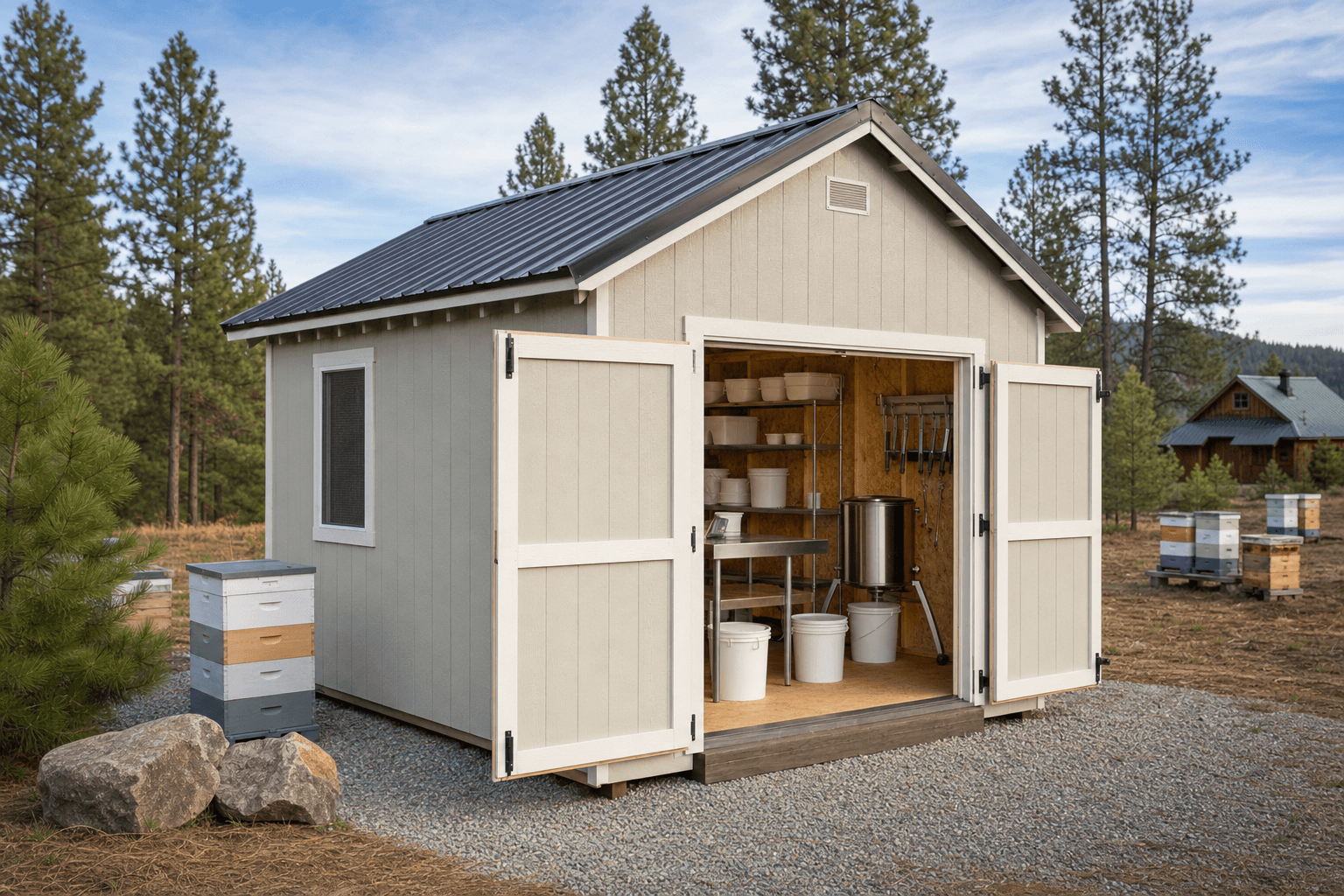
A honey extraction support shed should show washable surfaces, blank bucket staging, tool storage, ventilation, and weather protection without commercial processing cues.
Counters, wall zones near the workbench, and floor details should be chosen for cleanup rather than decorative storage. Smooth, durable surfaces help the room reset after a sticky harvest day.
Hive tools, uncapping gear, filters, clean pails, and empty frames need visible storage so the room does not turn into a pile during peak harvest.
Screened openings and planned airflow support comfort and pest awareness without inviting bees or debris into the work area.
A shed that looks large enough can still fail if full buckets, strainers, and storage tubs have no clear path between the door and work surface.
The shed can support a clean workflow, but it should not be described as certified food-processing space unless the owner pursues and meets the applicable requirements. A practical page and a practical build both need the same boundary: the shed shell can provide washable surfaces, protected storage, ventilation planning, and weather cover; it does not replace sanitation routines, licensing decisions, labels, or local health guidance.
That boundary affects layout. If honey is for personal use, the room still benefits from clean surfaces and good storage. If honey will be sold, the owner should check current Idaho and local guidance before assuming the shed, equipment, or labels are enough. Building in clear space for cleaning, drying, covered bucket storage, and separate dirty and clean zones makes either path easier to manage.
The safest shed language is honest and specific: support shed, harvest workspace, washable work surfaces, organized beekeeping workflow, and planning space for owner-selected food-safe equipment. Avoid promising commercial capacity, inspection status, or professional processing performance.
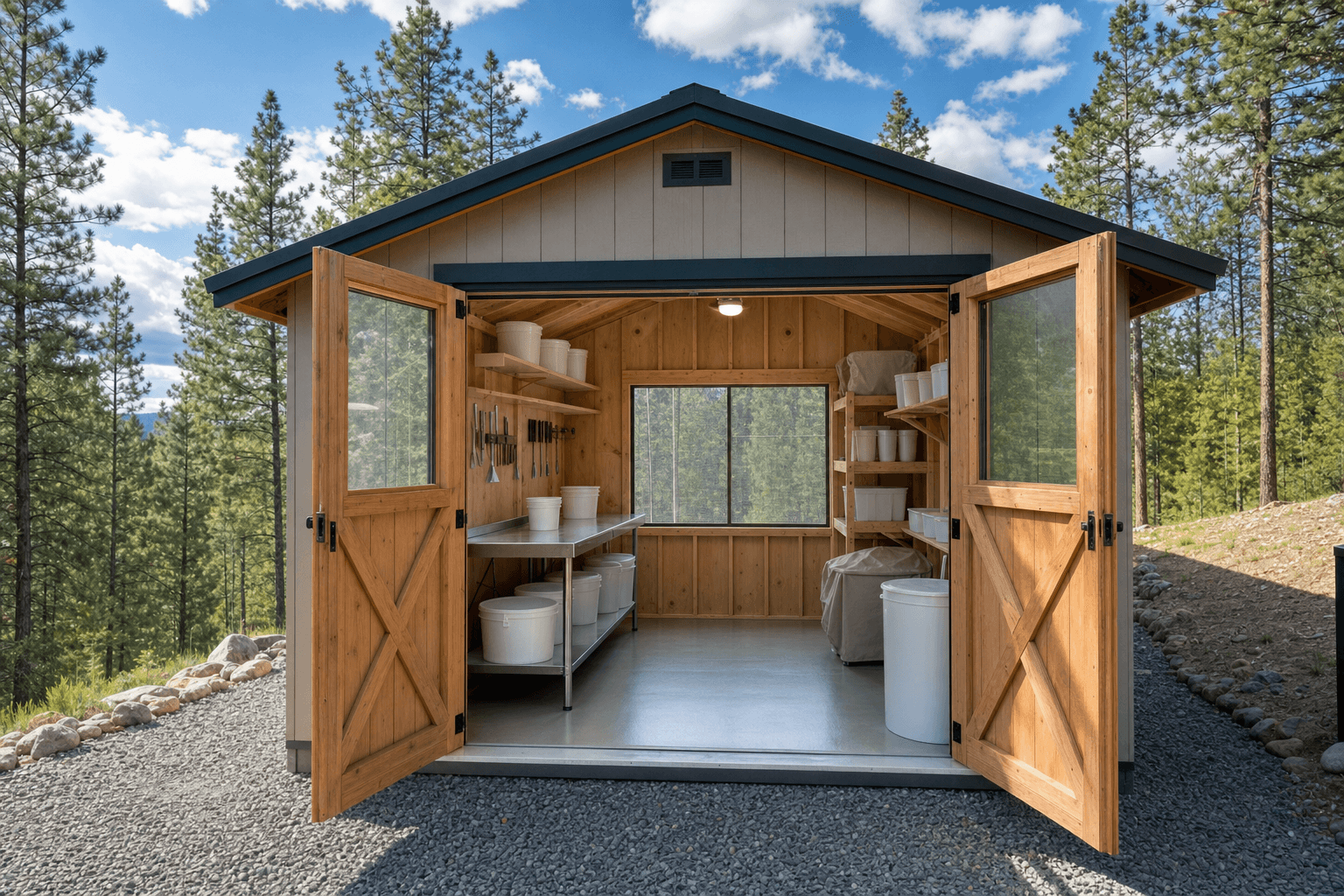
Open-door workflow views help buyers plan clean surfaces, bucket staging, tool storage, airflow, and cleanup space in a compact shed footprint.
Reserve a covered landing zone near the door so supers and frames do not immediately crowd the clean work surface.
Blank buckets, lids, strainers, and small parts should have a protected dry zone that is easy to inspect before harvest starts.
Hooks, shallow shelves, and bins keep hive tools, scrapers, brushes, gloves, and uncapping gear visible without crowding the table.
Ventilation and screened openings help comfort and pest awareness while preserving the weather protection that makes the shed useful.
Most extraction support sheds do their hardest work during a short harvest window. That is when the layout has to handle heavy buckets, sticky frames, wet cleanup, and quick transitions between dirty and clean tasks. A compact shed can work well if the door, table, bucket zone, and storage wall are aligned. A larger shed can still feel chaotic if every task crosses the same corner.
North Idaho weather adds another layer. Rain, smoke, dust, cold mornings, and harvest-season heat can all affect comfort and cleanup. A covered threshold, gravel approach, roof runoff plan, and door swing that does not fight the main carry path make repeated trips easier. If the shed will receive power, plumbing, heat, or specialized extraction equipment, those trade questions should be planned separately and early.
Pest awareness belongs in the design, too. The room should close up cleanly, avoid open sticky storage, and make it easy to remove residue after harvest. Screened ventilation, tight storage habits, and washable surfaces are more useful than a large room that is hard to clean.
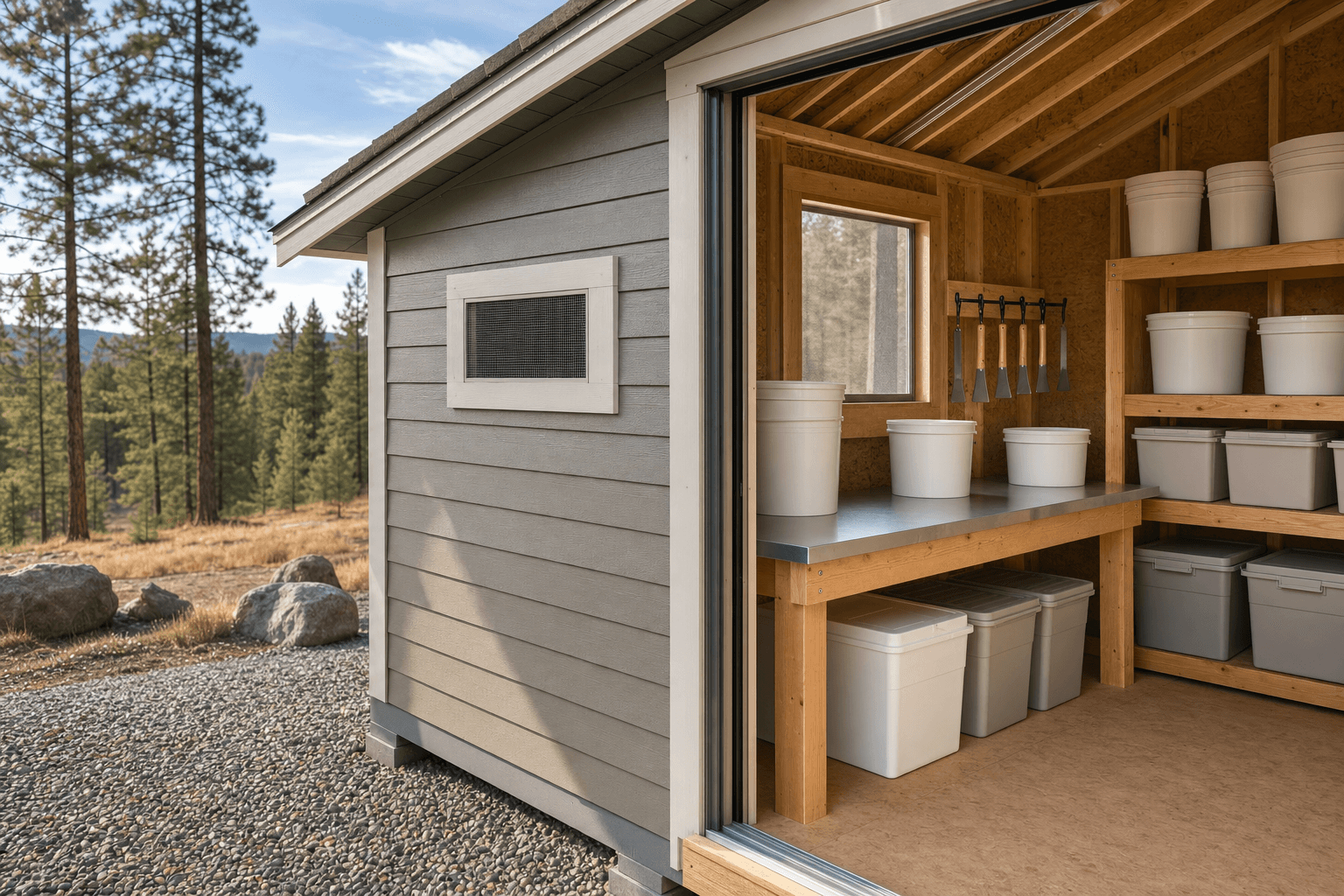
Detail views should keep the planning focused on cleanable surfaces, bucket staging, ventilation, dry storage, and organized hive-tool access.
A honey extraction support shed needs to handle short harvest windows, weather shifts, cleanup, and organized off-season storage.
Roof runoff, a clean gravel approach, and a covered threshold help keep sticky harvest work from mixing with mud.
Airflow should support comfort and drying while openings remain planned around pests, debris, and seasonal conditions.
Food handling, sanitation, sale, and inspection requirements depend on current guidance and local rules.
It supports seasonal beekeeping workflow by giving frames, buckets, filters, tools, and cleanup tasks a protected place. It is a support shed shell, not a promise of commercial processing approval.
No. North Idaho On Site Sheds can build the shed envelope and help plan workflow features. Food handling, sanitation, labeling, inspection, and sale requirements depend on current guidance and local rules.
Use smooth, washable work surfaces, protected bucket storage, and wall or shelf zones that can be cleaned after sticky harvest work. Avoid layouts where clean buckets share space with dirty tools.
Plan enough airflow for comfort and drying, with screened openings where appropriate. The goal is ventilation without inviting bees, dust, or pests into sticky work areas.
Many hobby workflows start around 8x12 or 10x12, while larger frame counts, two-person work, or extra storage may justify 10x16 or 12x16. Bucket clearance and aisle width matter as much as square footage.
Bring hive count, extraction method, bucket sizes, table dimensions, storage needs, cleanup plans, utility questions, and where supers will come from on the property. Those details shape the room.
Tell us your hive count, bucket sizes, extraction method, cleanup needs, and property access. We will help size a buildable support shed shell around the workflow.
Every shed we make is built on site in North Idaho. Explore other uses we build for.