A dog deserves better than a wire crate in a cold garage or a doghouse buried in January snow, and in North Idaho the gap between those options and real shelter is wide. A dog kennel shed closes it — a small, insulated building with warm sleeping quarters, an attached run for fresh air and exercise, and easy-clean surfaces that let you keep the whole space sanitary in a few minutes. Whether you raise a litter, work a hunting or sporting dog hard through the season, run a small boarding setup, or simply want your dogs comfortable and secure when they cannot be in the house, this guide walks through planning one for a Coeur d'Alene or Kootenai County property: which roofline and footprint fit the dogs you have, how to hold a comfortable temperature through a sub-zero night and a hot August afternoon, and the ventilation, drainage, and escape-proof construction that keep the dogs healthy and safe.
North Idaho On Site Sheds builds every dog kennel shed on your property, so the plan answers to your slope, your power run, your dogs, and the number of runs you want. The whole design hinges on three things working together — comfort, climate, and cleanliness — because a dog that is too cold, too hot, or living on a surface you cannot sanitize is a dog whose welfare and health suffer. Start with the sleeping quarters and the run, then size, insulate, and finish the building around the animals that live in it rather than treating it like plain storage. If your needs run broader than dogs toward chickens, goats, or other animals, our pet and animal shelters cover the same humane, weatherproof approach for a wider range of livestock and companions.
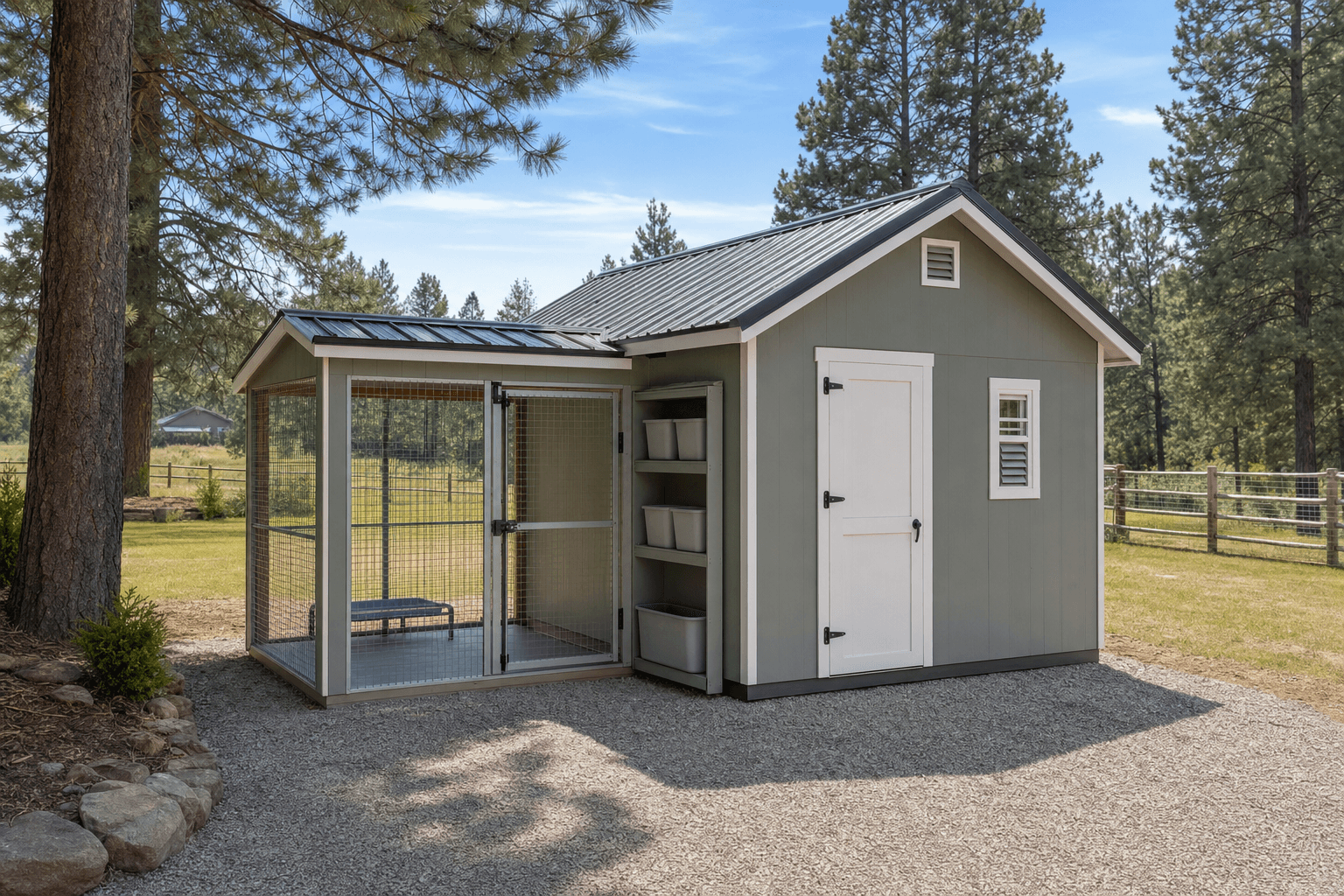
A dog kennel shed pairs warm, insulated sleeping quarters with an attached run and surfaces you can keep clean.
A standard gable is the workhorse for a dog kennel shed. The symmetrical roof sheds snow cleanly off the sleeping quarters, the straight sidewalls let you line up runs and stalls efficiently, and you get even headroom to stand and work — which matters when you are cleaning daily and lifting a sick dog out. Because the building is climate-controlled, you do not need a wall of glass; a couple of windows for daylight and a cross-breeze in summer is plenty, and fewer, smaller openings make the insulated quarters far easier to hold at temperature through a cold North Idaho night.
A lean-to or single-slope roof reads clean against a fence line and works well when you tuck the covered run under the low side and keep the tall wall for the insulated sleeping boxes, though headroom drops on the short side. A lofted barn (gambrel) buys an upper bay for bagged food, bedding, and seasonal gear, keeping the floor clear for the dogs and a wash-down aisle. If you also store feed in volume, run a separate freezer, or keep a grooming and supply area, lean the layout toward something closer to farm storage with a dry, secured room beside the kennel so dog food and bedding stay out of the humid run air. And if your project is really about housing chickens or ducks rather than dogs, a purpose-built chicken coop shed is laid out around nesting boxes, roosts, and a predator-proof run instead of kennel quarters — worth distinguishing before you settle the footprint.
Plan two zones, not one: an insulated indoor sleeping area the dog can warm, and an attached run for air and movement. A single 8x8 fits one dog comfortably; multiple dogs need length for separate runs.
Tally how many dogs and how big. A large or working breed wants a sleeping box it can stand and turn in plus a long run; small dogs pack tighter. Size to the animals, not a guess.
A dog kennel shed is climate-controlled, so plan a tighter envelope than plain storage. Insulated quarters with good drainage are warmer in winter, cooler in summer, and far easier to keep sanitary.
For a single dog or a closely bonded pair, an 8x8 dog kennel shed is the honest minimum: room for an insulated sleeping box, a small covered indoor area, and a doorway to an attached run, though it fills up the moment you add a second independent run. An 8x10 gives you that second run or a wash-down and supply nook beside the quarters, so cleaning and feeding are not fighting the sleeping space. The size many serious dog owners settle on is an 8x12: two separate insulated quarters with their own runs, a center aisle to work both, and a corner for food storage and a grooming or wash station near the door.
If you run multiple dogs, raise litters, or want indoor runs plus a real grooming and feed room in the same building, step up to a 10x12. The extra width lets the runs face a center aisle so you can hose down and feed both sides without crowding, and leaves a dry corner for a freezer, bagged food, leashes, and medical supplies. The deeper footprint also gives a heater and ventilation room to do their jobs without blasting the dogs directly — and it is the same footprint that suits a hybrid build sharing duties with farm storage when the kennel sits on acreage with other chores nearby.
These get confused, and picking the right build saves you from finishing for the wrong animal. A dog kennel shed is an insulated, climate-controlled building with sleeping quarters, an attached exercise run, and washable surfaces purpose-built around dogs — their size, their need to move, and the daily cleaning a kennel demands. A broader pet shelter follows the same humane, weatherproof principles but flexes to house other companions and livestock, so if you keep a mix of animals or are not sure dogs are the only tenant, the more general build leaves you room to adapt the interior.
A chicken coop shed, by contrast, is laid out for poultry — nesting boxes, roosting bars, a droppings board, and a predator-proof, hardware-cloth run sized to birds rather than a dog that wants to pace and play. The construction logic overlaps (insulation, ventilation, escape- and predator-proofing, easy cleaning) but the interior fit-out is entirely different. And if the real driver is keeping bagged feed, bedding, and supplies dry and secured for any of these animals, a dedicated farm storage building beside the kennel keeps food out of the humid, hair-filled kennel air where it would spoil or draw pests.
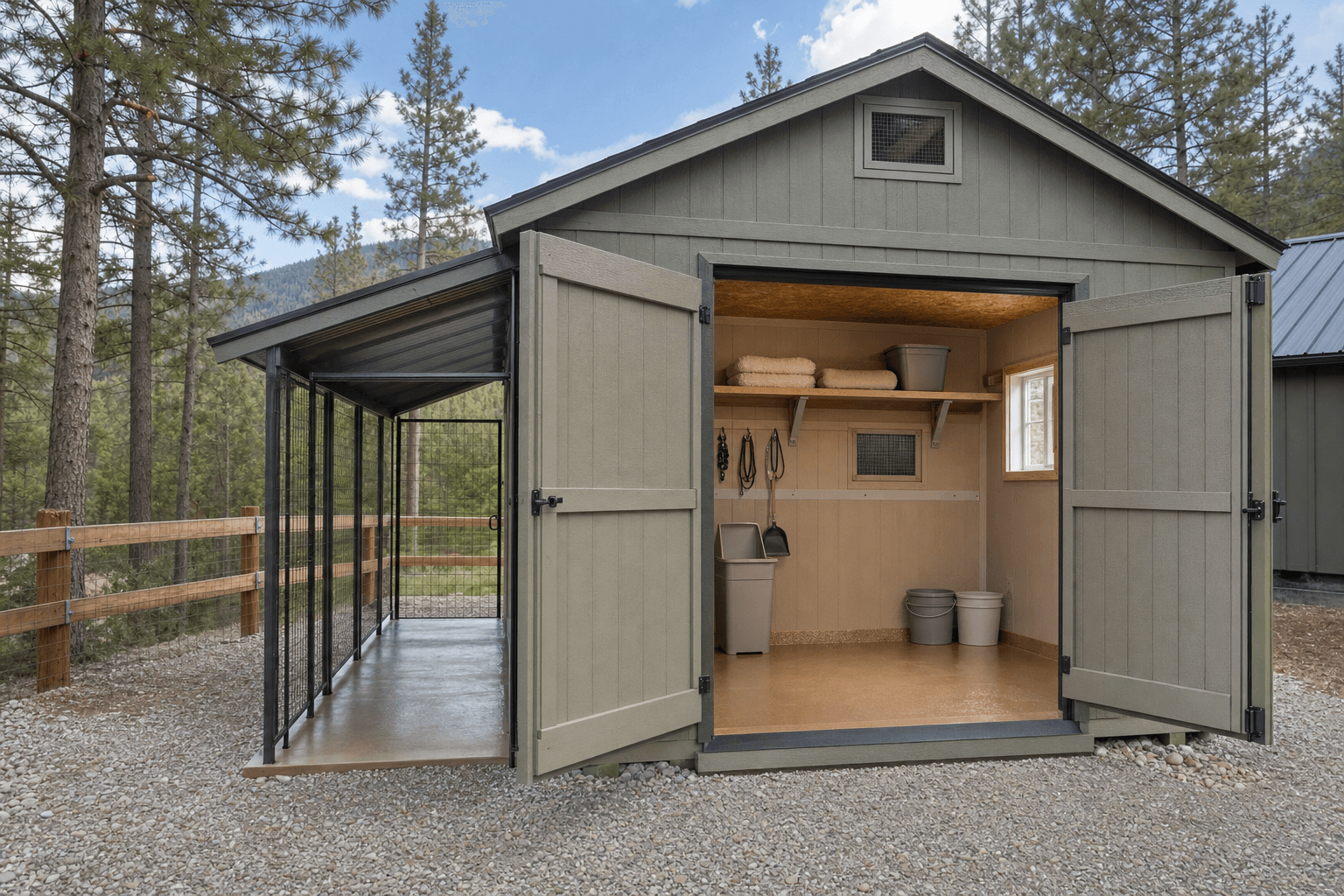
Zoning the building keeps warm sleeping quarters, the exercise run, and the wash-down and feed area from colliding.
A dog kennel shed works when each part of a dog's day gets its own spot. Build it around four zones. The sleeping zone is the warm heart: an insulated box or stall, raised off the floor, sized so the dog can stand, turn around, and stretch out, with a draft-free corner for bedding where the dog can hold its own body heat in winter. Keep it tight and low-ceilinged enough to stay cozy, away from the door's cold draft, and easy to reach so you can swap bedding and check on a sick dog without crawling.
The run zone is the attached exercise space — a covered, secure run off the sleeping quarters where the dog gets fresh air, daylight, and room to move without being let loose, ideally with a dog door or guillotine gate between the two so the dog chooses warmth or air. The service zone is your wash-down and feeding area: a spot near the door for food and water stations, a hose bib or wash sink, and a place to hang leashes, towels, and cleaning gear so feeding and sanitizing do not crowd the dogs. The storage zone rounds it out — a dry, sealed corner or upper shelf for bagged food, bedding, and supplies, kept away from the humid run air. Slope the whole floor to a drain and leave a clear aisle so you can hose, squeegee, and carry a feed bucket from end to end without stepping over a dog.
Insulated, draft-free sleeping boxes raised off the floor and sized to the dog, with a warm bedding corner. The dog holds its own heat in a snug box far better than in an open, cold room, which is the heart of winter comfort.
A thermostatically controlled, dog-safe heater for sub-zero nights and either a fan, an exhaust vent, or a small AC unit for hot afternoons, so the quarters stay in a comfortable band through North Idaho's full temperature swing.
Sealed, non-porous floors and lower walls sloped to a drain, with washable, chew-resistant kennel panels. The whole interior should hose down and disinfect in minutes so waste, hair, and odor never build up.
Cross-ventilation, vents, or an exhaust fan that exchange the air without chilling the sleeping box, clearing ammonia, moisture, and odor that otherwise irritate a dog's eyes and lungs in a closed building.
The fit-out is where a kennel earns the name, so plan space for the exact things you reach for every day. In and around the quarters: raised, chew-resistant dog beds or cots, washable bedding and blankets, a self-warming or heated pad for puppies and senior dogs, and modular kennel panels or gates that let you reconfigure runs. The feeding kit is its own line: stainless or no-tip food and water bowls, a dog kennel shed really benefits from elevated feeders and an automatic or heated waterer so the water does not freeze on a January morning, plus airtight, rodent-proof food bins.
The cleaning and sanitation gear needs a home by the door: a hose and nozzle or a wash sink, a squeegee, a stiff deck brush, a wet vac, pet-safe disinfectant and an enzymatic odor cleaner, waste bags and a covered bin, and a roll of towels. The climate and air kit lives where it serves the quarters: a thermostat-controlled heater, a fan or exhaust vent, a thermometer in the sleeping box, and a humidity check so the building does not stay damp. Round out the supply corner with leashes, collars, and harnesses on hooks, a grooming table or mat with clippers and a brush, a first-aid and medication shelf kept up out of reach, training treats, toys, and a small tool tray for the latches and hardware you will inevitably adjust. Keep the bagged food, bedding, and seasonal supplies on a dry, high shelf or in the sealed storage zone, away from the run.
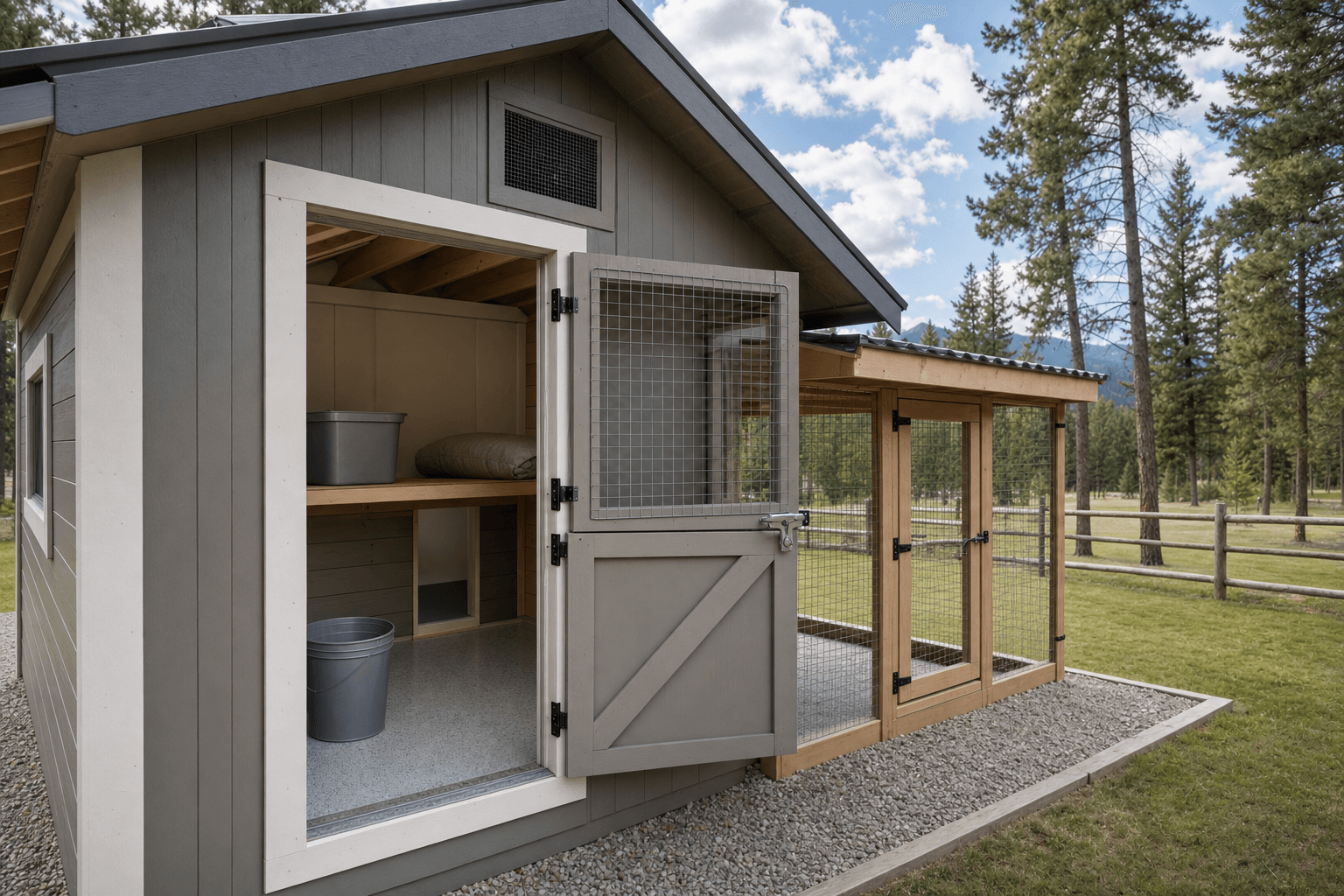
Sealed, sloped floors that drain to a channel let the whole kennel hose down and disinfect in minutes.
| Dog kennel shed planning checklist | |
|---|---|
| Best all-round size | 8x12 for two insulated quarters with their own runs, a working aisle, and a wash-down and feed corner |
| Sleeping quarters | Insulated, draft-free boxes raised off the floor, sized so each dog can stand, turn, and stretch out |
| Climate control | A dog-safe thermostat heater for sub-zero nights plus a fan, vent, or small AC for hot afternoons |
| Easy-clean surfaces | Sealed, non-porous floors and lower walls sloped to a drain, with washable, chew-resistant panels |
| Ventilation | Cross-vents or an exhaust fan that clear ammonia, moisture, and odor without chilling the sleeping box |
| Secure construction | Escape-proof latches, reinforced gates, dig guards, and chew-resistant materials throughout the runs |
A dog kennel shed earns its keep year-round, so power is part of the build, not an afterthought. Plan a dedicated circuit with enough outlets for a heater, a fan or exhaust, a heated waterer, and lighting all running at once, because the heaviest demand lands in the coldest, darkest part of the North Idaho year. Put outlets and any heater up where a dog cannot reach a cord or chew it, route wiring safely behind chew-resistant panels, and add good overhead lighting so you can check on the dogs, clean, and handle a late-night emergency without fumbling in the dark. A timer or thermostat on the heater and lights takes the daily fuss out of it.
Winter readiness is what separates a real kennel from a fair-weather doghouse. Insulate the walls, roof, and especially the floor and seal the envelope so a small thermostatically controlled heater holds the sleeping quarters in a comfortable, safe band on a single-digit night without running flat out — and so the heat you pay for warms the dogs, not the frozen ground. Insulation also steadies the swings, so the quarters do not crash twenty degrees the moment the sun drops or bake under a summer roof. Mind the water: a heated bowl or waterer keeps drinking water from freezing, and a sloped, sealed floor that drains means wash water and snowmelt do not pool and freeze into a hazard. In summer the same insulated, well-vented building stays far cooler than a bare metal or uninsulated structure, which matters as much for a dog's safety in August as the heater does in January.
Because we build on your property, the pad, drainage, and placement are part of the plan. A level, well-drained gravel pad is the standard base: it keeps the floor framing off wet ground, carries snowmelt and wash water away from the building, and gives a sealed, sloped kennel floor a dry, stable footing — which matters for a humid space you hose out regularly and do not want sitting in mud or wicking cold up under the dogs. Set the shed where a gravel driveway or path reaches the door so you can carry feed and bedding in without crossing mud, run the power line in early, and place a drain or French drain so the run does not turn into a mire after a thaw.
North Idaho weather drives the structure. We build for local snow load, so the roof and framing carry a heavy winter without sagging over the quarters and run, and we use treated and pine materials suited to the freeze-thaw swings here. Site the building so snow sliding off the roof clears the run and the door rather than burying the dogs' access, point the run to catch winter sun and summer shade where you can, and keep the kennel off the lowest, soggiest corner of the yard. Placement near the house also lets you hear the dogs and reach them fast. Permitting depends on size and your jurisdiction in Kootenai County or your city — most smaller kennel sheds fall under the threshold, but confirm setbacks, any electrical permit for the dedicated circuit, animal-keeping or noise rules, and HOA limits before the build. When you are ready, get a free estimate or build and price a shed to see your size, insulation, climate, and run options come together.
Treat it as a climate-controlled room and plan for both extremes. For winter, insulate the walls, roof, and floor and seal the envelope so a small thermostatically controlled, dog-safe heater can hold the sleeping quarters in a comfortable, safe band on a single-digit night without running flat out — and give each dog a snug, draft-free insulated box raised off the floor so it can hold its own body heat. For summer, the same insulation keeps the building far cooler than bare metal or an uninsulated shed, and a fan, an exhaust vent, or a small AC unit clears heat from a hot afternoon. Keep the heater and any cords up out of reach, put a thermometer in the sleeping box, and use a heated bowl so drinking water never freezes.
The attached run is for daily fresh air, daylight, and room to move between walks — it is not a replacement for real exercise, leash time, or play, which every dog still needs. Size the run to the dog: a large or working breed wants a long enough run to pace and stretch, while small dogs pack tighter. Connect it to the insulated quarters with a dog door or guillotine gate so the dog can choose warmth or air on its own, cover it so the dog has shade and dry footing in rain or snow, and point it to catch winter sun and summer shade where the site allows. On an 8x8 you get one dog's quarters and run; step up to an 8x12 or a 10x12 for separate runs when you keep multiple dogs so each has its own space.
Plan sealed, non-porous floors and lower walls that you can hose down and disinfect in minutes, sloped to a drain so wash water, urine, and snowmelt run off instead of pooling. Sealed concrete, coated, or another washable surface beats bare wood, which soaks up moisture and odor and never truly comes clean. Use washable, chew-resistant kennel panels and gates rather than porous materials, and raise beds and feeders off the floor so the surface stays clear for cleaning. A floor drain or channel, a hose bib or wash sink near the door, and a squeegee turn daily cleanup into a quick routine — and a kennel that cleans easily is one that actually stays sanitary, which directly protects the dogs' health.
Air exchange is a welfare issue, not just a comfort one — in a closed kennel, ammonia from urine and the moisture dogs give off build up fast and irritate their eyes and lungs. Plan cross-ventilation with vents or operable windows positioned to move air through the run and service area, plus an exhaust fan for still, humid days, while keeping the airflow off the sleeping box so you ventilate without chilling the dogs. Pair that with the easy-clean, sloped, sealed floors so waste is removed daily rather than left to off-gas, an enzymatic odor cleaner for the surfaces, and good drainage so nothing sits damp. Insulation and a sealed envelope let you vent on your terms instead of leaving the building drafty all winter.
Safe, secure construction protects the dogs and your peace of mind. Use heavy-duty, chew- and dig-resistant kennel panels and gates with secure, dog-proof latches that a clever dog cannot nose or paw open, and reinforce gate frames and hinges since a determined large dog will test them. Guard against digging with a concrete or sealed floor, a buried apron, or a dig guard along the run perimeter, and cover open-topped runs if you keep a jumper or climber. Inside, route wiring and cords behind chew-resistant panels and keep heaters out of reach. Build the runs so dogs that should be kept apart genuinely cannot reach each other, and choose materials and hardware rated to stand up to weather and daily abuse rather than light residential fencing.
Size it to the dogs, not a round number. Each dog needs a sleeping box it can stand up, turn around, and stretch out in, plus a run long enough to move — so a large or working breed takes noticeably more room than a couple of small dogs. An 8x8 suits one dog or a closely bonded pair with quarters and an attached run; an 8x10 adds a second run or a wash-down and supply nook; and an 8x12 holds two separate insulated quarters with their own runs and a working aisle between them. Step up to a 10x12 when you keep several dogs, raise litters, or want indoor runs plus a real grooming and feed room. Leave room to carry a feed bucket and hose the floor end to end without stepping over a dog, and plan a little extra so the space is not cramped as dogs grow or numbers change.
Coeur d'Alene winters test any outdoor enclosure. A kennel that works in October starts getting inadequate in December when overnight lows drop into the single digits and moisture from respiration, water bowls, and damp coats has nowhere to go. A dog kennel shed built on site can be framed with the insulation, sealed floor, and controlled ventilation that a purpose-built animal enclosure requires — not adapted from a storage shed spec.
The floor assembly is the detail that matters most for welfare and cleanliness. A sealed concrete slab with a slight pitch to a floor drain lets you fully rinse and disinfect the kennel interior without water pooling or seeping under framing. Treated sills and a proper moisture barrier between slab and framing prevent rot from daily cleaning. These are framing-stage decisions that cost little when built in and much more when retrofitted.
Ventilation should be designed for two conditions: the cold North Idaho winter where you want enough air exchange to control odor and moisture without chilling the space, and the warm July and August days when shade and airflow prevent heat stress. A ridge vent combined with low sidewall vents gives passive airflow that can be augmented with a small exhaust fan during summer. Plan the electrical circuit for that fan during construction.
Properties in Post Falls, Hayden, and out in Kootenai County's rural areas often have fenced rear yards that a kennel shed tucks into without affecting the usable lawn. Because the build happens on site, an attached run can be framed into the same structure — oriented for sun and shade in the right proportions for your yard's aspect. Design the kennel footprint or get a free estimate when you have the run dimensions figured out.
Size the quarters, run, heat, and drainage, then get a free estimate or price it in the configurator.
Keep planning your build with related North Idaho shed guides.