An archery range shed works best when it is planned as two connected spaces: a weather-protected practice bay and a secure storage area for bows, arrows, targets, tools, and maintenance supplies. The shed should make practice easier without turning the property into a cluttered equipment area.
For North Idaho properties, the design has to account for rain, snow, soft spring ground, pine debris, and changing light. A covered bay can keep the shooting position dry, while the enclosed shed protects gear between practice sessions. The safest plans also think through lane direction, target storage, property setbacks, and a clear path for carrying targets in and out.
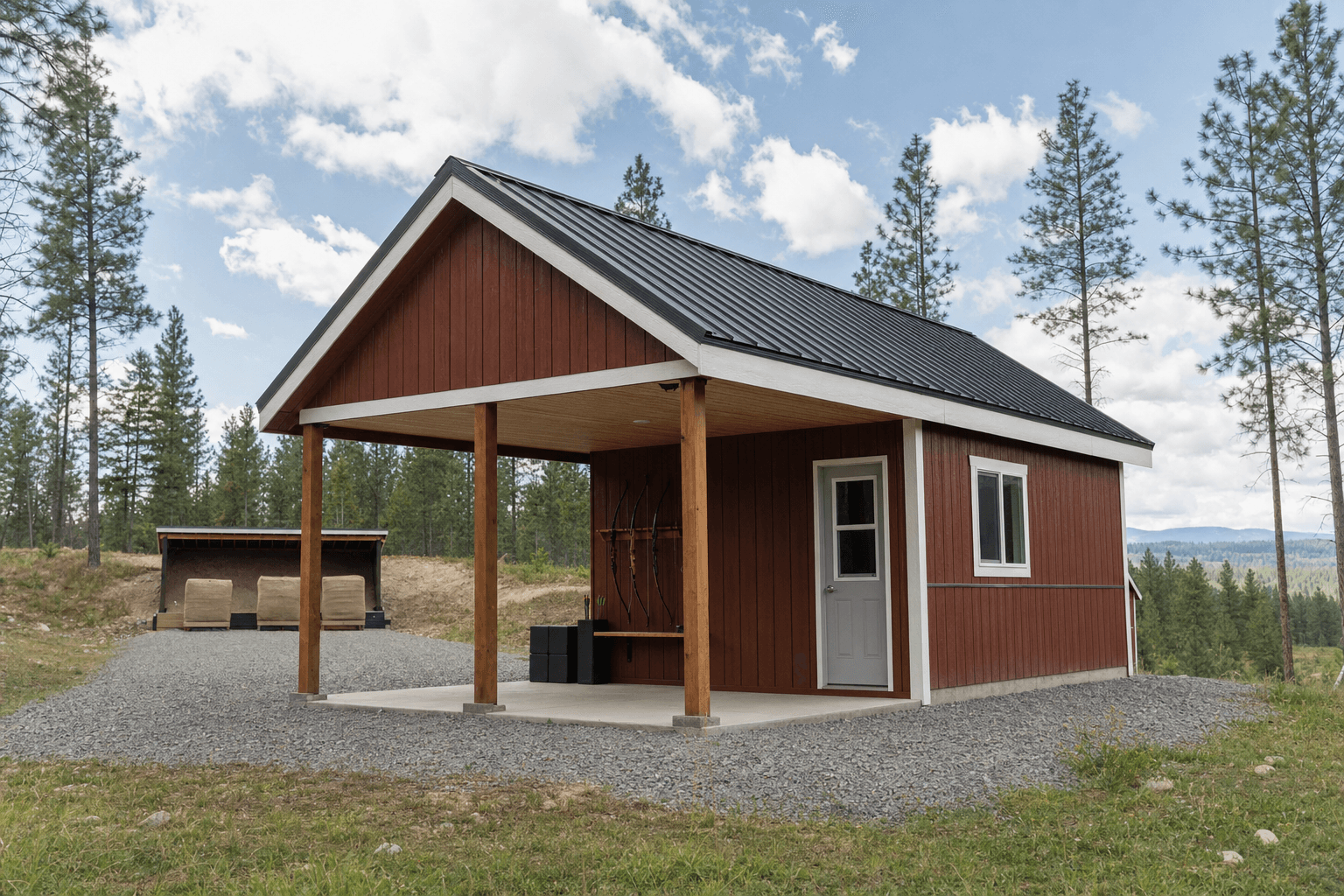
A covered gable-end layout can protect archery gear and create a simple practice bay.
The most important decision is where the practice lane belongs on the property. The covered area should face a controlled, private direction with a safe target zone and enough room to move around the bay without stepping into the storage path. Keep the design archery-focused: blank targets, dry gear storage, good visibility, and a calm practice setup.
A 10x16 shed can work for gear storage and a modest covered position. A 12x20 or 12x24 gives more room for target bags, bow hooks, a small tuning bench, and a covered bay that does not crowd the door. If the shed also needs seasonal storage, plan that separately so archery gear is not blocked by totes or yard equipment.
Door placement matters here too. A man door near the gear wall is convenient for quick access. Larger doors may be useful if target stands, mats, or maintenance tools need to move in and out. Windows should add light without taking away the wall space needed for hooks and shelving.
Place the covered bay only where the lane, target area, and surrounding property can be managed responsibly.
Blank target bags, foam blocks, and stands need a dry place to sit between sessions so they do not soak up weather.
Bows, arrows, releases, tools, and spare parts stay easier to inspect when they have dedicated wall storage.
The shed, porch posts, roof drainage, and gravel pad should work together so the covered position stays usable in wet weather.
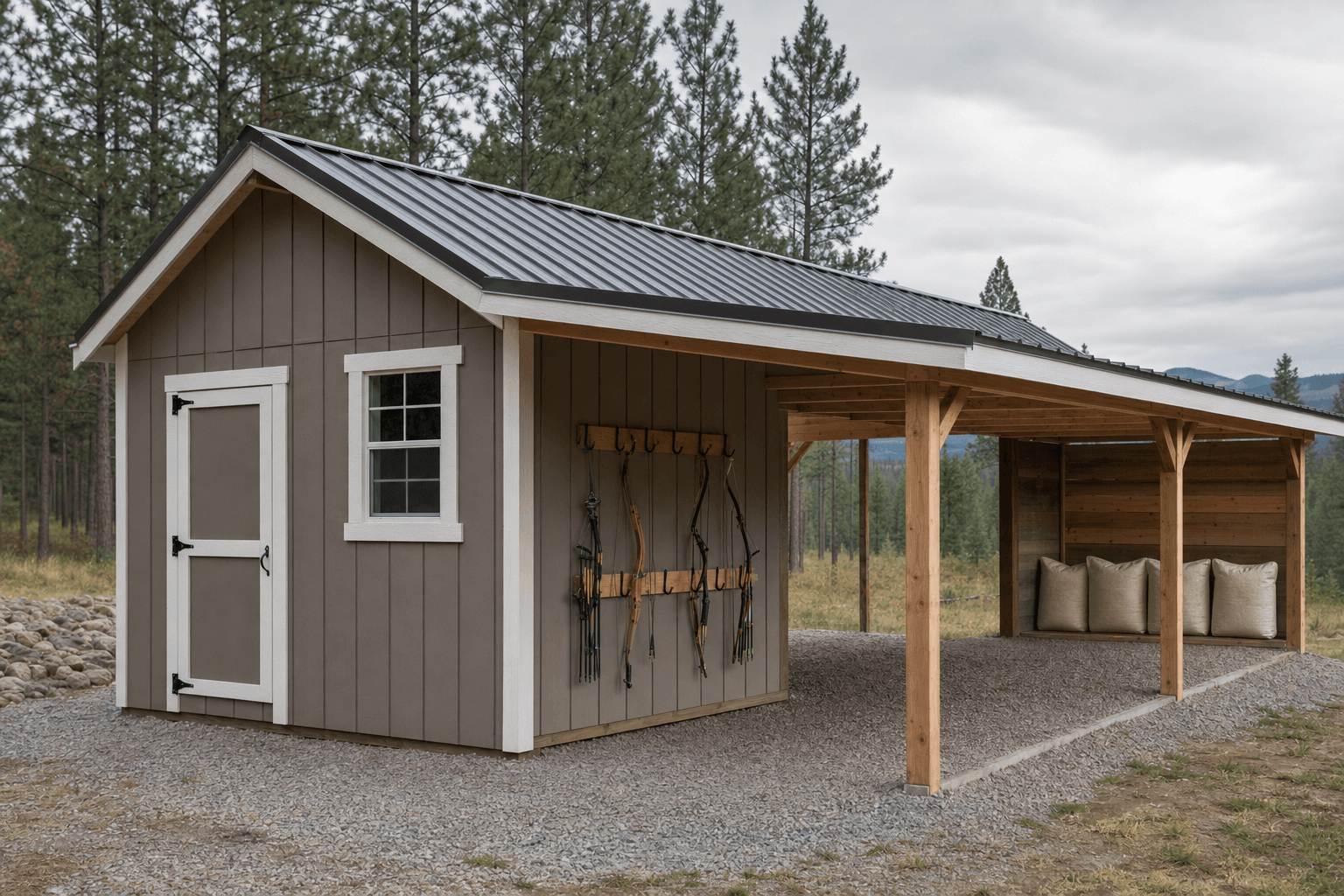
The covered lane makes the shed feel like a weather-aware practice and storage setup.
Archery equipment does not need a finished room, but it does need a clean, predictable place to live. Wall hooks keep bows off the floor. Shelves keep target supplies, bow cases, tools, and spare parts in sight. A compact bench gives you a place for string checks, small adjustments, and organizing gear before practice.
Moisture control is a real design issue in North Idaho. Wet target bags, snow tracked onto the floor, and damp shoulder-season air can all shorten the life of gear. Ventilation, a stable pad, a roof that drains away from the bay, and an entry plan that does not collect mud are more important than decorative finishes.
Security should be simple and practical. Put expensive gear where it is not visible from the road, use door hardware that matches the value of what is stored, and avoid window placement that gives away the entire interior. The page should stay focused on archery practice and storage, not hunting, tactical gear, or firearm use.
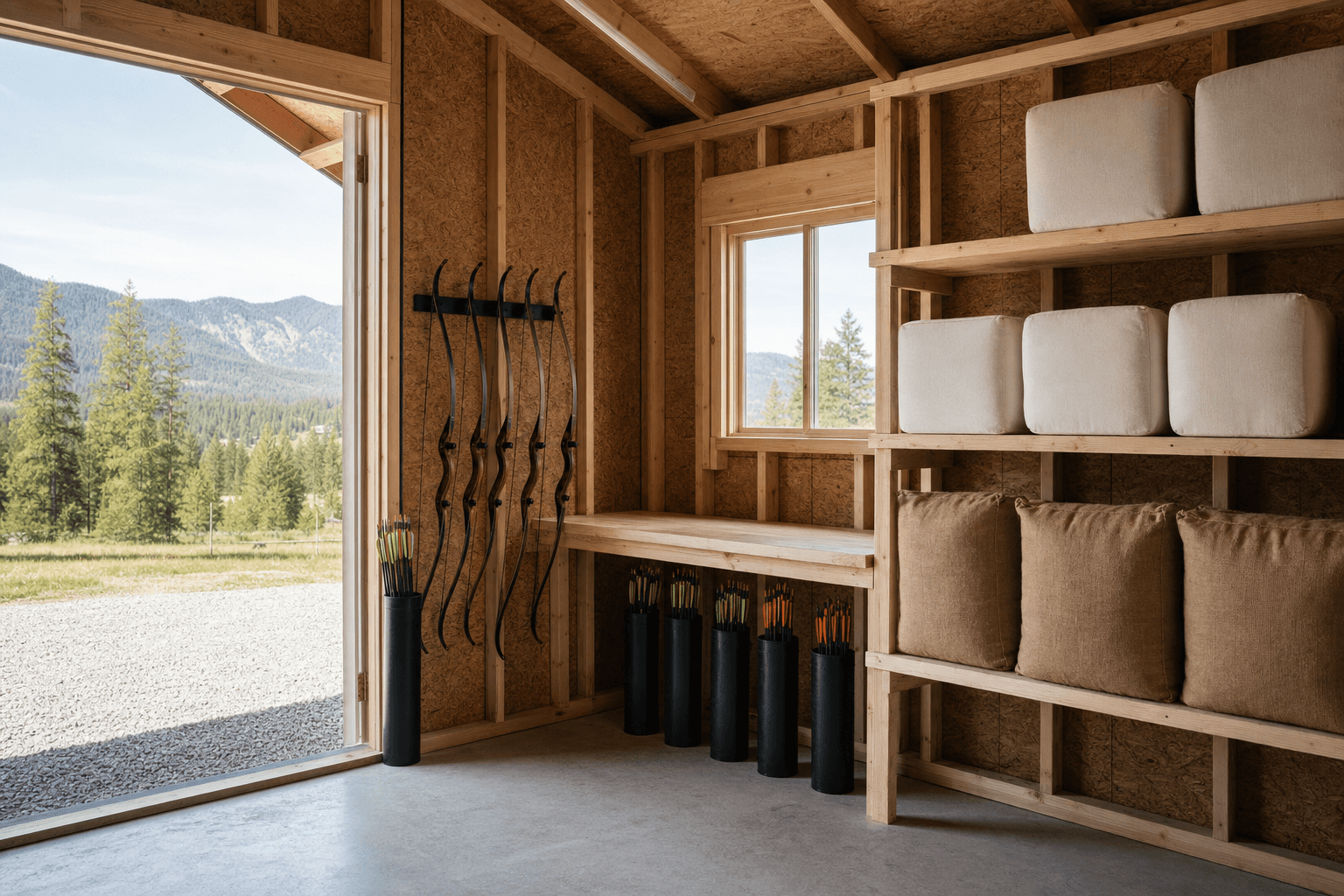
Interior storage details show how bows, arrows, and targets can stay dry and organized.
A covered position helps keep the archer and gear out of rain or snow while still keeping the lane outdoors and easy to manage.
Hooks, shelves, and a small bench reduce clutter and make it easier to inspect equipment before and after practice.
Target bags and stands are easier to move when the door location lines up with the practice bay and storage wall.
A small window can help inside the storage area, but wall storage and privacy should guide where openings belong.
The pad has to support both the enclosed shed and the covered bay. Plan drainage, roof runoff, and the walking path between the storage wall and target area before the build. A clean gravel base helps the bay stay usable after rain and during snowmelt.
A covered archery shed should keep the practice position usable while protecting equipment from moisture, snowmelt, and seasonal temperature swings.
Roof coverage, drainage, and sensible overhangs help keep gear and the practice position dry.
The shed and covered bay should feel solid on exposed rural properties and open clearings.
Window and bay orientation should support visibility while keeping storage walls practical.
An archery range shed may raise more site-planning questions than a simple storage shed because the covered bay, target area, and property boundaries all matter. Confirm local permit rules, setbacks, HOA limits, and any electrical work before finalizing placement.
A 10x16 can handle gear storage and a compact covered position, but a 12x20 or 12x24 gives more room for targets, a bench, and a bay that does not crowd the door. The right size depends on the lane, target storage, and what else must fit inside.
Yes. Plan hooks for bows, shelves for cases and supplies, a dry place for blank target bags, and a small bench for maintenance. Keeping those zones separate helps the shed stay organized between practice sessions.
The lane should face a controlled, responsible direction with room for the target area, safe movement, and property setbacks. Site placement should be reviewed before the shed footprint and covered bay are finalized.
A stable gravel pad, roof coverage, ventilation, sensible door hardware, and storage that keeps gear off the floor all help. Window placement should balance daylight with privacy and wall storage.
Permit and setback requirements depend on the shed size, location, jurisdiction, electrical work, and property rules. Because the target area and covered bay affect placement, check local requirements before ordering.
Yes. A covered bay can be planned at the gable end or side of the shed, with the enclosed space used for targets, bows, arrows, and maintenance supplies. The roofline, posts, pad, and door layout should be designed together.
Tell us how you want to store gear, where the lane should face, and what size bay you have in mind. We will help shape the shed around the site.
Every shed we make is built on site in North Idaho. Explore other uses we build for.